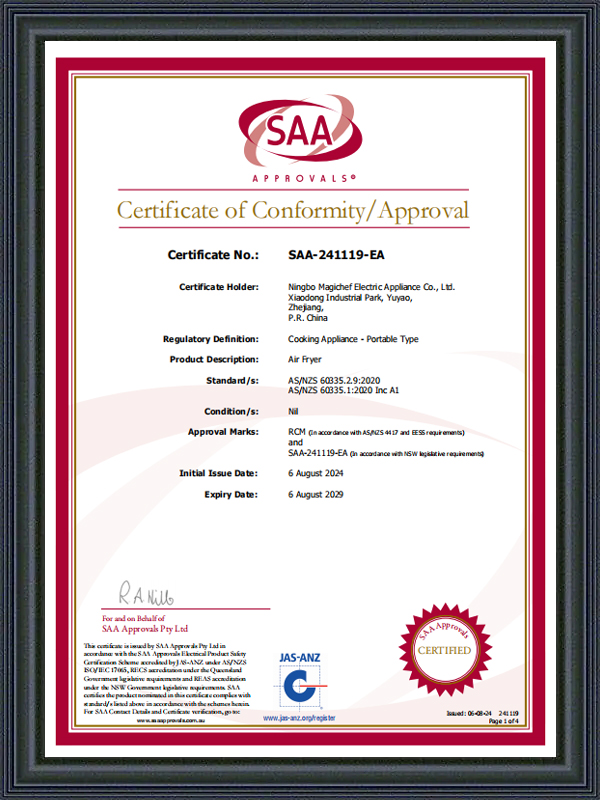
Ningbo Magichef Electric Appliance Co.,Ltd.
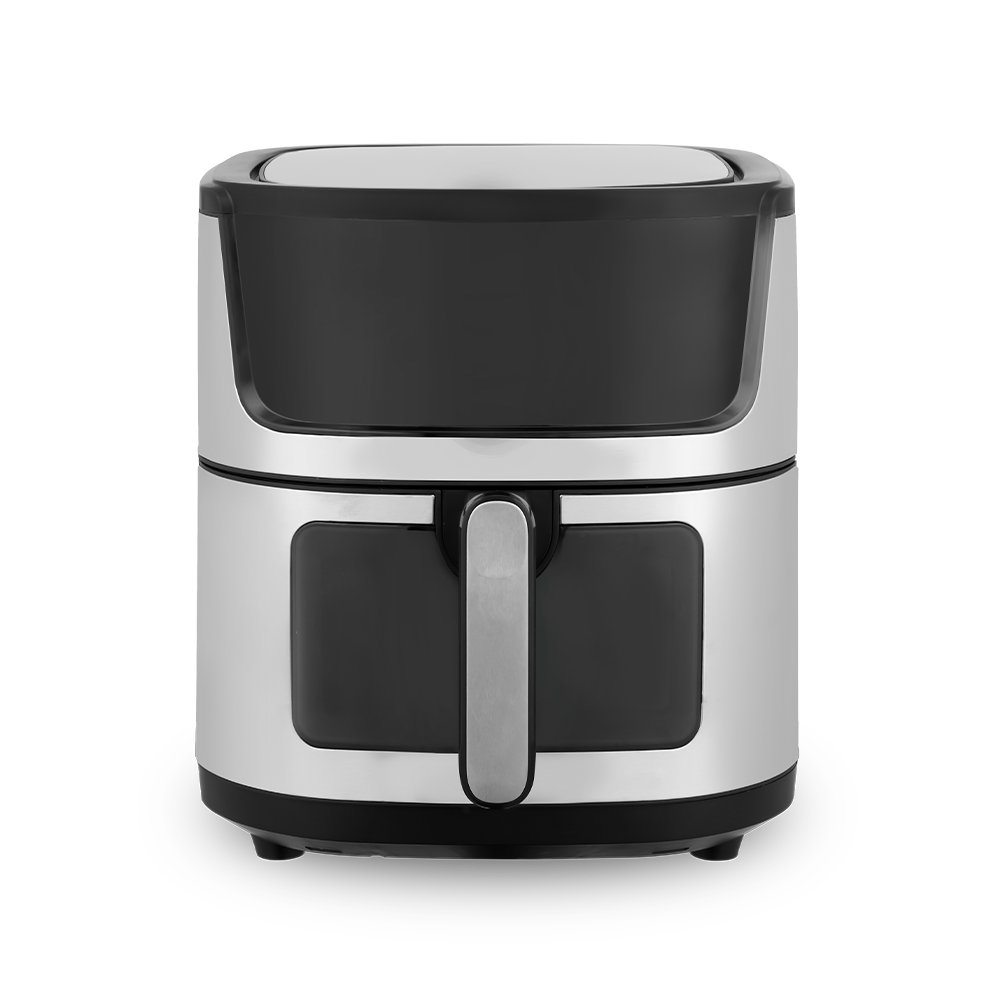
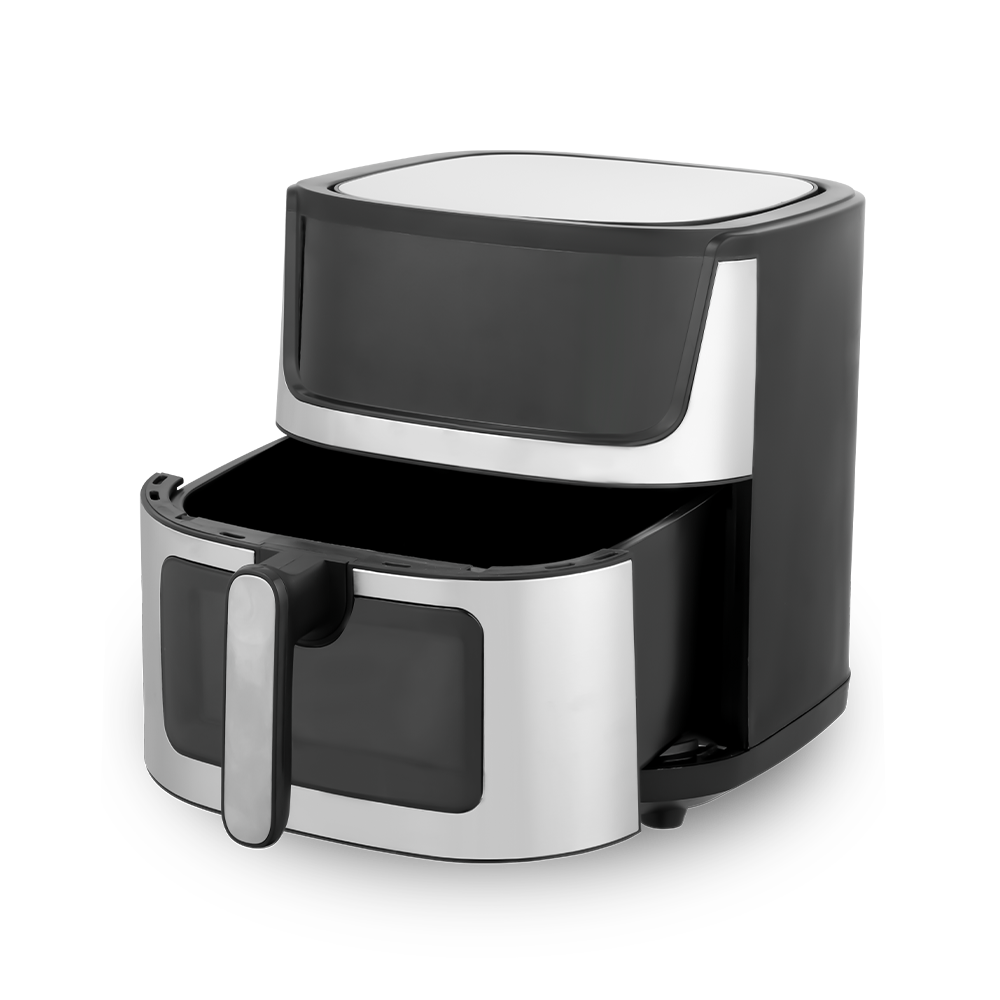
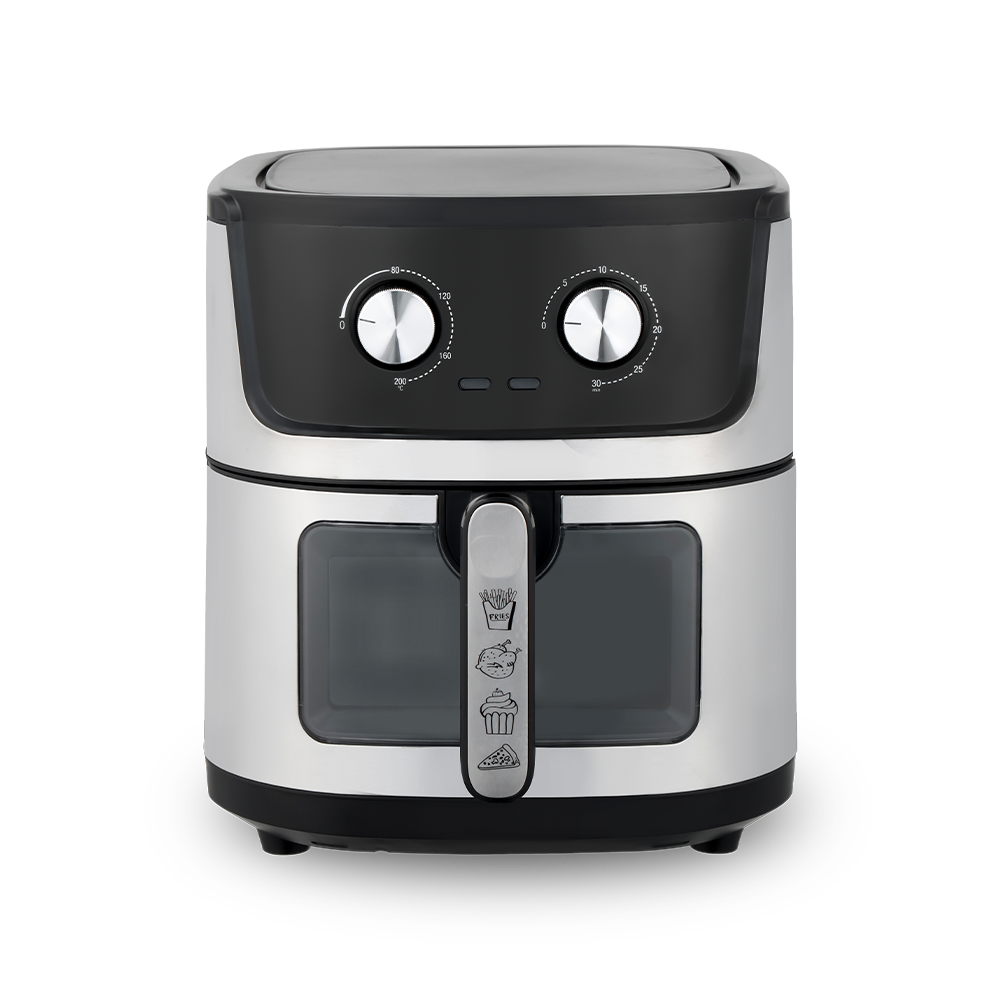
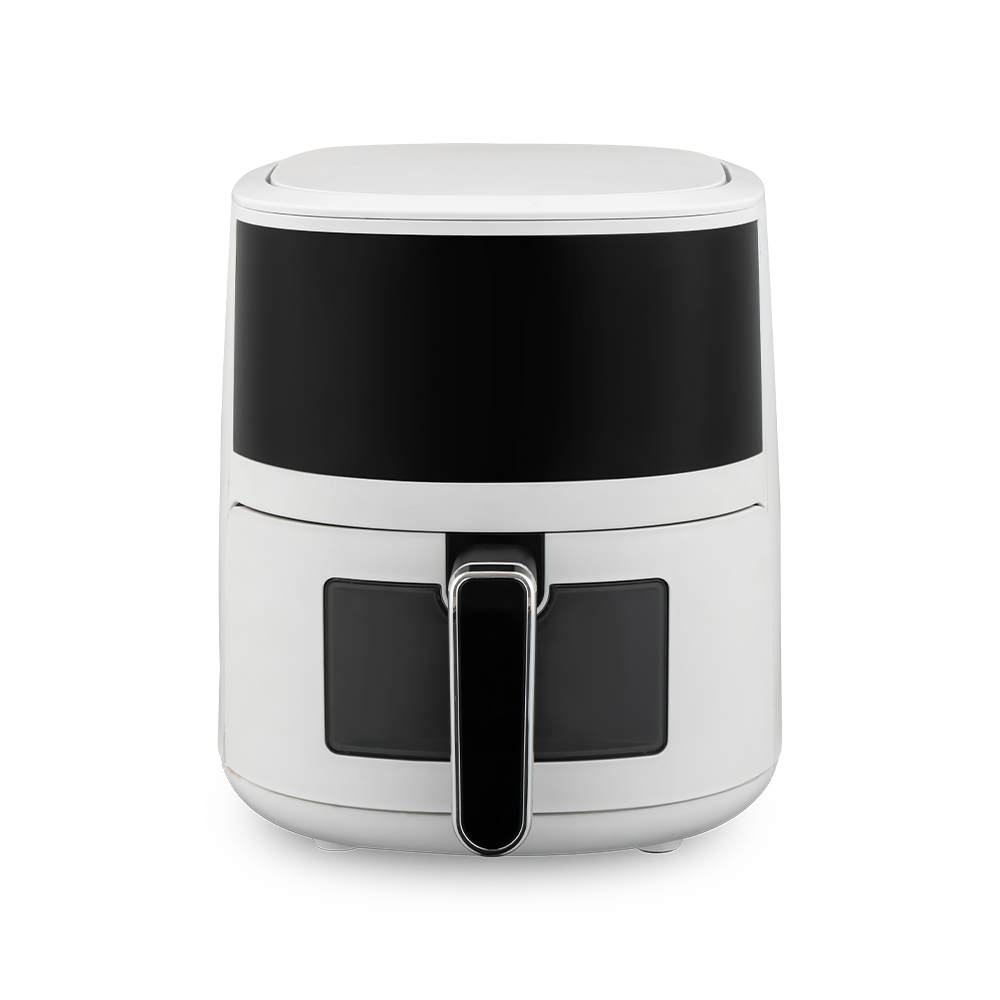
A cook opens the air fryer drawer at minute 14, checks the wings, and closes it again. That single peek costs heat, time, and sometimes crispness. A visible air fryer with a window or glass basket solves that specific problem: you can judge color and movement without breaking the cooking cycle. For most home kitchens,...
READ MOREMagichef Brings New Air Fryers to the Canton Fair Visit us October 15–19, 2026 Booth 4.1A22 Ningbo, China – Ningbo Magichef Electric Appliance Co., Ltd. announced that it will take part in the 140th China Import and Export Fair (Canton Fair), held October 15–19, 2026. At Booth 4.1A22, the company will present its l...
READ MOREA two-year-old air fryer sits on the kitchen counter. The fan spins, the heating element still produces intense heat, and the food comes out crisp, but the touchscreen is dark. The control board failed, and the repair quote is nearly the price of a new unit. That is the most common failure mode among digital air fryer...
READ MORELarge air fryers, typically defined as units with cooking capacities exceeding six liters, present distinct thermodynamic challenges compared to compact tabletop models. The primary variable influencing preheat duration is the physical volume of the cooking chamber. As the internal space expands, the volume of air that must be elevated to target temperatures increases proportionally. Additionally, larger cooking baskets and structural metal components introduce higher total thermal mass into the system. When electrical power is applied, a portion of the generated heat is absorbed by the cold internal walls, wire racks, and heating element supports before the ambient air reaches a stable operating state. Consequently, without adjustments to power input or airflow velocity, larger capacity units naturally require a longer duration to transition from room temperature to standard cooking thresholds.
To offset the increased internal volume and thermal mass, engineering teams scale up the electrical wattage of the primary heating elements in large air fryers. Standard compact units often utilize heating coils rated between 1200 and 1400 watts, whereas large capacity models regularly employ heating elements ranging from 1700 to 2200 watts. This substantial increase in power output raises the rate of British Thermal Units (BTUs) or Joules delivered per second into the cavity. Advanced manufacturing facilities, including those operated by Ningbo Magichef Electric Appliance Co.,Ltd., integrate high-density stainless steel heating loops designed to withstand high surface heat loads without rapid oxidation. By increasing total wattage, large air fryers can achieve preheat times of three to five minutes, keeping thermal ramp-up rates competitive with smaller appliances.
| Chamber Capacity | Typical Wattage Rating | Average Preheat Time to 200°C | Air Volume Heating Rate |
|---|---|---|---|
| 3.5 Liters to 4.5 Liters | 1300W to 1500W | 2.5 Minutes to 3.5 Minutes | High Temperature Rise per Second |
| 5.5 Liters to 6.5 Liters | 1600W to 1800W | 3.5 Minutes to 4.5 Minutes | Moderate Temperature Rise per Second |
| 8.0 Liters and Above | 1800W to 2200W | 4.5 Minutes to 6.0 Minutes | Controlled Gradient Rise per Second |
Preheating efficiency relies not only on raw thermal generation but also on how rapidly that heat is distributed throughout the large cavity. Forced air convection systems in large air fryers utilize high-RPM brushless DC or AC motors fitted with larger impeller blades. Higher rotational speeds increase the Cubic Feet per Minute (CFM) rating of the internal air stream. Rapid airflow reduces the thermal boundary layer surrounding cold internal components, accelerating heat absorption across metal basket walls and food support grids. By continuously recycling air across the heating element at high velocity, the internal atmosphere achieves thermal equilibrium faster, eliminating cold zones in the lower corners of expanded cooking drawers.
In addition to forced air convection, direct infrared heat transfer plays a crucial role during the initial thermal ramp-up phase. High-temperature heating coils emit radiant energy that directly strikes exposed surfaces inside the chamber without relying on air molecules as a transport medium. In large air fryers, the geometric arrangement of the heating element relative to the basket floor influences radiant heat coverage. Expanding the coil diameter or using coiled quartz heating tubes increases the surface area emitting infrared radiation. As product design teams at Ningbo Magichef Electric Appliance Co.,Ltd. optimize heating element geometries, radiant heat works in tandem with air convection to raise the temperature of internal surfaces before the circulating air reaches its final target setpoint.
| Heat Transfer Mechanism | Role in Preheating Phase | Influence of Chamber Size | Impact on Energy Distribution |
|---|---|---|---|
| Forced Convection | Drives Ambient Air Temperature | Requires Higher Fan CFM | Eliminates Internal Thermal Gradients |
| Radiant Infrared Heat | Direct Surface Energy Transfer | Requires Wider Coil Coverage | Accelerates Basket and Base Heating |
| Structural Conduction | Transfer through Metal Components | Scales with Component Mass | Pulls Heat until Mass Reaches Saturation |
Managing the ramp-up speed in large capacity air fryers requires precise microprocessor firmware calibration. During a fast preheat cycle, the high-wattage heating coil runs at maximum duty cycle to reach target temperatures quickly. However, because large metal structures retain substantial thermal energy, turning off the heating coil precisely at the target temperature can lead to thermal overshoot, where internal temperatures briefly exceed desired limits. To prevent this, digital temperature controllers monitor NTC thermistor inputs and begin pulsing the power relay as the internal temperature approaches the setpoint. This proportional control strategy balances rapid heating speed with accurate thermal stabilization, preventing temperature spikes that could scorch delicate ingredients.
Skipping the preheat cycle in a large air fryer has a more pronounced effect on food outcome than in smaller models due to the larger volume of cold air initially trapped inside. Placing cold ingredients into an unheated large chamber forces the food to sit in a low-temperature environment while the appliance ramps up, leading to excessive moisture loss and prolonged exposure to low heat before surface browning can begin. Proper preheating ensures that when ingredients enter the basket, the surrounding air velocity and ambient temperature immediately initiate surface evaporation and starch gelatinization. R&D engineers at Ningbo Magichef Electric Appliance Co.,Ltd. focus on optimizing this initial thermal burst to ensure that large batch loads cook evenly across the entire surface area of expanded basket bottoms.
A: Achieving uniform cooking in expanded chambers requires advanced aerodynamic engineering. Enterprises like Ningbo Magichef Electric Appliance Co.,Ltd. design high-velocity convection fans paired with optimized air guides at the base of the drawer. This specific geometry forces superheated air to penetrate densely packed ingredients from the bottom up, preventing the cold spots often associated with overloading standard-sized appliances.
Q: Does the increased chamber volume of large air fryers result in disproportionately high electrical consumption?A: While larger units require higher-wattage heating coils—typically between 1700W and 2200W—to reach target temperatures quickly, their overall energy efficiency remains excellent. The rapid cooking times achieved by intense forced air convection offset the higher instantaneous power draw. By cooking family-sized meals in a single cycle rather than multiple small batches, the total energy expended is often significantly lower than operating a conventional electric wall oven.
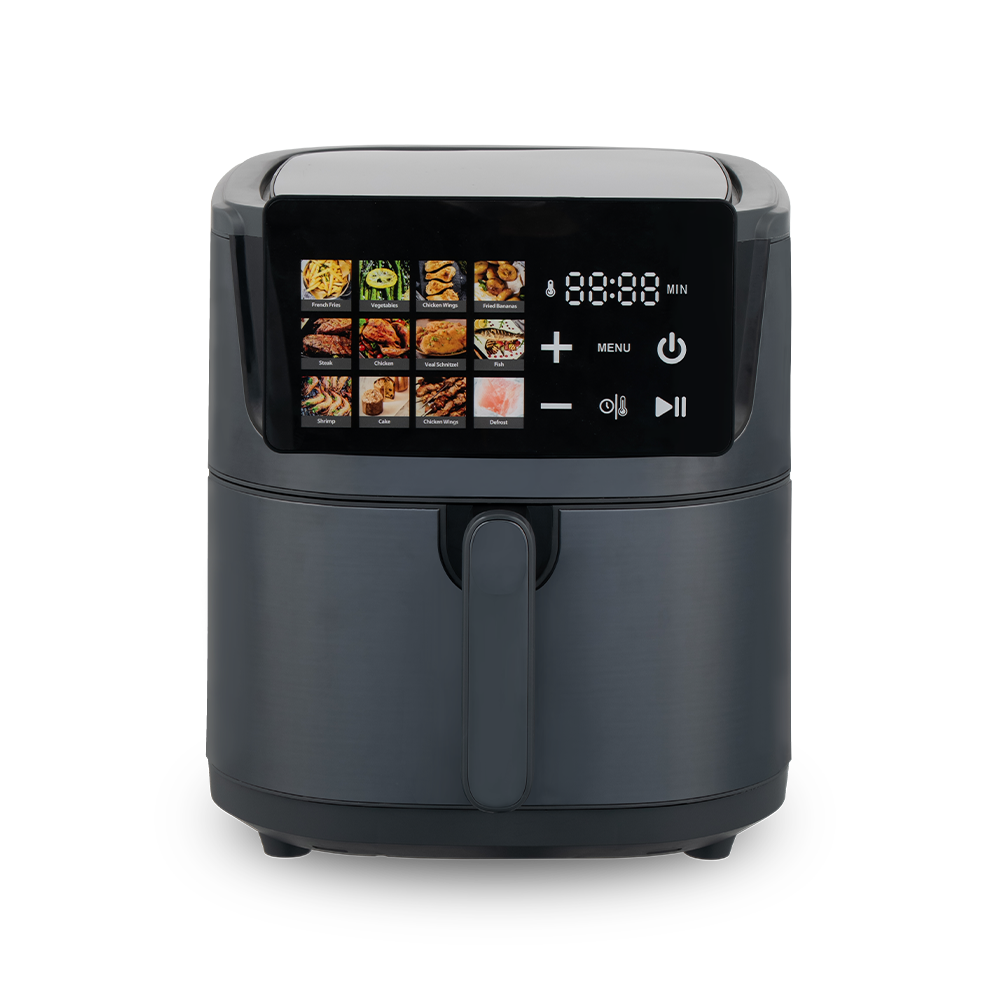
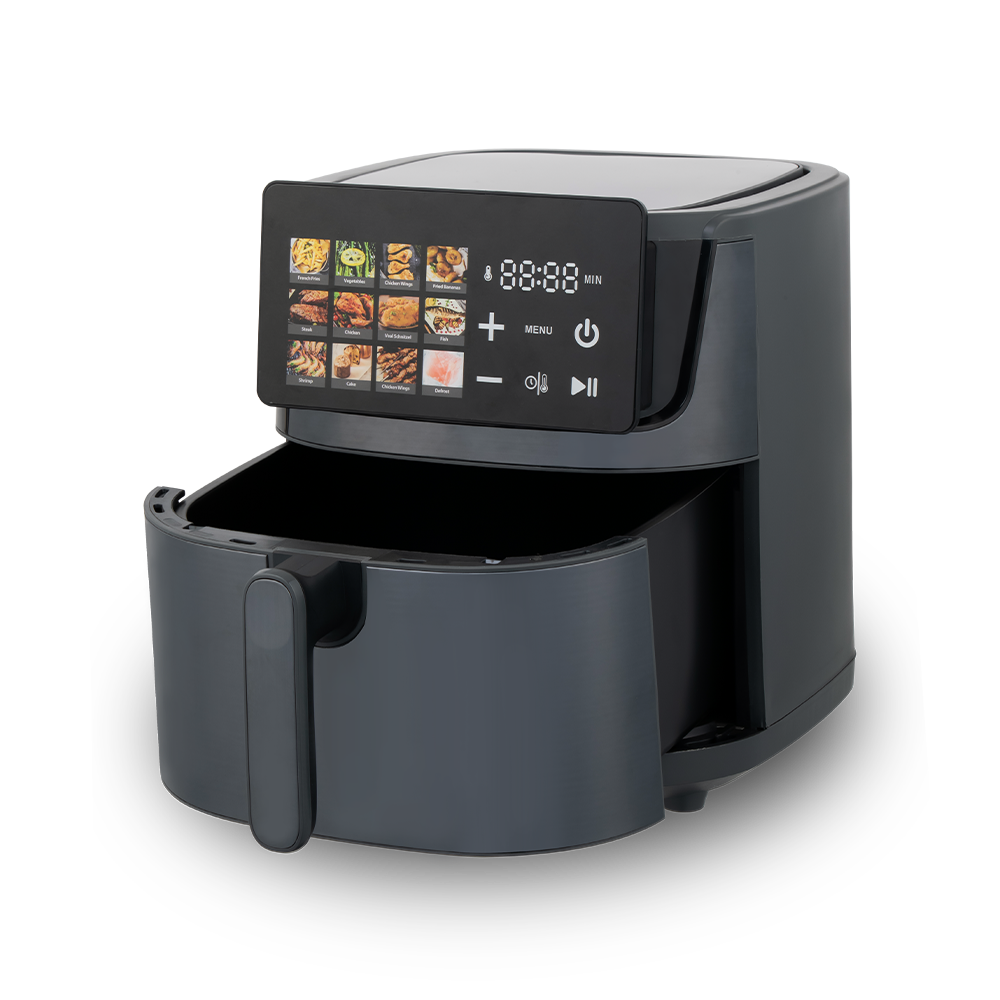
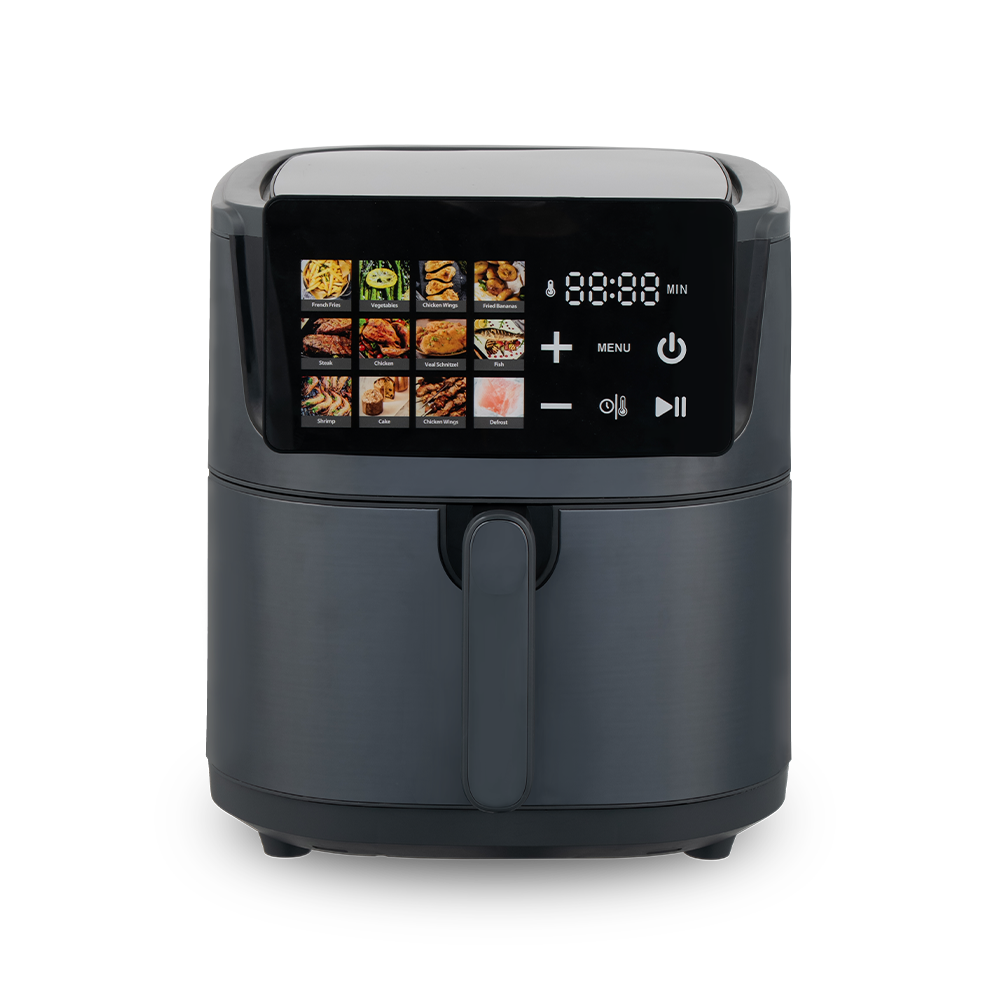
Q: What programmable customization options are available for commercial clients seeking OEM manufacturing of large air fryers?A: For commercial customization, manufacturers focus on integrated digital controls and smart firmware adjustments. The R&D team at Ningbo Magichef Electric Appliance Co.,Ltd. can tailor digital touch interfaces, multi-stage cooking algorithms, and precise NTC temperature sensors for high-capacity models. This allows brands to offer exclusive pre-programmed settings optimized specifically for bulky items like whole poultry or heavy roasts.
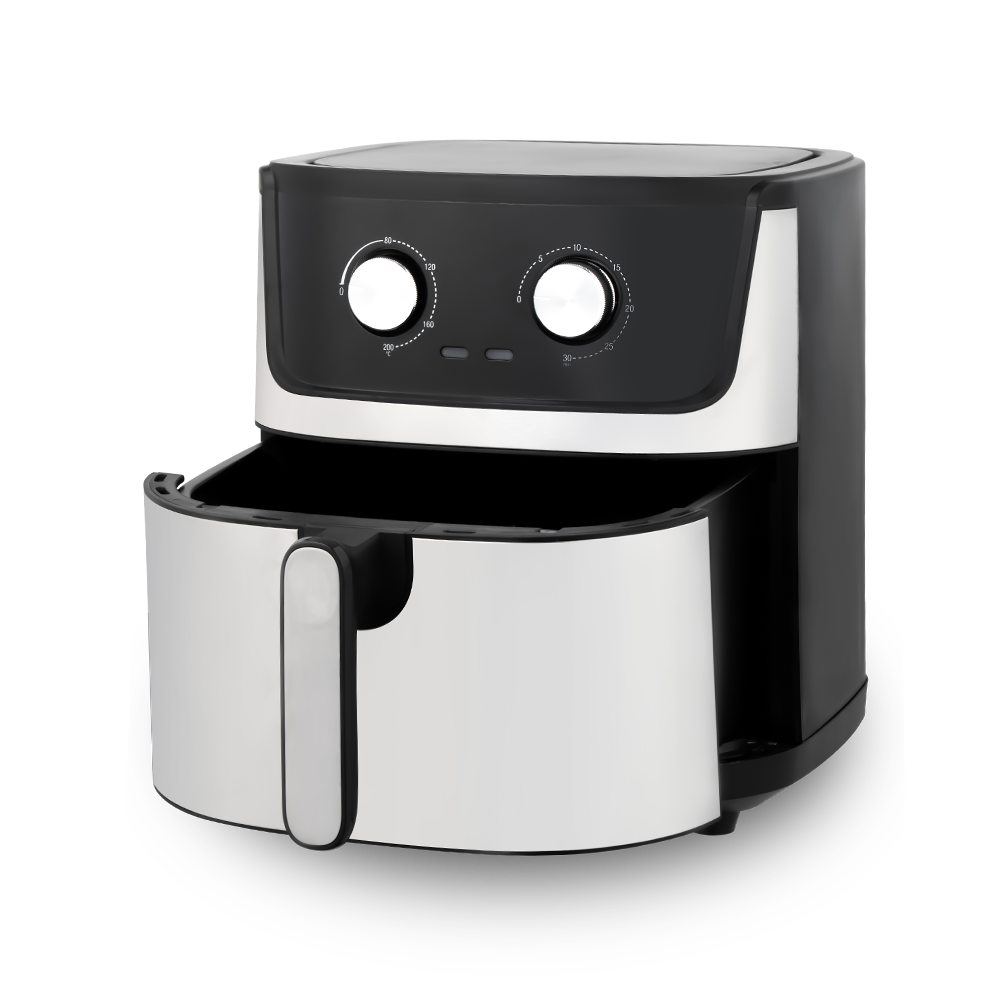
Q: How is the mechanical integrity of the drawer and handle maintained when handling heavy food loads?A: Supporting heavy ingredients requires reinforced mechanical designs. The basket chassis and exterior handle assemblies are constructed using high-temperature-resistant polymers combined with heavy-gauge metal brackets. The sliding structural rails inside the main housing are also extended and reinforced to ensure smooth insertion and removal, preventing structural fatigue even when the large-capacity basket is fully loaded.
Q: What internal design features simplify the cleaning and lipid drainage process in high-capacity air fryers?A: To manage the increased interior surface area and higher volume of rendered animal fats, large baskets are engineered with premium, multi-layer non-stick coatings that resist high-temperature degradation. Many modern designs utilize a removable inner crisper plate rather than a bulky two-piece basket system. This allows the main drawer to act as a wide catch-basin for liquefied fats, while the lightweight, perforated plate can be easily removed for quick, hassle-free cleaning.




 English
 русский