

 English
 русский
information to be updated

Ningbo Magichef Electric Appliance Co.,Ltd.
information to be updated
A cook opens the air fryer drawer at minute 14, checks the wings, and closes it again. That single peek costs heat, tim...
READ MOREMagichef Brings New Air Fryers to the Canton Fair Visit us October 15–19, 2026 Booth 4.1A22 Ningbo, China – Ningbo M...
READ MOREA two-year-old air fryer sits on the kitchen counter. The fan spins, the heating element still produces intense heat, a...
READ MOREPicture this: you have found a kitchen air fryer that looks great in the photos, it arrives, and the first time you use...
READ MOREAn electric air fryer is built around a simple process: a heating element warms the air in the cooking chamber, a high-...
READ MORENingbo, Zhejiang, China – September 2026 – Ningbo Magichef Electric Appliance Co., Ltd. (Magichef), a professional manuf...
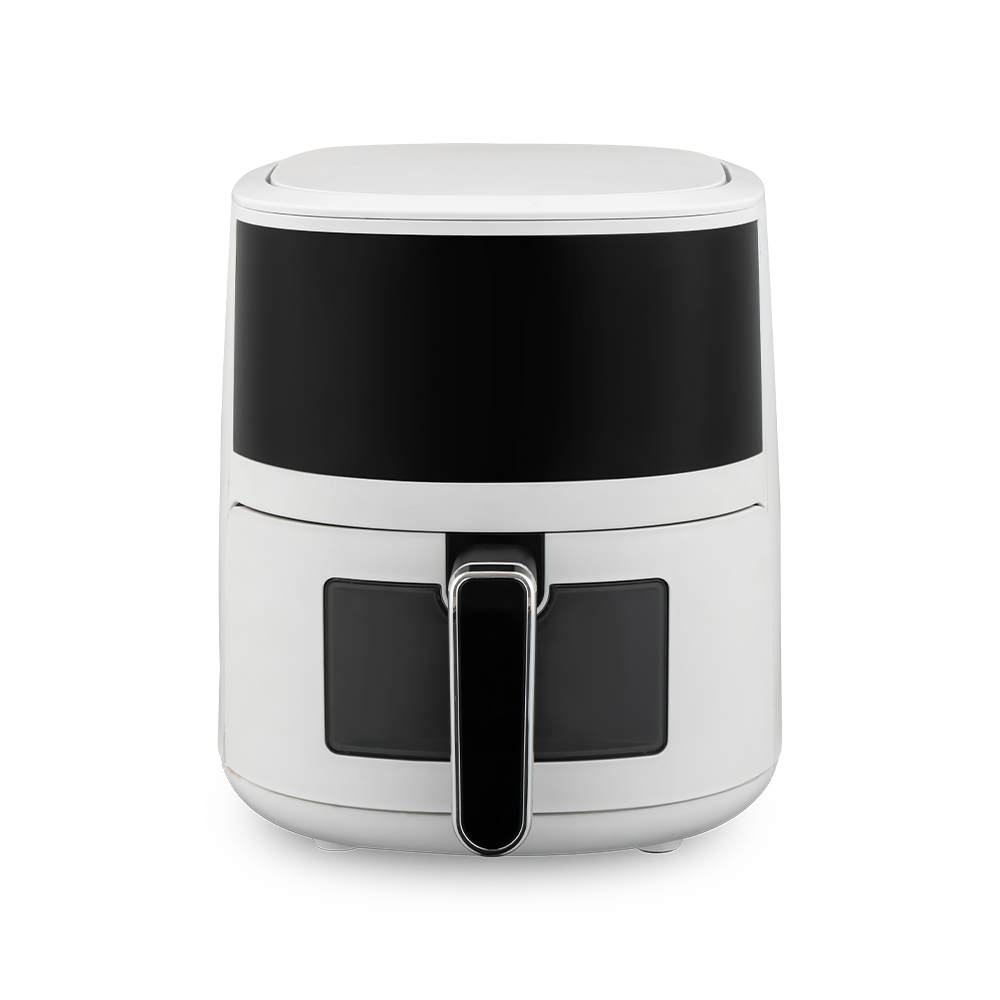
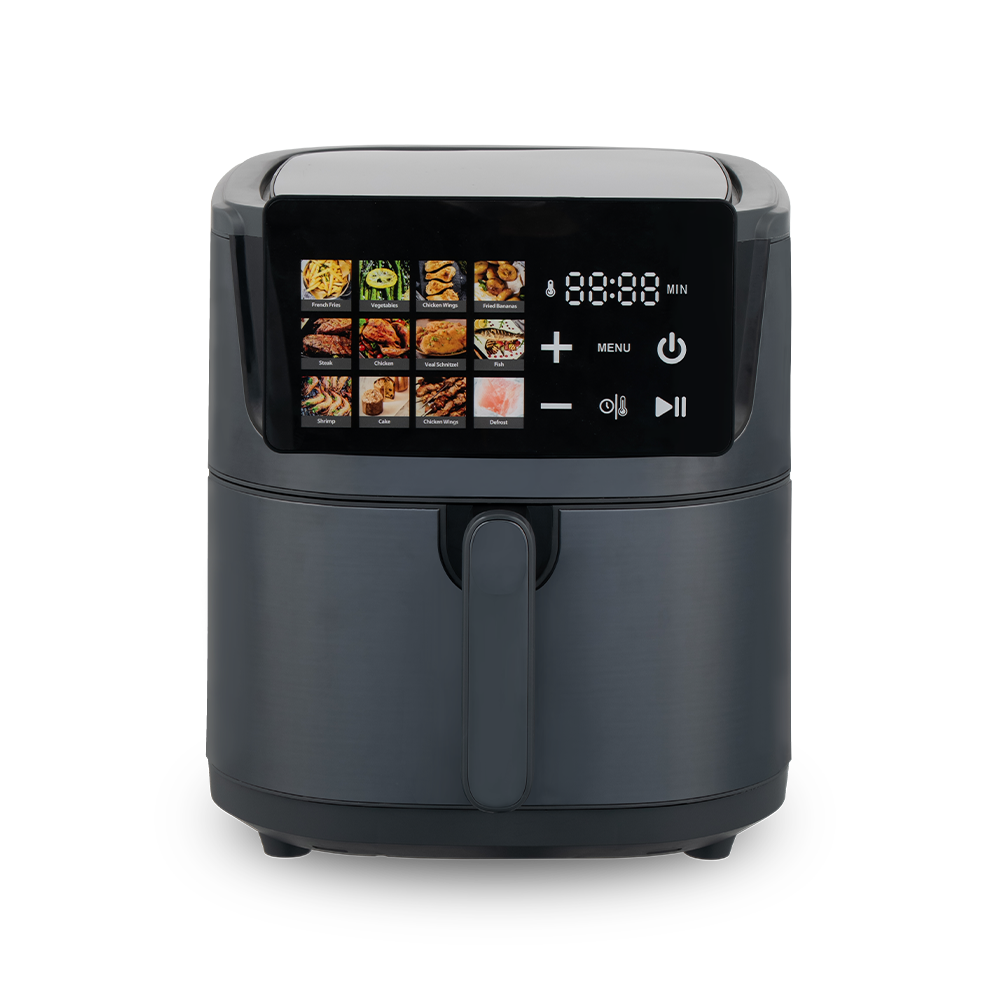
READ MOREDetermining energy consumption in kitchen appliances begins with understanding nominal wattage specifications and operating duty cycles. A 120 series large air fryer typically operates with a rated power draw between 1800W and 2200W, which is higher than the 1400W to 1500W rating found in standard 4.0L appliances. While a higher wattage means greater electrical current during active heating cycles, power draw alone does not dictate total kilowatt-hour usage over time. Because a 120 series large air fryer generates thermal energy rapidly within its chamber, it reaches target cooking temperatures faster, allowing the heating elements to cycle off more frequently via internal thermostat controls.
| Performance Index | Standard Air Fryer (4.0L) | 120 Series Large Air Fryer |
|---|---|---|
| Rated Power Range | 1400W - 1500W | 1800W - 2200W |
| Preheat Time to 200°C | 4.5 minutes | 3.0 minutes |
| Cooking Time for 1.5kg Batch | 45 minutes (2 batches required) | 22 minutes (1 batch required) |
| Estimated kWh per Complete Meal | 1.05 kWh | 0.73 kWh |
Energy transfer within an air fryer depends on thermal convective efficiency rather than simple spatial volume expansion. In a smaller appliance, hot air must be continuously forced through compact quarters, leading to thermal bottlenecks when food loads are densely packed. A 120 series large air fryer offers a larger interior surface area that allows high-velocity hot air to move freely around food surfaces without requiring prolonged exposure times. Engineering teams at Ningbo Magichef Electric Appliance Co.,Ltd. optimize internal cavity reflections and convective air ducts in large-format models to improve heat absorption rates, ensuring electrical energy converted into thermal radiation is used efficiently during active operation.
When evaluating household or commercial energy consumption, cooking frequency plays a critical role in cumulative power costs. Cooking a meal for a multi-person household in a standard air fryer often demands two or three back-to-back operational cycles, which increases heat loss through repeated basket drawer pulls. A 120 series large air fryer accommodates larger food volumes in a single cooking pass, eliminating idle preheating periods between batches. Consequently, despite drawing higher instantaneous wattage, the 120 series large air fryer frequently consumes less overall electricity per kilogram of food prepared compared to running multiple consecutive sessions on smaller units.
| Structural Element | Impact on Heat Retention | Energy Loss Factor |
|---|---|---|
| Double-Walled Outer Housing | Reduces exterior thermal radiation | Lowers standby cooling loss |
| Silicone Gasket Sealing | Prevents hot air leakage from door gaps | Maintains internal pressure stability |
| Heavy-Gauge Internal Liner | Stores convective heat energy | Reduces heating element duty cycles |
Modern air fryers do not operate at maximum power throughout the entire cooking process. Once the internal cooking chamber achieves the designated setpoint temperature, the control board modulates current to the heating coil, reducing power draw to low-duty maintenance pulses. A 120 series large air fryer equipped with digital thermistor monitoring measures micro-variations in chamber temperature and adjusts the heating cycle dynamically. By preventing unnecessary temperature overshoot, appliances built by Ningbo Magichef Electric Appliance Co.,Ltd. regulate power consumption efficiently without subjecting ingredients to excessive thermal spikes.
The efficiency of forced-convection heating relies on air velocity and fluid dynamics inside the appliance cavity. In a 120 series large air fryer, large-diameter fan impellers driven by high-torque motors create consistent convective currents throughout the tray surface. This continuous airflow accelerates surface evaporation on food items, facilitating faster Maillard reactions and reducing the time required to complete cooking programs. Shorter cooking durations mean the heating element remains engaged for brief intervals, directly lowering the kilowatt-hour reading on residential electric meters.
| Operating State | Average Power Consumption | Operational Duration |
|---|---|---|
| Active Heating Phase | 1800W - 2000W | 8 - 12 minutes per cycle |
| Maintenance Pulse Phase | 400W - 600W | 10 - 15 minutes per cycle |
| Standby / Digital Panel Display | 0.5W - 1.0W | Continuous when plugged in |
Many large-format models within the 120 series feature dual-zone basket designs or removable partitions that allow users to alter heating parameters based on immediate meal sizes. When cooking small portions, a 120 series large air fryer can selectively power a single heating zone rather than energizing the entire 9.0L to 12.0L internal cavity. Manufacturers like Ningbo Magichef Electric Appliance Co.,Ltd. design dual-zone relays that isolate heating circuits, giving users flexibility to switch between full-capacity batch cooking and lower-wattage single-zone operations without wasting electrical power.
Calculating the true monetary impact of operating a 120 series large air fryer requires assessing local utility rates alongside daily usage habits. Because electrical utility billing is calculated in kilowatt-hours, reducing active appliance operational time yields direct savings on utility statements. A 120 series large air fryer operating at 2000W for 20 minutes uses approximately 0.66 kWh of power, whereas a 1400W standard model running for two 25-minute batches consumes roughly 1.16 kWh. Thus, the larger capacity unit demonstrates higher operational energy efficiency when utilized for regular meal preparation.
Q: How does a 120 series large air fryer balance higher power wattage with long-term energy efficiency?
A: Although a 120 series large air fryer operates at a higher rated power draw between 1800W and 2200W, it accelerates heating speeds and reduces overall cooking times compared to standard units. By eliminating the need for multiple consecutive cooking batches and utilizing precise thermostatic cycling, appliances engineered by Ningbo Magichef Electric Appliance Co.,Ltd. maintain lower total kilowatt-hour consumption per kilogram of food prepared.
Q: What internal structural design features in a 120 series large air fryer prevent uneven heat distribution during full-capacity loads?
A: A 120 series large air fryer incorporates optimized air velocity ducting, top-down forced convection fans, and contoured cavity walls. These internal engineering elements create uniform airflow loops throughout the expanded basket geometry, ensuring that heat reaches all surface areas evenly without leaving localized hot or cold zones when cooking dense food volumes.
Q: In what ways do independent dual-zone features operate within a 120 series large air fryer cavity?
A: The wide chamber footprint of a 120 series large air fryer allows integration of dual heating elements and removable internal dividers. This structural flexibility enables users to power a single compartment for smaller portions or engage both zones simultaneously with distinct temperature and timer parameters, allowing two separate dishes to complete cooking at the same time.
Q: How do component insulation materials manage exterior surface temperatures in high-wattage air fryers?
A: To handle the increased thermal output required for large-volume heating, a 120 series large air fryer utilizes double-walled housing insulation, high-density silicone door seals, and heat-resistant outer enclosures. Manufacturers such as Ningbo Magichef Electric Appliance Co.,Ltd. implement these structural thermal barriers to retain heat inside the cooking chamber while keeping external touch surfaces safely within temperature limits.
Q: What thermal control mechanisms prevent temperature overshooting in a 120 series large air fryer during extended use?
A: Modern 120 series models rely on multi-point digital thermistors and micro-controller algorithms that continuously read real-time internal conditions. When target temperatures are reached, the control unit switches from continuous heating to low-duty pulse cycles, preserving exact thermal levels without overcooking ingredients or drawing unnecessary electrical power.