Ningbo Magichef Electric Appliance Co.,Ltd.
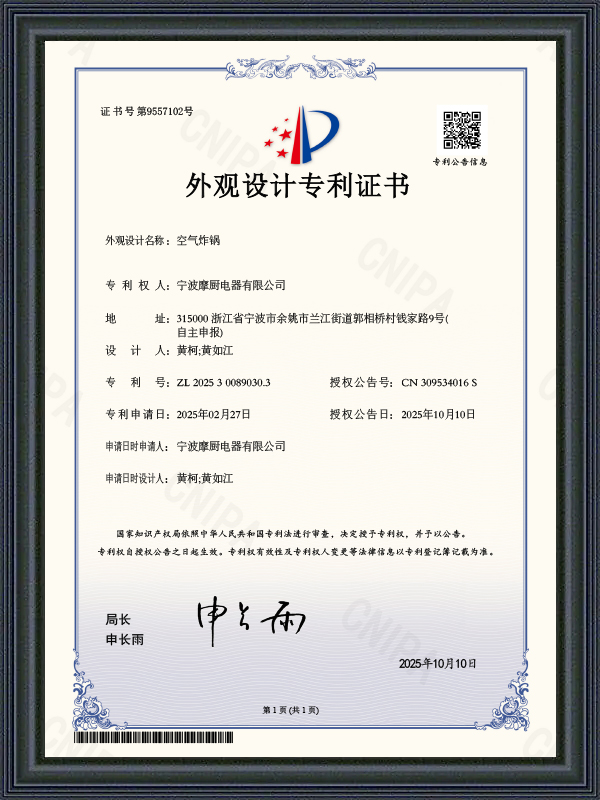
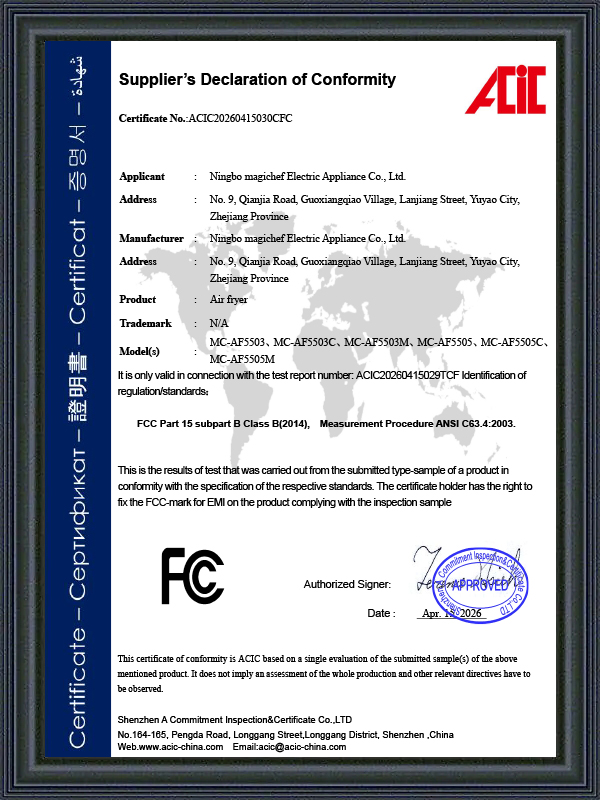
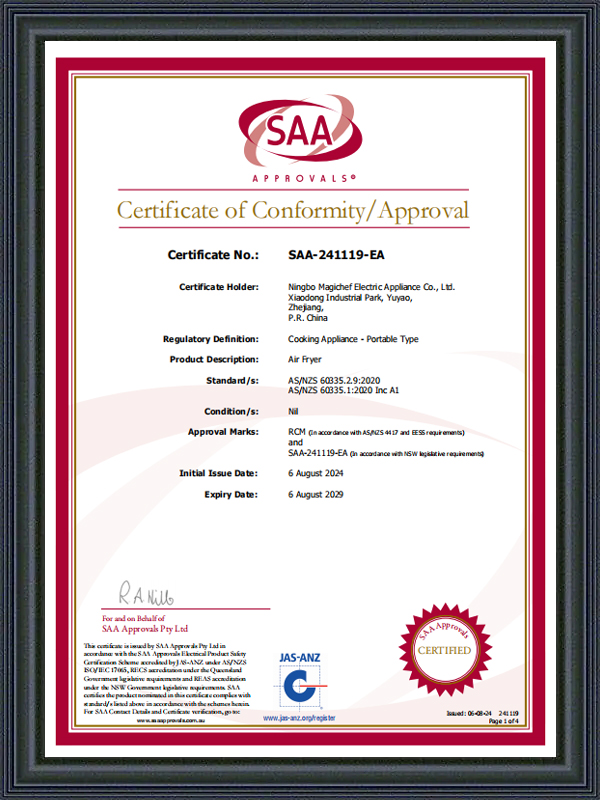
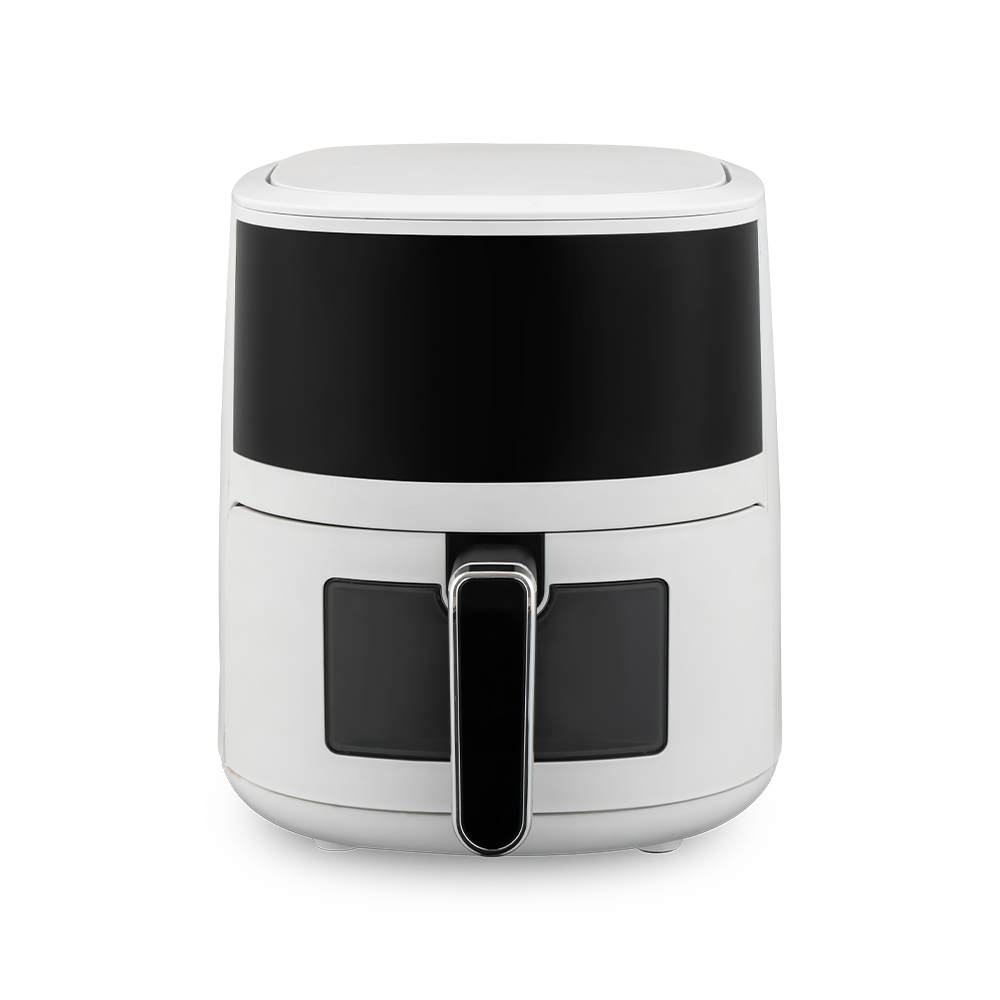
A cook opens the air fryer drawer at minute 14, checks the wings, and closes it again. That single peek costs heat, time, and sometimes crispness. A visible air fryer with a window or glass basket solves that specific problem: you can judg...
READ MOREMagichef Brings New Air Fryers to the Canton Fair Visit us October 15–19, 2026 Booth 4.1A22 Ningbo, China – Ningbo Magichef Electric Appliance Co., Ltd. announced that it will take part in the 140th China Import and Export Fair (Canton ...
READ MOREA two-year-old air fryer sits on the kitchen counter. The fan spins, the heating element still produces intense heat, and the food comes out crisp, but the touchscreen is dark. The control board failed, and the repair quote is nearly the p...
READ MOREPicture this: you have found a kitchen air fryer that looks great in the photos, it arrives, and the first time you use it the basket is too small for half a bag of frozen fries. Then next week the coating starts to scratch, or the dial fe...
READ MOREThe operational core of an electric blender is defined by its motor system, where electrical energy is converted into high-speed rotational mechanical force. Quality evaluation begins with the copper winding density within the stator and rotor assemblies, as high-purity copper coils deliver consistent torque without generating excess thermal energy. A critical factor is the wattage rating relative to load stability; higher wattage allows the blade assembly to maintain angular velocity when crushing dense solids or ice. Mechanical coupling between the motor drive shaft and the blade base also dictates long-term performance. Utilizing high-grade metal-to-metal drive sockets rather than soft plastic gears prevents teeth stripping under high load, ensuring efficient power transmission throughout prolonged operational cycles.
| Engineering Specification | Standard Entry-Level Models | Commercial-Grade / High-Performance Models |
|---|---|---|
| Motor Winding Material | Copper-Clad Aluminum (CCA) | Pure Oxygen-Free Copper Coils |
| Drive Socket Construction | Polymer Resin Plastic | Zinc Alloy or Stainless Steel Metal-to-Metal |
| Continuous Running Thermal Threshold | 85°C Shutoff Boundary | 130°C High-Tolerance Insulation Class |
| Rotational Speed Range (RPM) | 12,000 to 18,000 RPM | 22,000 to 32,000 RPM under load |
Blending consistency is heavily dictated by the physical design and material composition of the cutting assembly. High-quality electric blenders utilize food-grade 304 or 420 martensitic stainless steel blades that undergo specialized heat treatment to achieve optimal hardness and edge retention. Blade design goes beyond simple sharpness; the spatial orientation, attack angles, and combination of serrated and flat edges create a vortex that continuously pulls ingredients downward into the cutting path. Research and development specialists at Ningbo Magichef Electric Appliance Co.,Ltd. configure multi-tier blade arrangements that generate both horizontal shear forces and vertical flow currents, eliminating unblended pockets at the bottom of the container.
The container, or jar, must withstand repeated structural impacts from frozen ingredients while remaining chemically inert and easy to clean. Quality blenders employ food-grade BPA-free Eastman Tritan copolyester, thick borosilicate glass, or heavy-gauge stainless steel. Beyond material selection, the internal wall geometry directly influences processing efficiency. Cylindrical jars often allow ingredients to ride along the perimeter without contacting the blades, whereas square, pentagonal, or ribbed wall profiles interrupt fluid movement. These internal ribs force the vortex to collapse inward, redirecting solid particles directly toward the rotating center to ensure homogeneous particle size reduction.
| Jar Material Category | Impact Resistance | Thermal Shock Tolerance | Weight Considerations |
|---|---|---|---|
| Borosilicate Glass | Moderate Fragility | High Resistance to Rapid Temp Changes | Heavy Operational Mass |
| Tritan Copolyester | High Structural Resilience | Moderate Heat Threshold (Below 95°C) | Lightweight and Ergonomic |
| Stainless Steel Grade 304 | Maximum Structural Durability | High Thermal Capacity | Opaque Interior Surface |
Heat generation and mechanical vibration are primary causes of motor degradation and user fatigue. High-grade electric blenders integrate targeted ventilation channels within the motor housing to draw cool air past the internal windings while expelling hot air through rear or base vents. Structural stability is maintained through heavy base construction and internal rubber dampeners that isolate motor vibration from the outer housing and countertop. Production lines operated by Ningbo Magichef Electric Appliance Co.,Ltd. incorporate dynamic balance testing for rotor assemblies, which reduces operational noise levels and prevents housing movement during high-speed blending operations.
Liquid ingress into the motor housing represents a primary cause of electrical failure in kitchen appliances. The quality of an electric blender relies on the seal assembly situated at the base of the jar. Double-sealed silicone gaskets combined with stainless steel ball bearing cartridges prevent liquid leakage while allowing smooth, low-friction rotation at elevated speeds. In contrast to sleeve bearings that wear down quickly under lateral forces, precision ball bearings maintain axial alignment, preventing wobble and preserving the integrity of the oil seals during rigorous daily use.
Modern electric blenders require intelligent power regulation to manage diverse culinary tasks without stalling. Advanced models feature Printed Circuit Boards equipped with Microcontroller Units that automatically adjust power delivery based on resistance feedback from the motor. Safety protocols are implemented through mechanical or magnetic hall-effect sensors that prevent motor activation unless the jar is securely locked onto the base. Engineering teams at Ningbo Magichef Electric Appliance Co.,Ltd. incorporate redundant overload switches and NTC temperature sensors that automatically suspend electrical current if current draw spikes or internal temperatures exceed safe operational thresholds.
A: Long-term sealing performance relies on precision engineering at the jar base assembly. High-grade blenders utilize dual-layer silicone sealing gaskets paired with stainless steel ball bearing cartridges rather than standard brass sleeve bearings. This construction maintains smooth axial rotation and prevents liquid ingredients from leaking down the drive shaft into the motor housing during heavy use.
Q: How do internal jar wall geometries affect blending efficiency beyond basic blade rotation speed?A: Smooth cylindrical jars often cause thick liquids to swirl along the perimeter without hitting the blades. Modern blender jars integrate strategic wall ribbing or asymmetric corner profiles that interrupt continuous circular flow. These internal contours force the fluid vortex to collapse inward, continuously directing unblended ingredients down into the active cutting zone.
Q: What thermal management systems are integrated to protect blender motors during heavy continuous blending?A: Motor longevity is preserved through active airflow routing and automatic thermal shutoff circuits. Engineering teams at enterprises such as Ningbo Magichef Electric Appliance Co.,Ltd. design internal housing channels that draw ambient air directly across the copper stator windings. If internal operating temperatures exceed safety boundaries, an inline NTC sensor or thermal protector automatically interrupts power to prevent coil insulation breakdown.
Q: How do safety interlock systems ensure user safety during high-rpm operational cycles?A: Electric blenders implement mechanical or magnetic Hall-effect interlock switches embedded within the motor base. These sensors require the container to be fully aligned and locked into position before electrical current can reach the motor drive board, preventing accidental blade engagement while the jar is removed or improperly seated.
Q: What customization options are available for commercial OEM clients targeting specialized culinary markets?A: For commercial manufacturing partnerships, product development teams at Ningbo Magichef Electric Appliance Co.,Ltd. offer broad customization across motor wattage tuning, PCB firmware programming, multi-stage speed presets, and specialized blade steel formulations. Clients can also select from various jar materials, such as heavy-duty Tritan resin or heat-resistant borosilicate glass, tailored to specific market demands.




 English
 русский