

 English
 русский
Content
- 1 Start with Basket Capacity: Right-Size the Air Fryer to Your Kitchen
- 2 Visible Cooking: Why Glass Windows Change the Experience
- 3 Controls That Fit How You Actually Cook
- 4 Materials, Safety, and Long-Term Durability
- 5 Practical Details That Make Daily Use Easier
- 6 Retail Choice vs. Manufacturing Partnership: Where Magichef Comes In
Picture this: you have found a kitchen air fryer that looks great in the photos, it arrives, and the first time you use it the basket is too small for half a bag of frozen fries. Then next week the coating starts to scratch, or the dial feels loose. Most air fryer complaints do not come from cooking technology; they come from size mismatches and under-specified parts. After years of reviewing and manufacturing air fryer configurations, I suggest a different approach. Forget the marketing labels for a moment and focus on six practical criteria: capacity, visibility, controls, materials, daily cleanup, and the source behind the product. If you match those to your kitchen, the air fryer becomes one of the most useful appliances you own.
Start with Basket Capacity: Right-Size the Air Fryer to Your Kitchen
The single most common mistake I see in air fryer buying is choosing a basket that is too small. A 2-liter model is perfect for a solo side dish but frustrating if you want to cook a full dinner. On the other hand, a huge basket takes longer to preheat and occupies valuable counter space. So think about what you will cook most often, not what you might cook once a year.
For most households, the usable volume is a more realistic number than the total volume. A 5.5-quart basket might hold a whole small chicken, but if the food needs to sit below the maximum fill line, the practical capacity might be 4.5 to 5 quarts. Check the basket shape too. A tall narrow basket is not always better for even browning; a wide, flatter basket gives hot air more surface area to contact.
| Capacity range | Best for | Typical uses |
|---|---|---|
| 2-3 L | Singles and couples | Fries, chicken skewers, small cookies |
| 4-5 L | Families of three or four | Chicken portions, side dishes, frozen foods |
| 6-8 L | Large households and batch cooking | Whole chicken, roasting vegetables, baking |
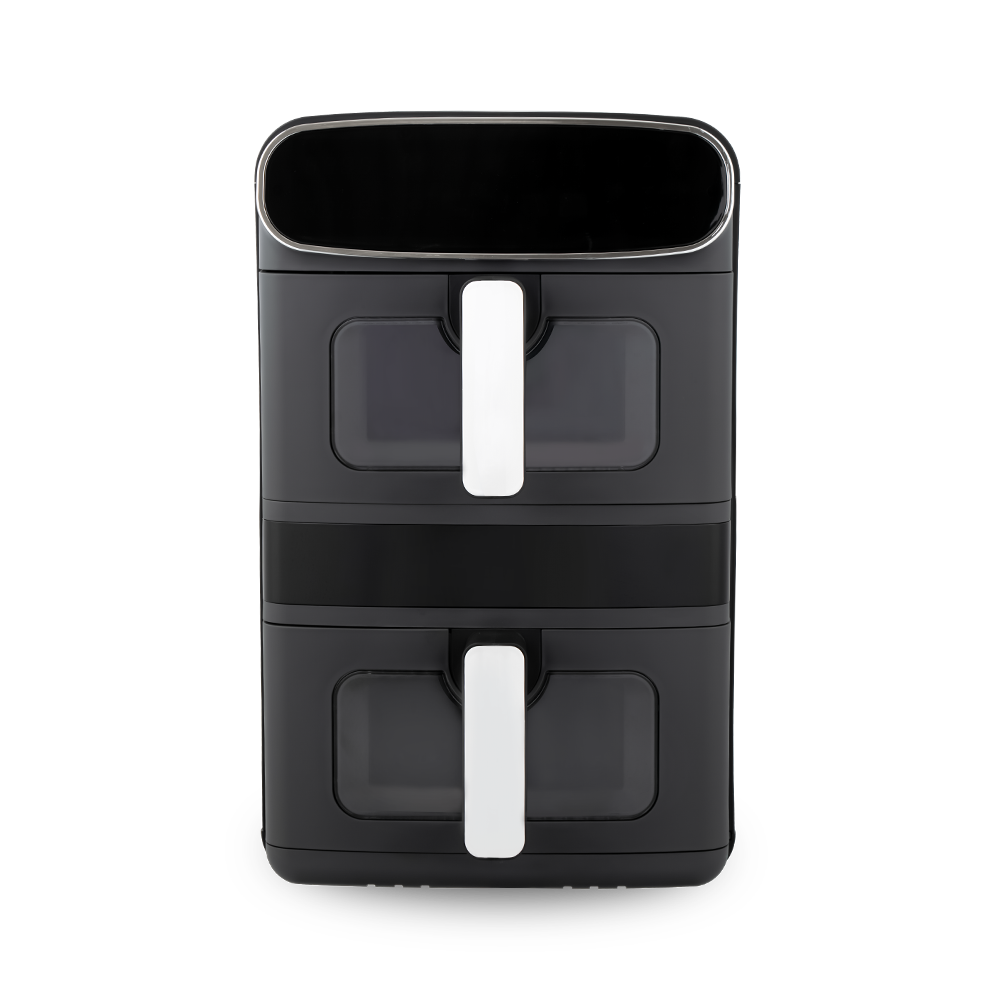
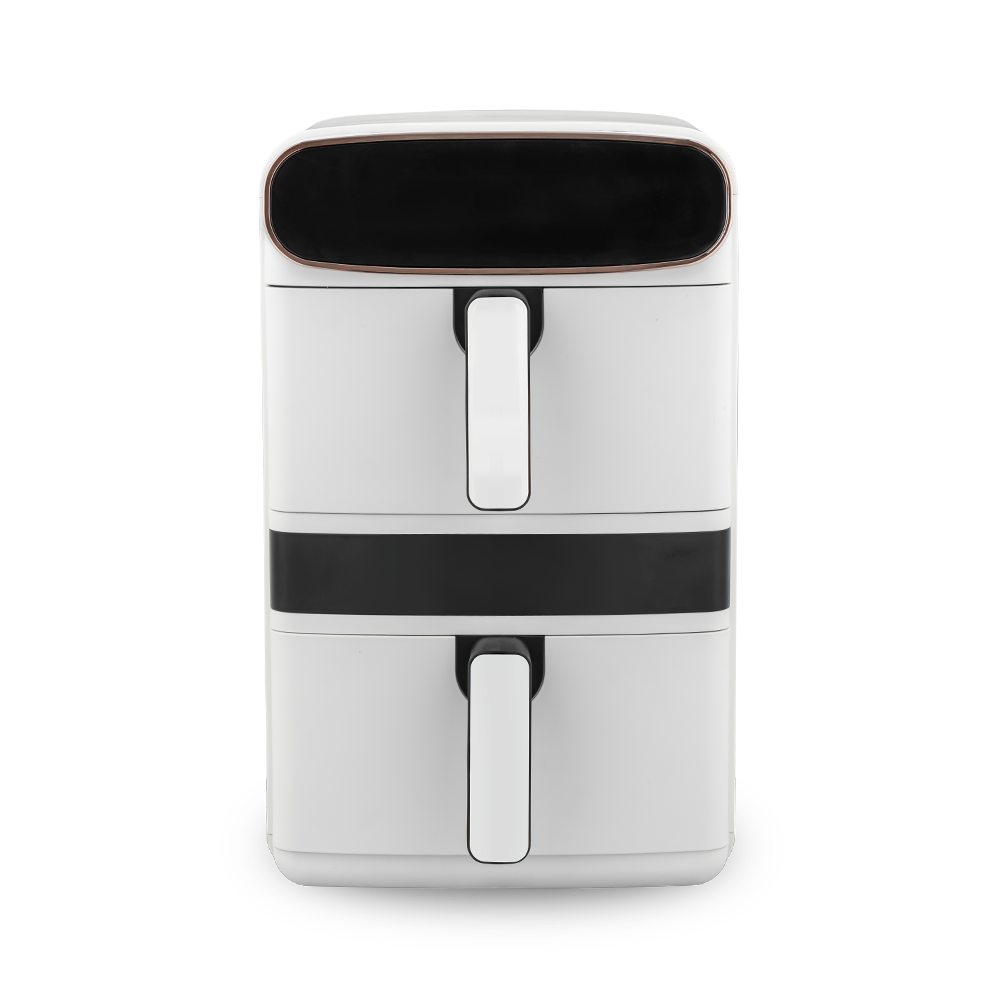
| Dual-basket | Busy families cooking two dishes | Different foods at the same time |
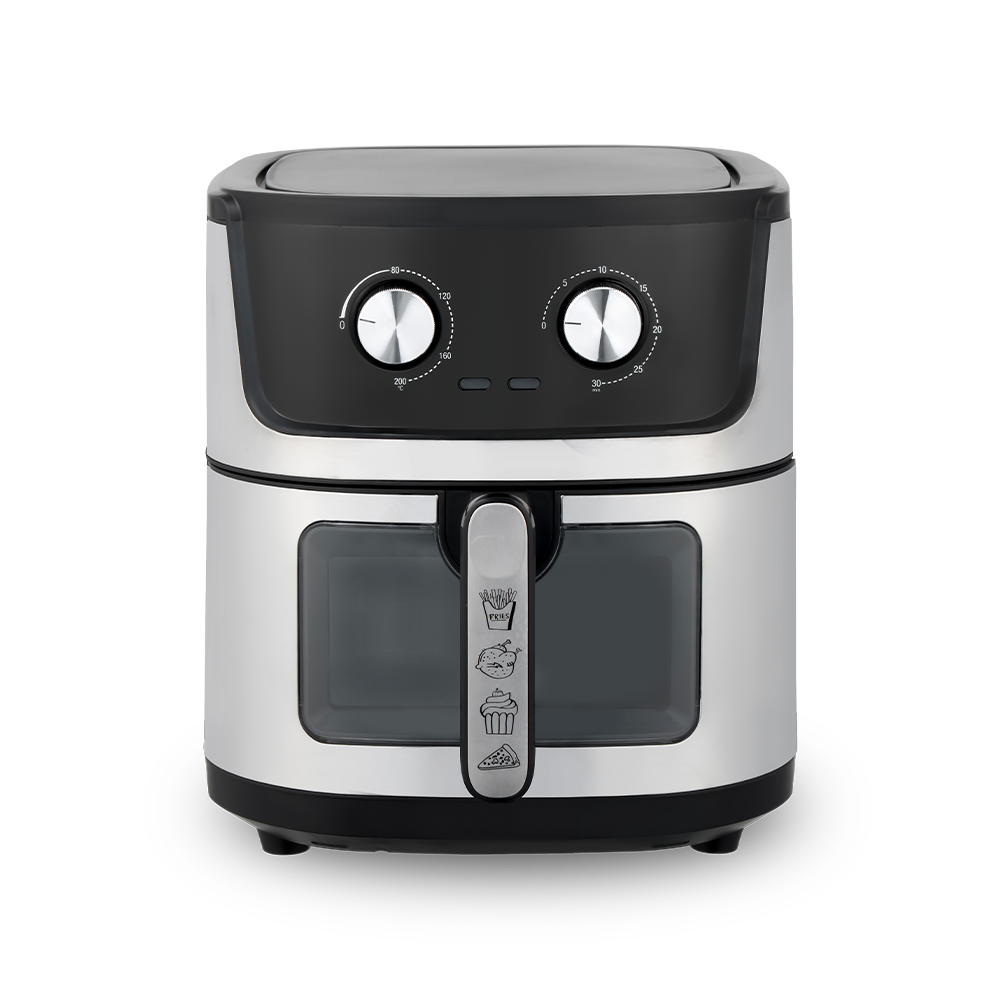
If you regularly host dinners or meal prep, a large-capacity air fryer with a rotary control and visible window is a good option. The simpler the control, the less there is to go wrong in high-use kitchens. A product such as the 85-series rotary-control visible large-capacity air fryer is designed for that kind of routine: a big basket with a straightforward dial and a window to monitor progress.
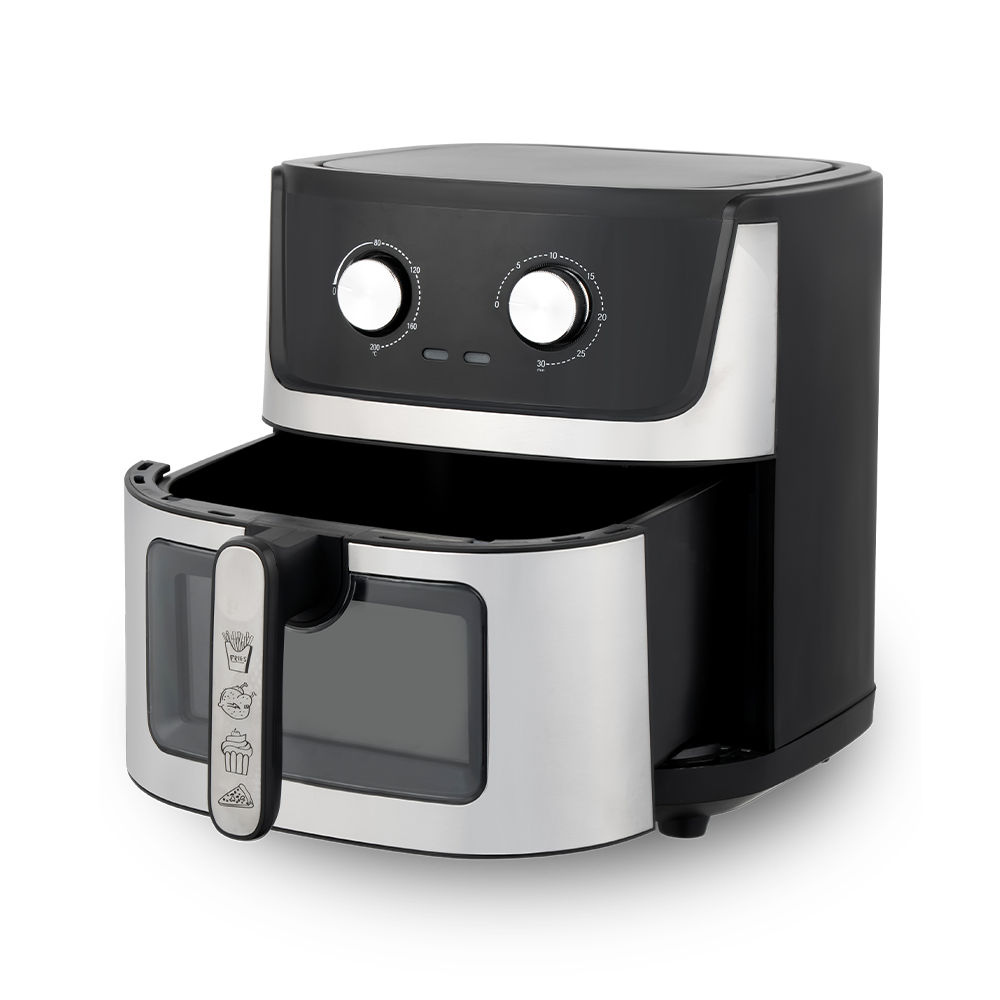 Rotary Control Large-Capacity Air Fryer with Viewing WindowThis 9L air fryer pairs a simple dual-knob control with a large viewing window, making it easy to monitor browning without opening the basket. Ideal for frequent cooking, its straightforward mechanical design suits high-use kitchens.View Product →
Visible Cooking: Why Glass Windows Change the Experience
Another area where buyers often underestimate value is visibility. With a closed basket, you have to pull the drawer out, shake it, and sometimes open it several times during a recipe. Every time you do that, heat escapes and the cooking time stretches. A visible design lets you watch the food as it browns, which is especially helpful for first-time users who are not sure when a vegetable is “crispy enough.”
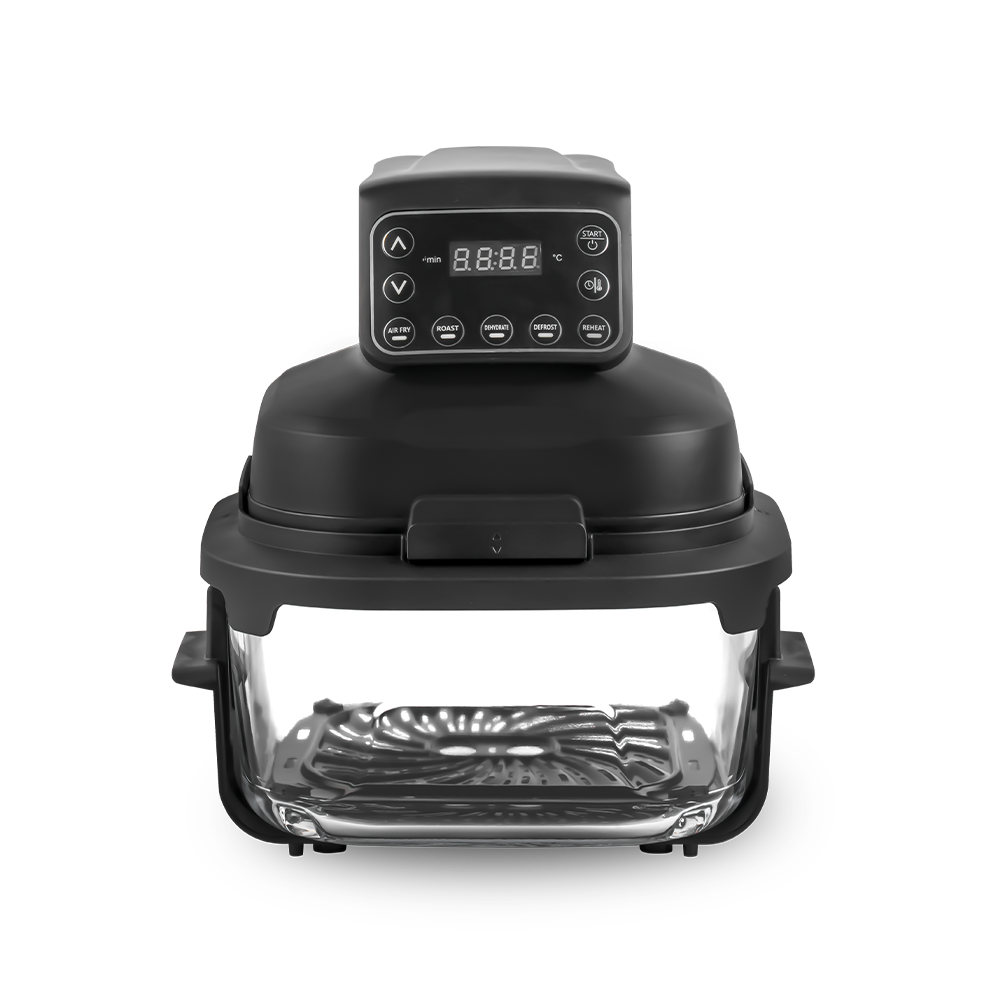
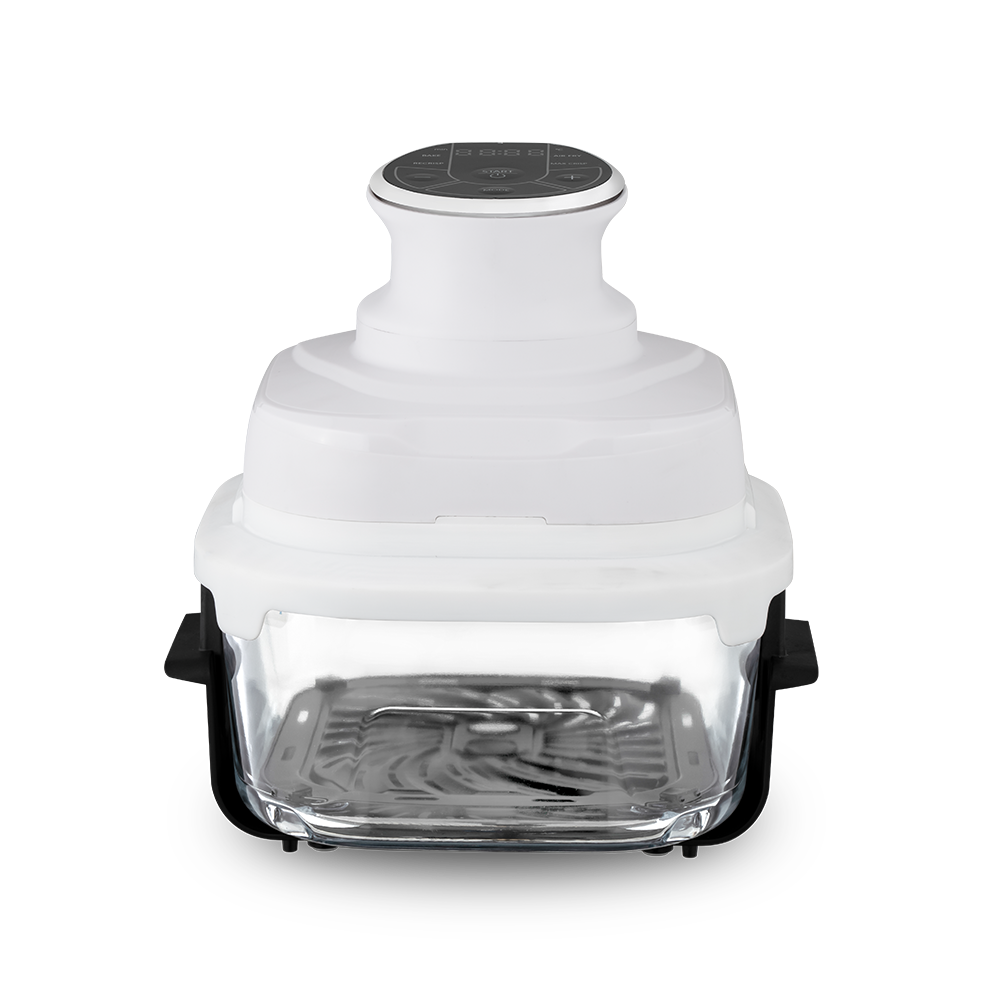
There are two common routes: glass air fryers that provide a 360-degree view, and enclosed baskets with a front window. Glass models make it easy to see the sides of food and are less intrusive during long cooking. Models with a viewing window still protect more heat and are closer to conventional basket designs.
From a production standpoint, visibility also affects material quality. The glass must resist thermal stress, the seals need to be stable, and the window has to stay clear without discoloring after repeated heating. If you choose a glass model, check that the glass is removable or at least easy to wipe clean.
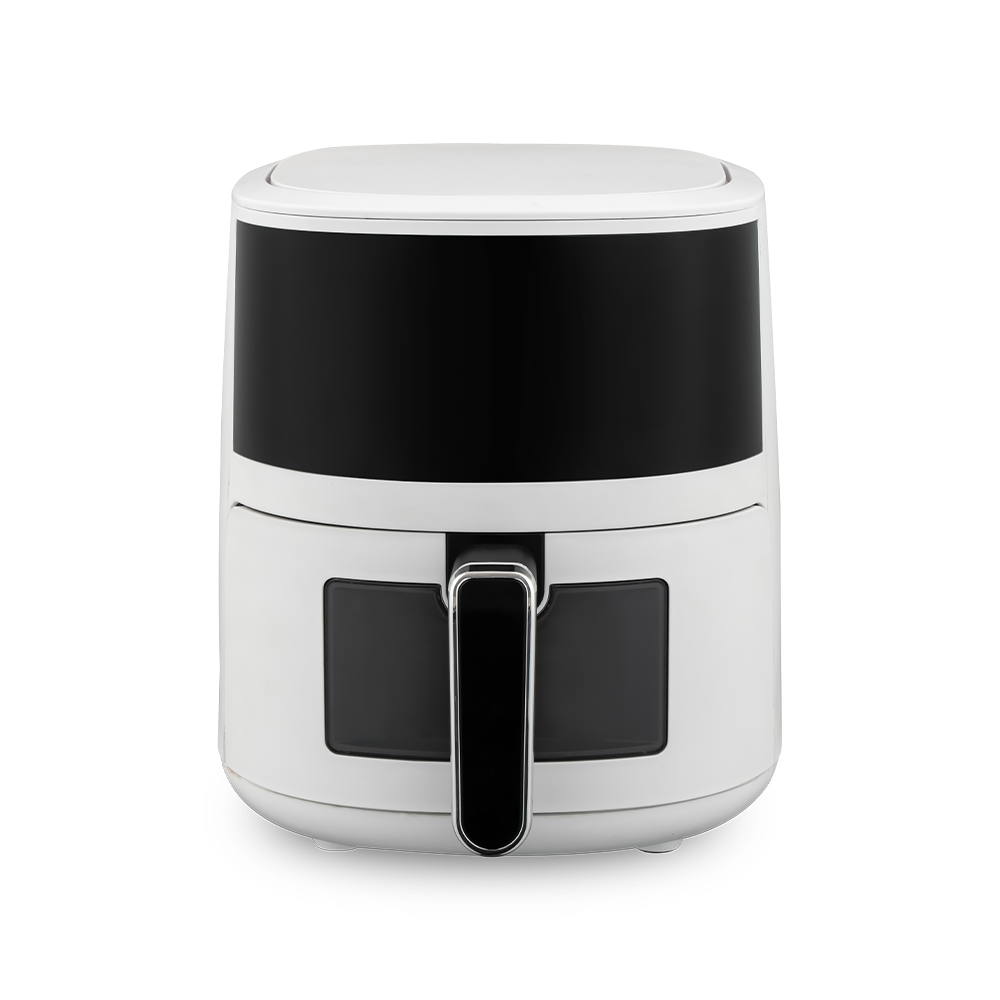
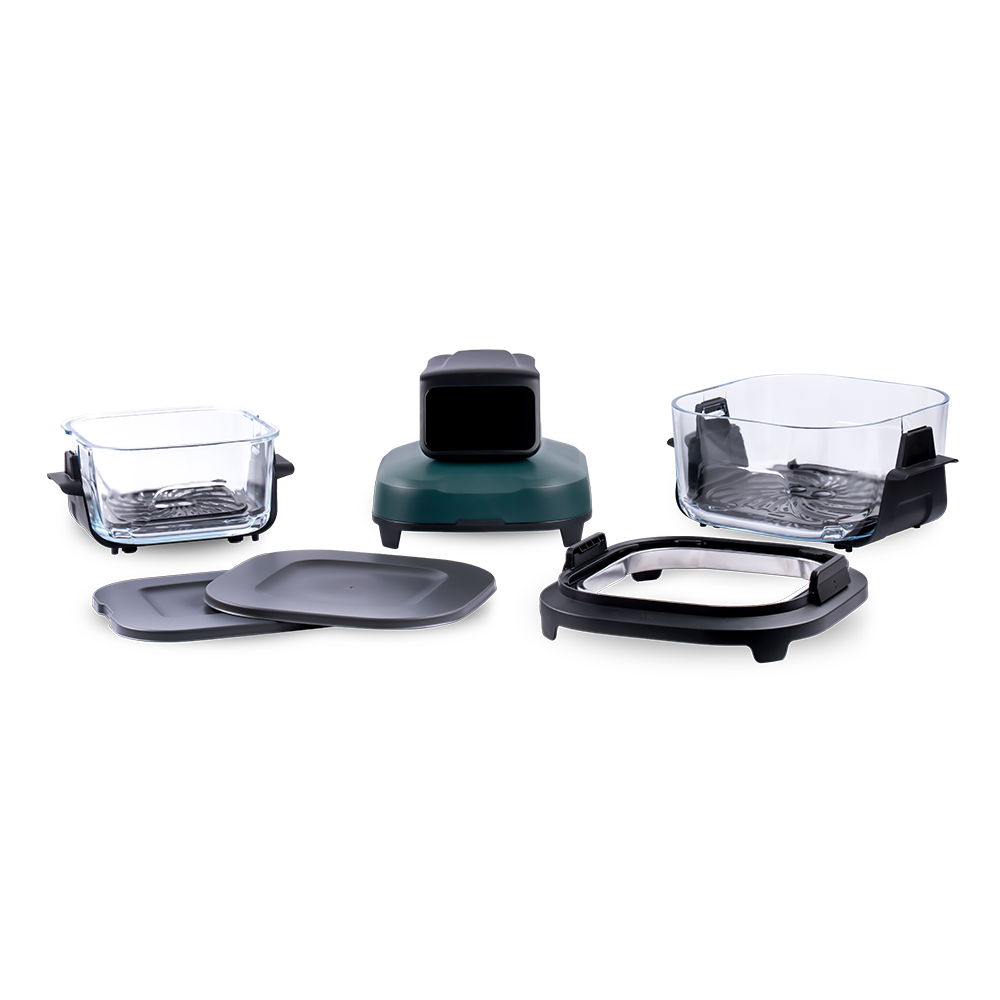 360° High-Definition Visible Air Fryer with Dual-Pot OptionFeaturing a large clear window and eight cooking modes, this model offers 3L or 5.5L container choices for flexible batch cooking. Its fingerprint-resistant coating and safety auto-off add convenience and peace of mind.View Product →
Controls That Fit How You Actually Cook
The interface is often the first thing you notice, but it matters more than you think. A mechanical dial is intuitive and robust; it is hard to beat when you are frying chips at 8 p.m. and you just want to set the timer. Digital controls give you exact temperatures, and smart touchscreens add presets for common foods. The best choice depends on who will be using the appliance and how many features you really need.
| Control type | What it does well | Potential drawback |
|---|---|---|
| Mechanical rotary dial | Simple, durable, easy to operate | Coarser temperature and timer settings |
| Digital buttons | Exact temperature and time, easy to clean | Menus can feel less intuitive |
| Touchscreen / smart | Presets, modern interface, quick setting | More sensitive to wet fingers and accidental taps |
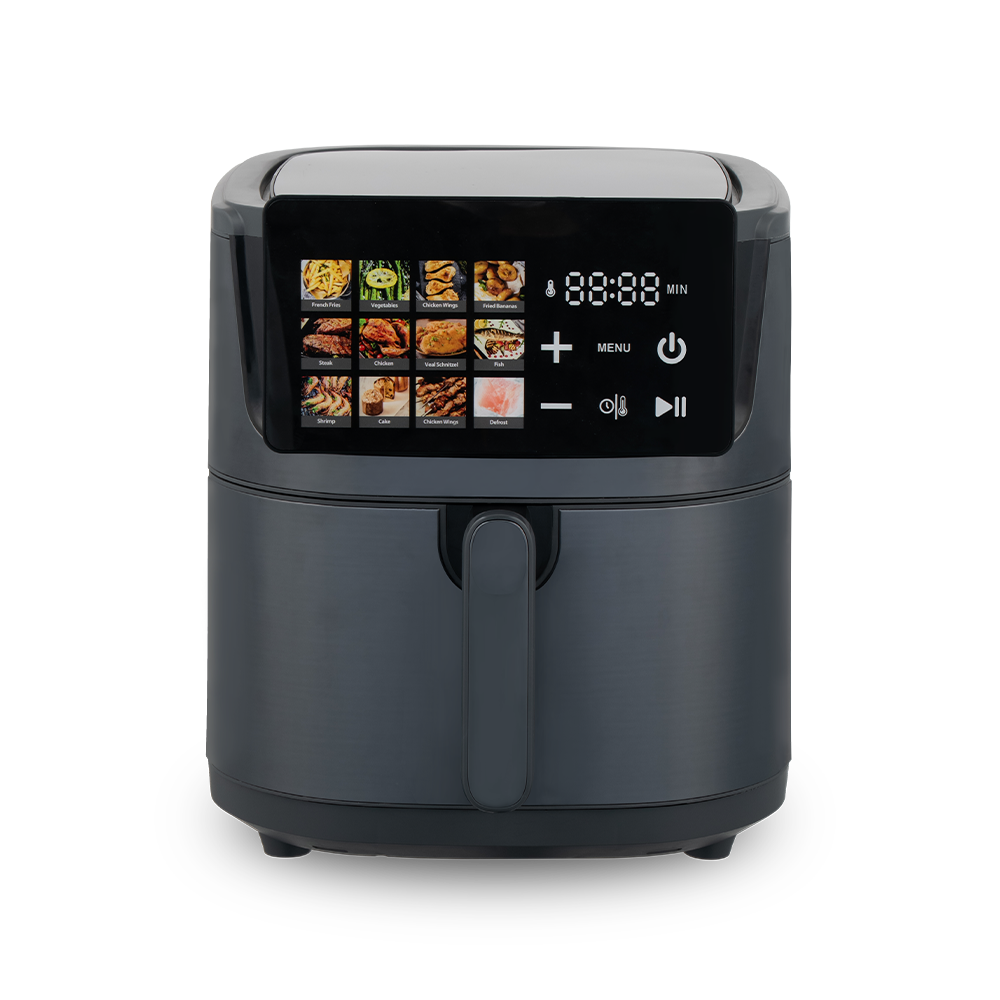
For a family kitchen, a smart touch control with a visible window is a nice middle ground: you get presets that make the first few months easier, while the window keeps you aware of what is happening. For a spare kitchen or a smaller household, a simple mechanical model is less expensive and often more durable.
When evaluating a touchscreen model, press the buttons yourself. A good panel responds immediately and gives clear feedback. In our production lines, we check keypad durability and display readability because those small parts determine how the appliance feels after six months of use.
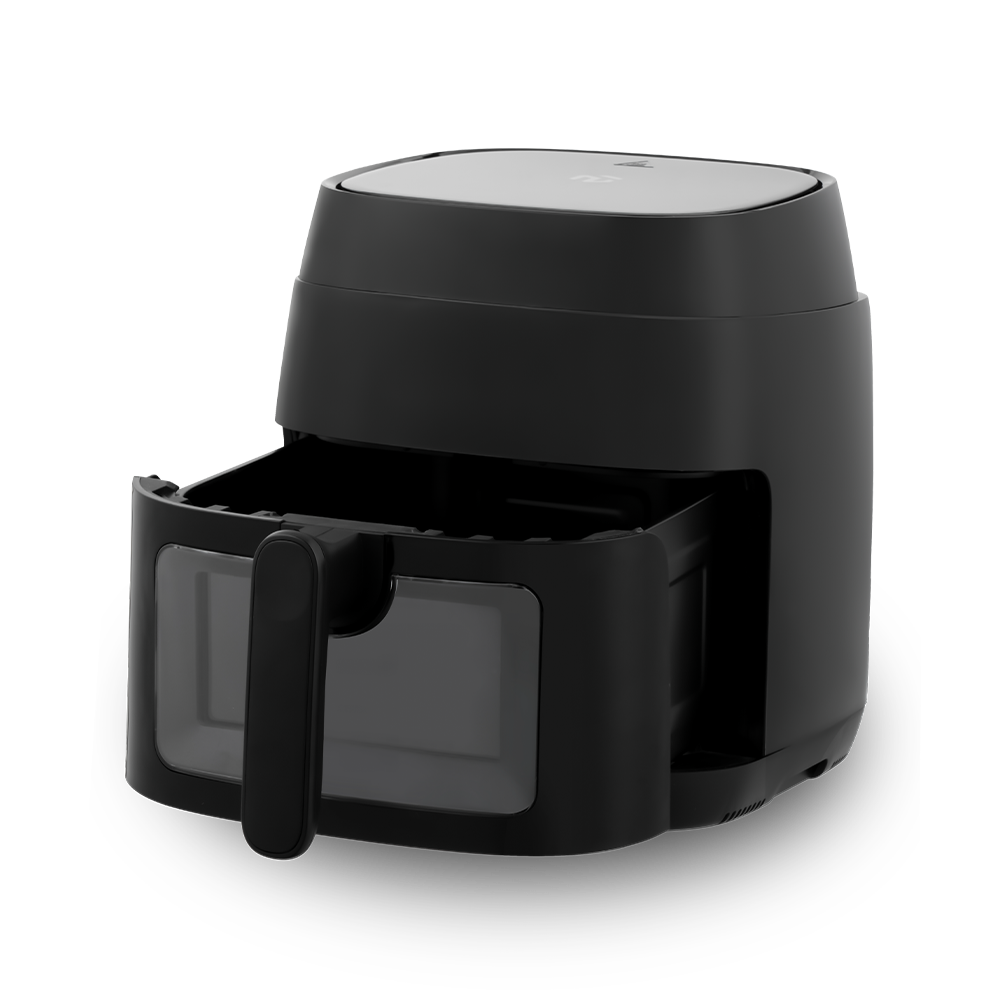 Visible Intelligent Touch Control Air Fryer with 7L CapacityThis digital touch-panel air fryer provides precise 80–200°C temperature control and a transparent window for monitoring. With 1800W heating and an optional dual-heating design, it quickly cooks evenly while maintaining a compact footprint.View Product →
Materials, Safety, and Long-Term Durability
Air fryers work at temperatures between 150-200°C, so material quality is directly linked to safety and lifespan. The basket and inner chamber should be made of food-safe materials, and the non-stick coating should be clearly described. If a product page avoids mentioning the coating or the inner material, that is a warning sign.
Look for certifications that match your local market: CE for Europe, FCC/UL/ETL for North America, and national standards where you are buying. Certifications are not decorative badges; they mean the device has been tested for electrical safety, overheating, and basic performance. As a manufacturer, we follow this path through documented quality management systems — the same approach behind our ISO 9001:2025 certification news.
Also examine the physical construction. Are the handles securely attached? Is the vent placed away from where your hand would grab? Does the air fryer have rubber feet that keep it stable on slippery counters? These minor details often distinguish a well-built appliance from one that rattles after a few uses.
Practical Details That Make Daily Use Easier
Once the main specifications are in place, the remaining differences are in daily convenience. Here is a quick mental checklist before you check out:
- Dishwasher-safe parts: A removable basket and drip tray save a lot of effort. Non-stick surfaces are easier to wipe, but they still need gentle handling.
- Noise level: Air fryers make between 50 and 65 dB during operation. If you cook in an open-plan kitchen or while watching TV, this matters more than you expect.
- Footprint and storage: Some air fryers are tall and narrow, others wide and low. Measure the space where you plan to store it, including the handle and vent clearance.
- Preheat and power: A higher wattage around 1500-1800 W preheats faster but may require a dedicated circuit in older kitchens. Don't assume the biggest wattage is automatically more efficient.
- Accessories: Many models come with a rack, skewers, or a baking pan. They expand the air fryer from a snacks machine into a mini oven.
If you are choosing from a manufacturer's lineup, ask for the exact basket volume, the coating material, and the list of available accessories. These are not marketing details; they are the basis for long-term satisfaction.
Retail Choice vs. Manufacturing Partnership: Where Magichef Comes In
The decision becomes more complex when you are not only buying an air fryer for your own kitchen but also selecting a supplier for a brand, store, or private label. In that case, the product itself is just one part of the picture. You need a manufacturing partner who can offer consistent quality, custom colors, control layouts, packaging, and documentation.
This is what Magichef does. We are an air fryer manufacturer based in Ningbo, one of China's major appliance production centers. Our catalog covers mini, medium, large, glass, and dual-basket air fryers, and we build them for customers around the world. If you want to evaluate a manufacturer, ask for the factory's certifications, sample control process, and the real specifications behind the model numbers.
Whether you are a consumer searching for a reliable kitchen air fryer or a procurement professional looking for a production partner, the same principle holds: understand the cooking tasks you need to cover and the quality controls behind the product. Take your time, compare detailed specs, and then test the model with your own recipes.
If you are ready to explore your options, you can discuss your requirements with us.
The best kitchen air fryer is the one that disappears into your cooking routine. Size the basket to your family, choose a visibility level that reduces guesswork, pick controls you can live with, and verify materials and safety certifications. Once those basics are right, an air fryer becomes more than a countertop novelty; it becomes a dependable tool for faster, crisper meals.