

 English
 русский
Content
- 1 Match Capacity to the Household Before Comparing Anything Else
- 2 Mechanical Knobs or Digital Touch: Choose for the Cook, Not the Brochure
- 3 A Viewing Window Changes How You Actually Cook
- 4 Dual Baskets Solve a Timing Problem, at the Cost of Counter Space
- 5 Materials and Paperwork Worth Checking Beyond the Coating
- 6 If You Are Sourcing Household Air Fryers, Audit the Factory Behind the Spec Sheet
Two chicken thighs and a serving of fries will not fit into the same 3.5-liter basket at the same time, and most families discover this only after the box is already open. A household air fryer bought one size too small is the most common regret we hear about, both from home cooks and from retail partners who end up handling the returns. The fix is to decide four things in order before comparing prices: capacity first, then control type, then visibility, then basket layout. Get those right and the appliance will match how a kitchen actually runs, while every remaining feature becomes a preference rather than a compromise.
Match Capacity to the Household Before Comparing Anything Else
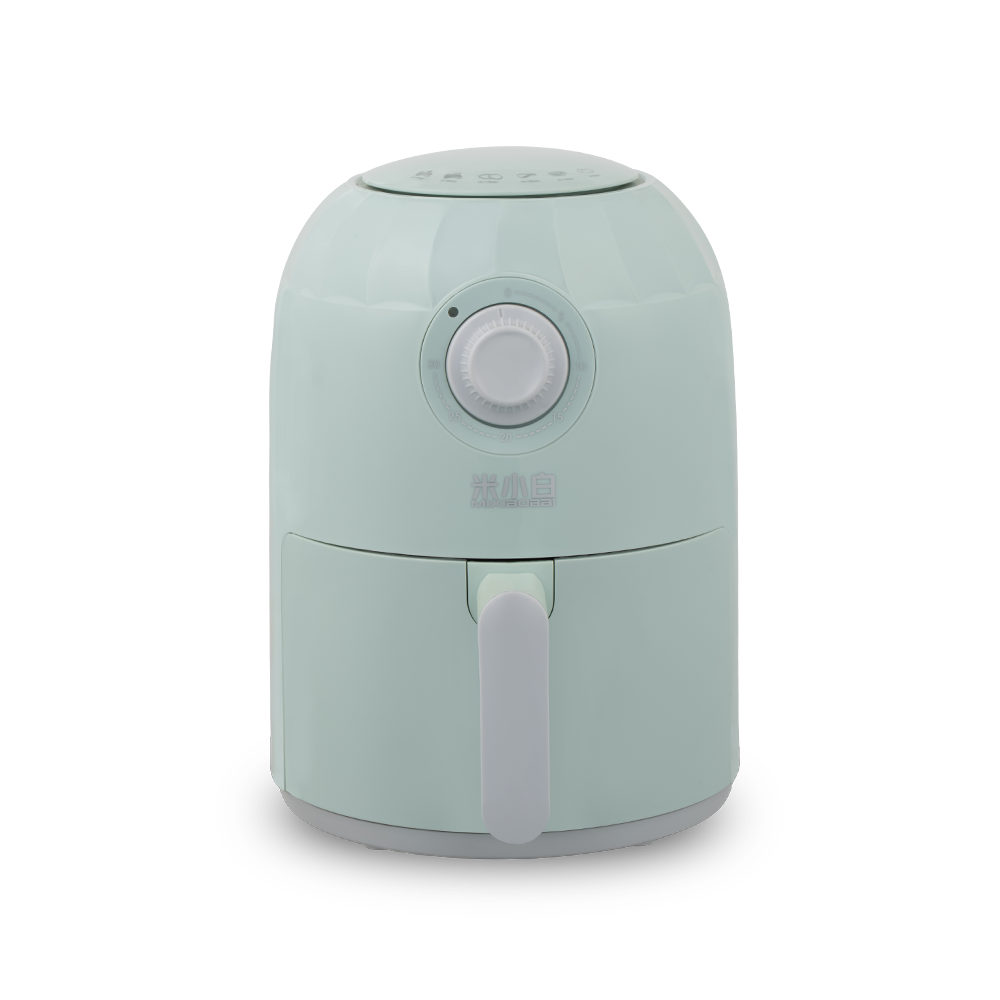
The starting point is a simple mapping between headcount and basket volume. One or two people are well served by 2-4 liters, the territory of mini and small models. A household of three or four lands in the 5-7 liter range, where medium series such as the 65 and 70 series can handle a main dish and a side without batching. Five or more people, or anyone who batch-cooks for the week, should look at 8 liters and above or consider a dual-basket layout.
Rated capacity overstates what you can actually cook. Basket walls, the max-fill line, and the airflow space food needs mean that roughly 20-30% of the rated volume goes unused in practice. Crispness also depends on geometry: fries and breaded items want a single layer, while drumsticks and roasted vegetables tolerate stacking. When a household sits between sizes, step up rather than down.
Typical rated basket capacity by air fryer class (liters)
| Household | Recommended capacity | Realistic single load |
|---|---|---|
| 1-2 people | 2-4 L (mini or small) | Two chicken thighs plus 200 g of fries, cooked in two passes |
| 3-4 people | 5-7 L (medium, 65/70 series) | Six drumsticks, or a full single layer of fries in one pass |
| 5+ people or batch cooking | 8 L and up, or dual basket | A whole cut-up chicken, or two dishes finishing together |
Because capacity labels can be deceptive across categories, it helps to see how basket sizes really compare between product classes before committing to a series. For most families of three or four, a medium 6.5-liter class basket is the practical center of gravity.
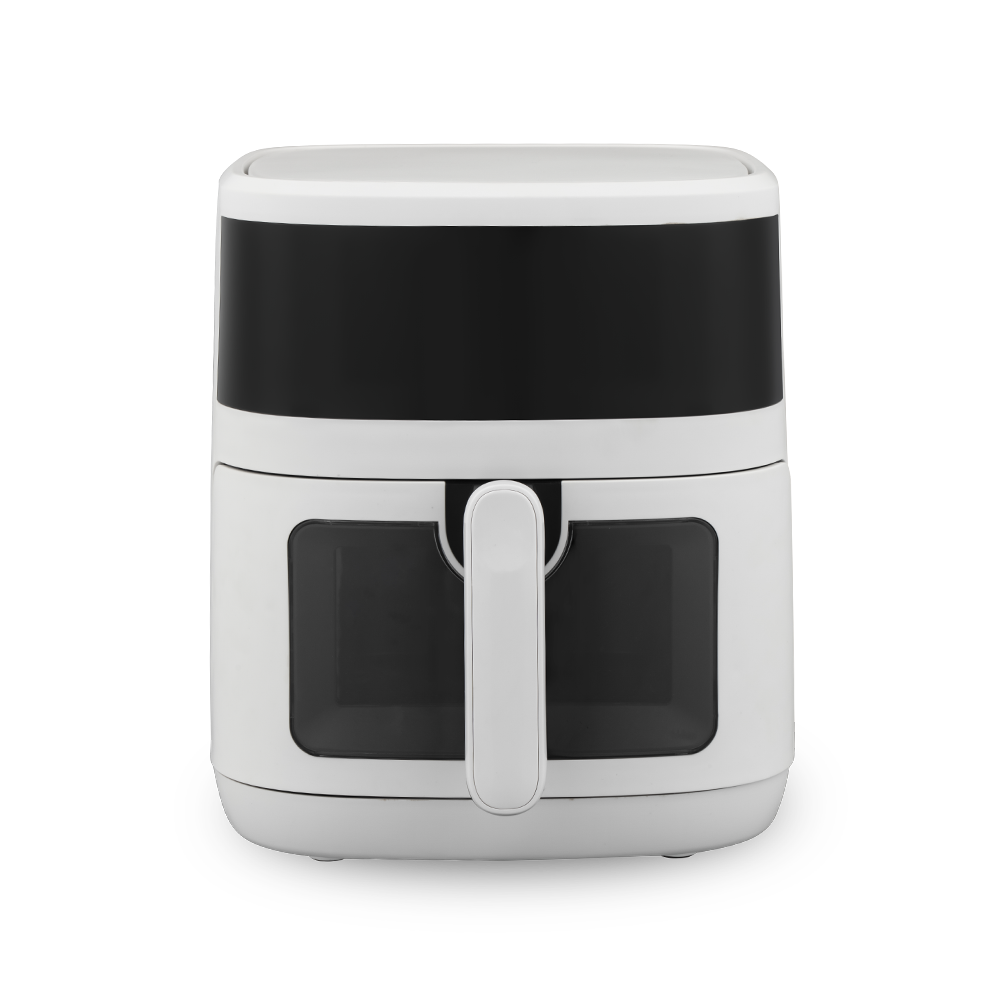 65 Series Medium 6.5L Air FryerA 6.5-liter medium basket air fryer offering generous capacity in a compact footprint. It fits the practical center of gravity for families of three or four discussed here, pairing simple controls with real everyday cooking space.View Product →
Mechanical Knobs or Digital Touch: Choose for the Cook, Not the Brochure
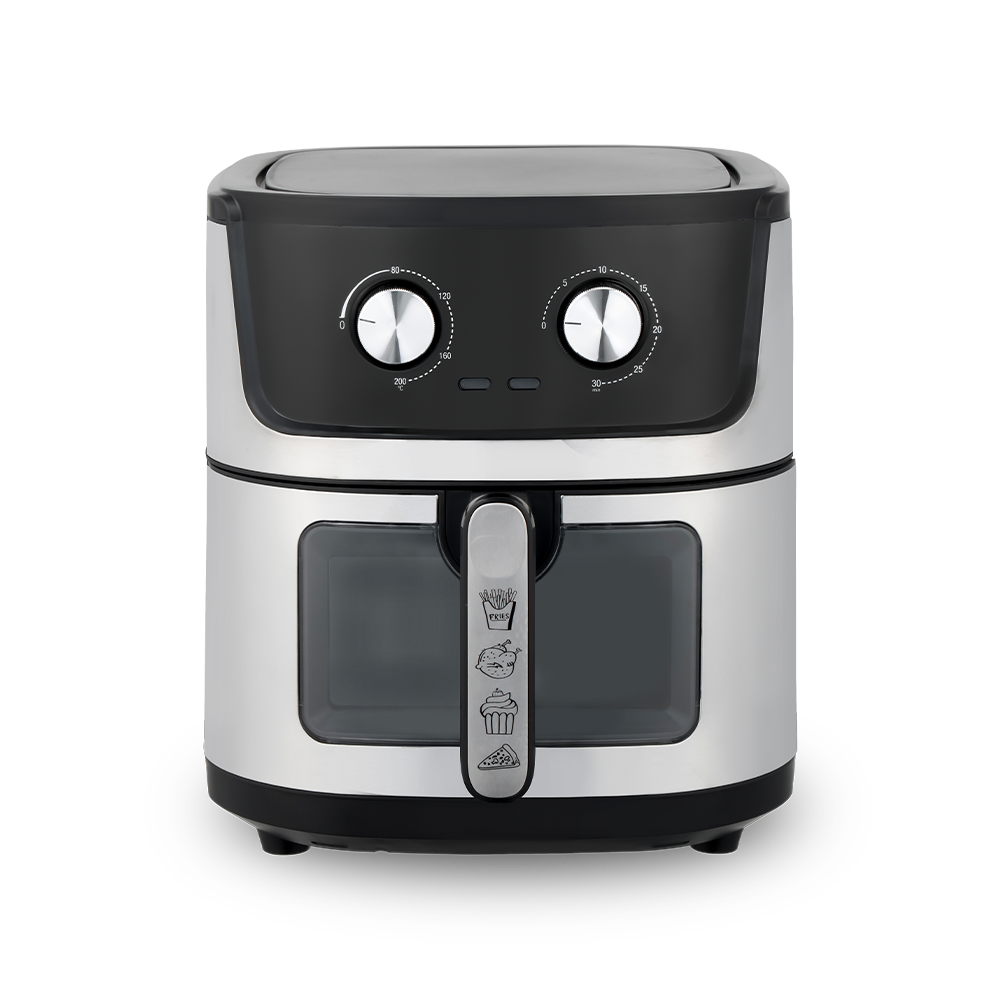
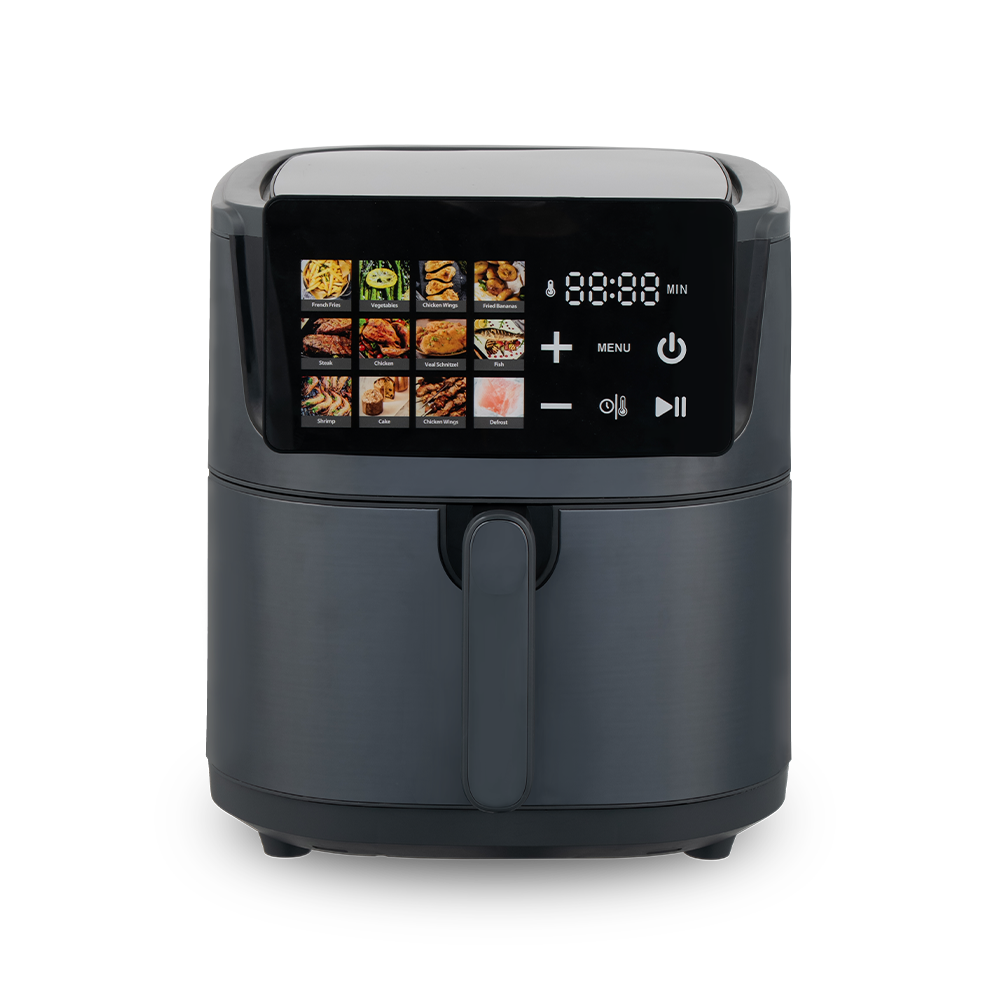
Dual-knob mechanical controls still earn their place in household kitchens. There is no menu to learn, a twist sets time and temperature, and the layout keeps electronics away from rising steam and grease. Digital touch panels answer with precision: exact setpoints, preset programs, and repeatable results for anyone who cooks from recipes. Simplified push-button designs sit between the two and suit first-time users who prefer one honest button over a screen.
| Control layout | Where it wins | Where it falls short | Best suited to |
|---|---|---|---|
| Dual-knob mechanical | Fewer failure points, intuitive operation, quick wipe-down | Coarser steps in time and temperature, no presets | Shared kitchens, older family members, rental units |
| Digital touch | Exact setpoints, presets, accurate timers, repeatable recipes | More electronics exposed to heat and grease over the years | Frequent cooks who follow recipes |
| Simplified push-button | Minimal learning curve, low cost | Fewer adjustments possible mid-cook | First-time users and compact kitchens |
Whichever layout you prefer, judge it by feel: knobs should turn with clear detents and buttons should click without mush, because these are the parts a household touches every day. In procurement terms, control components are also where long-term warranty costs concentrate, so switch and panel quality deserves the same attention as the motor.
A Viewing Window Changes How You Actually Cook
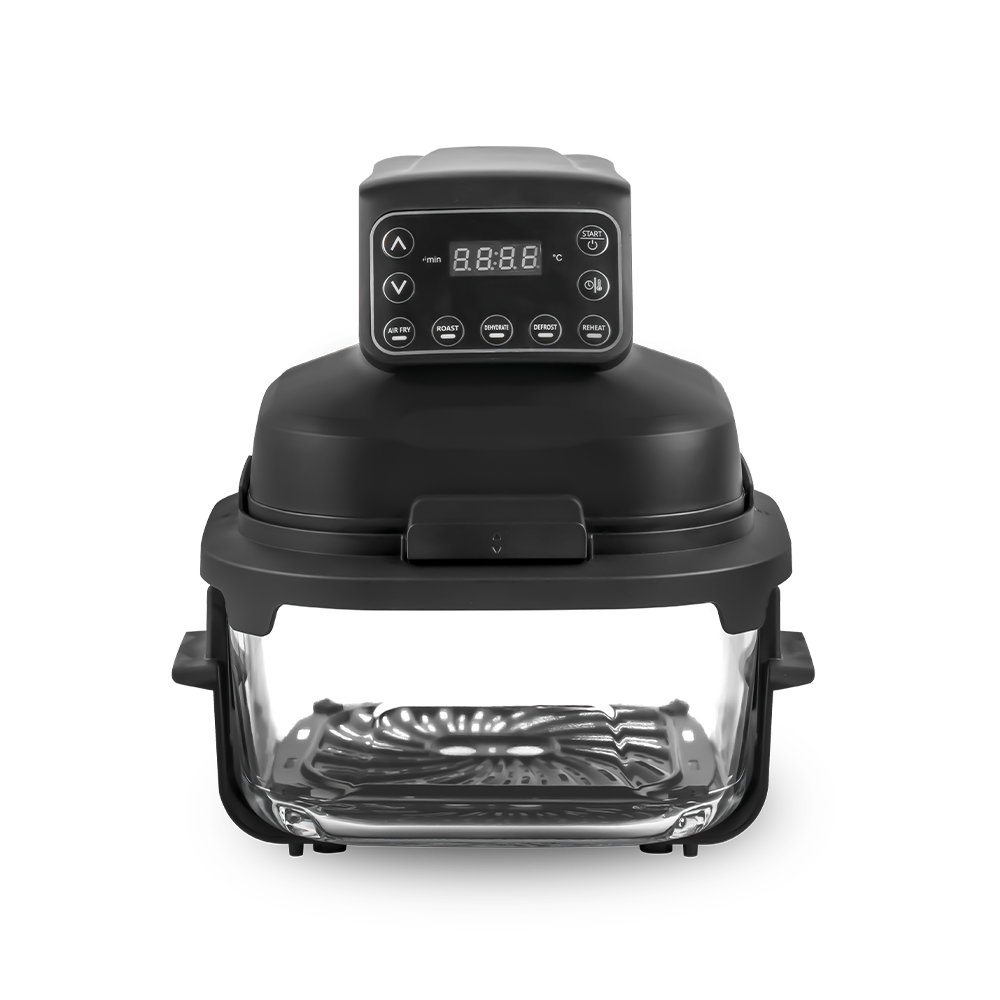
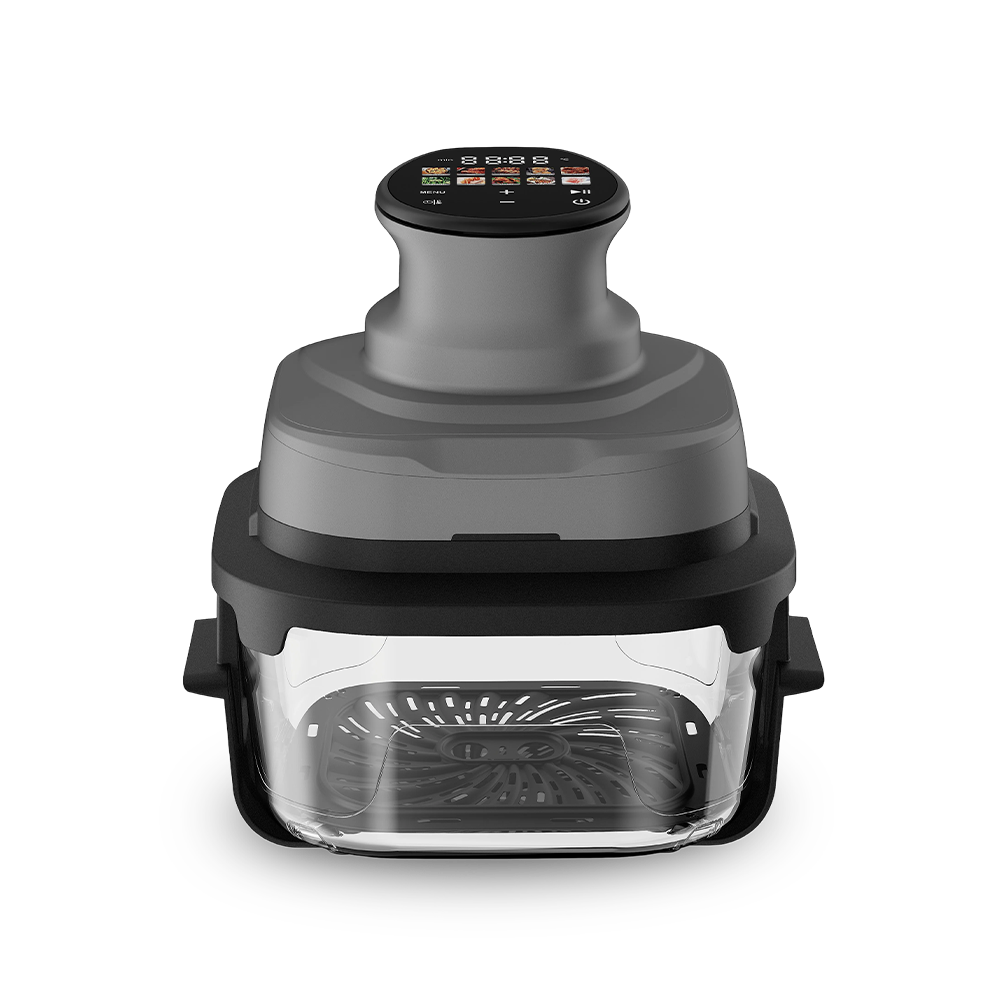
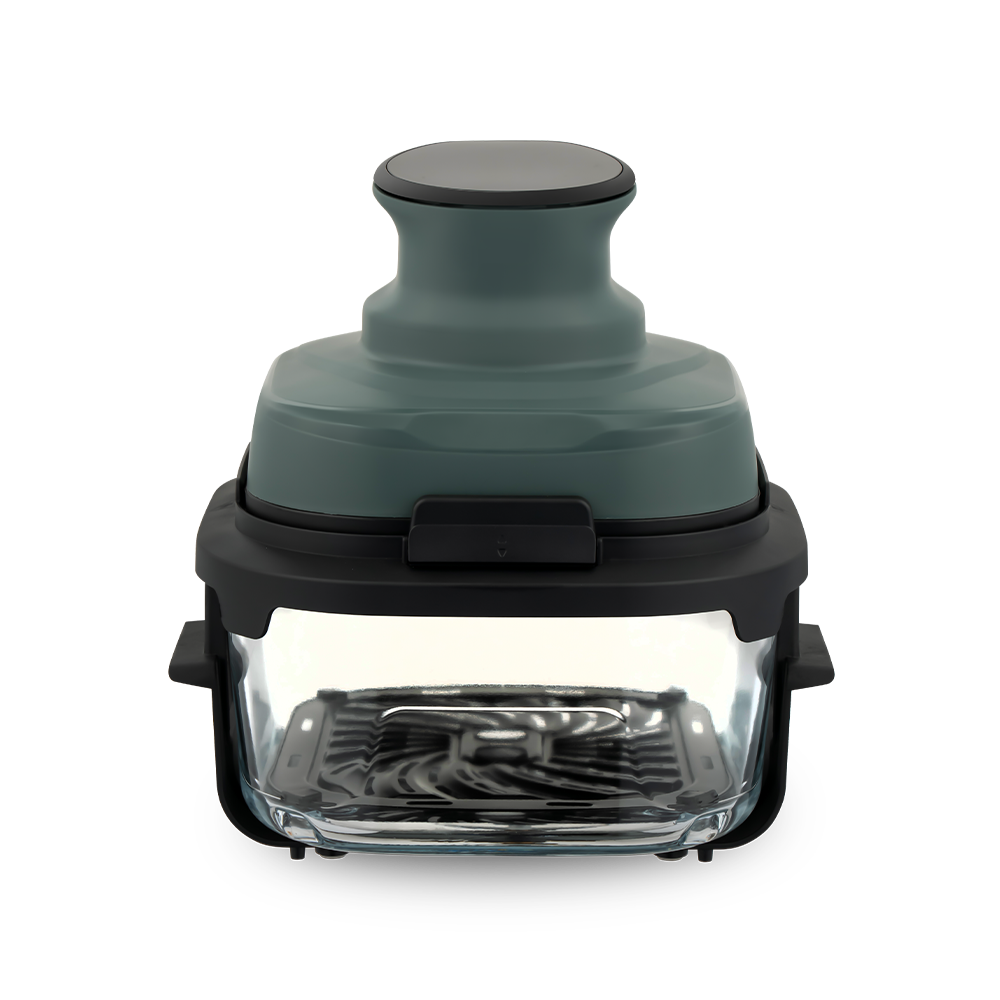
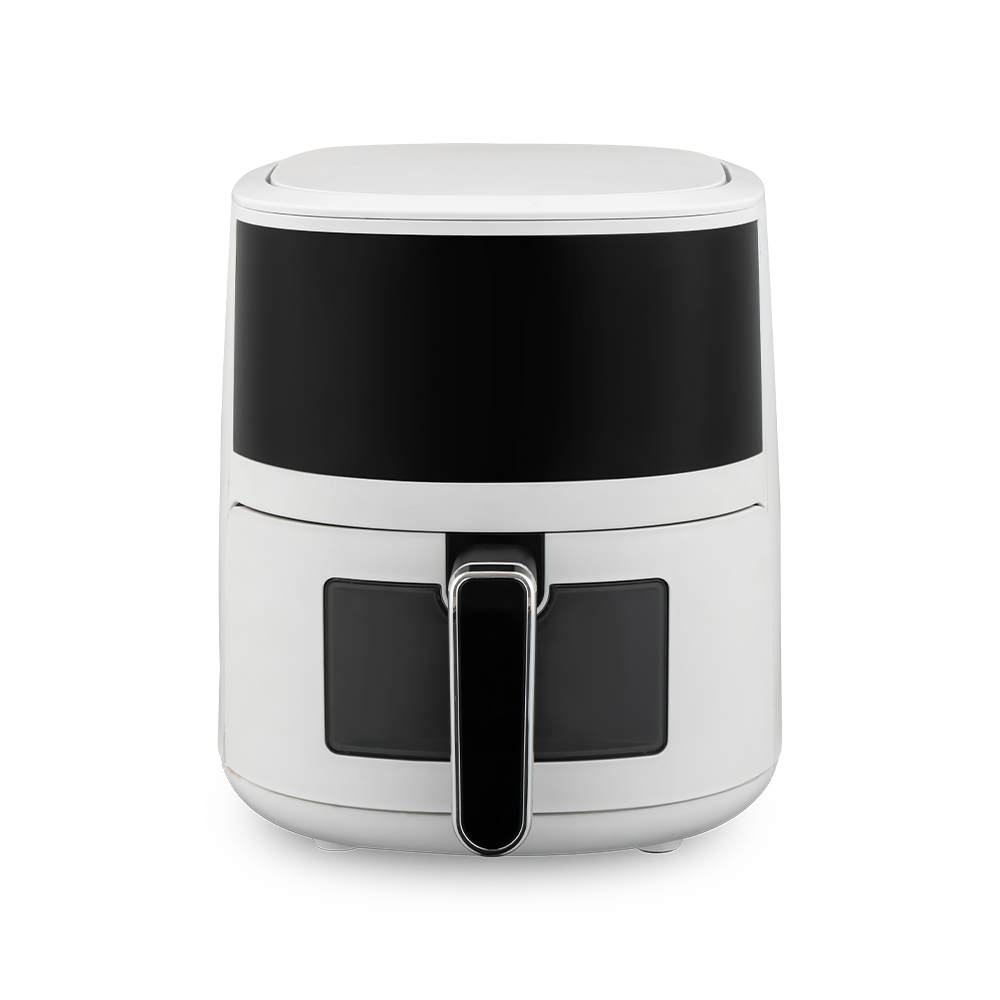
Every lift of the basket releases heat, and a mid-cook peek can add minutes to the timer. That is the quiet argument for visibility: a viewing window lets you judge browning without pausing the fan and heater. Glass models take the idea further. A borosilicate bowl gives a clear view from almost any angle, carries no nonstick coating, and rinses clean without holding onto the odors that coated metal can trap over months of use.
The trade-offs are weight and packaging. Glass adds heft, demands careful storage space, and needs stronger drop protection in transit. If you are evaluating glass or window models for a household that moves the appliance in and out of a cabinet, ask for thermal-shock and drop-test data instead of accepting the word tempered on its own. A multifunctional glass model with a built-in viewing window shows how the two approaches combine: glass visibility with simple button operation.
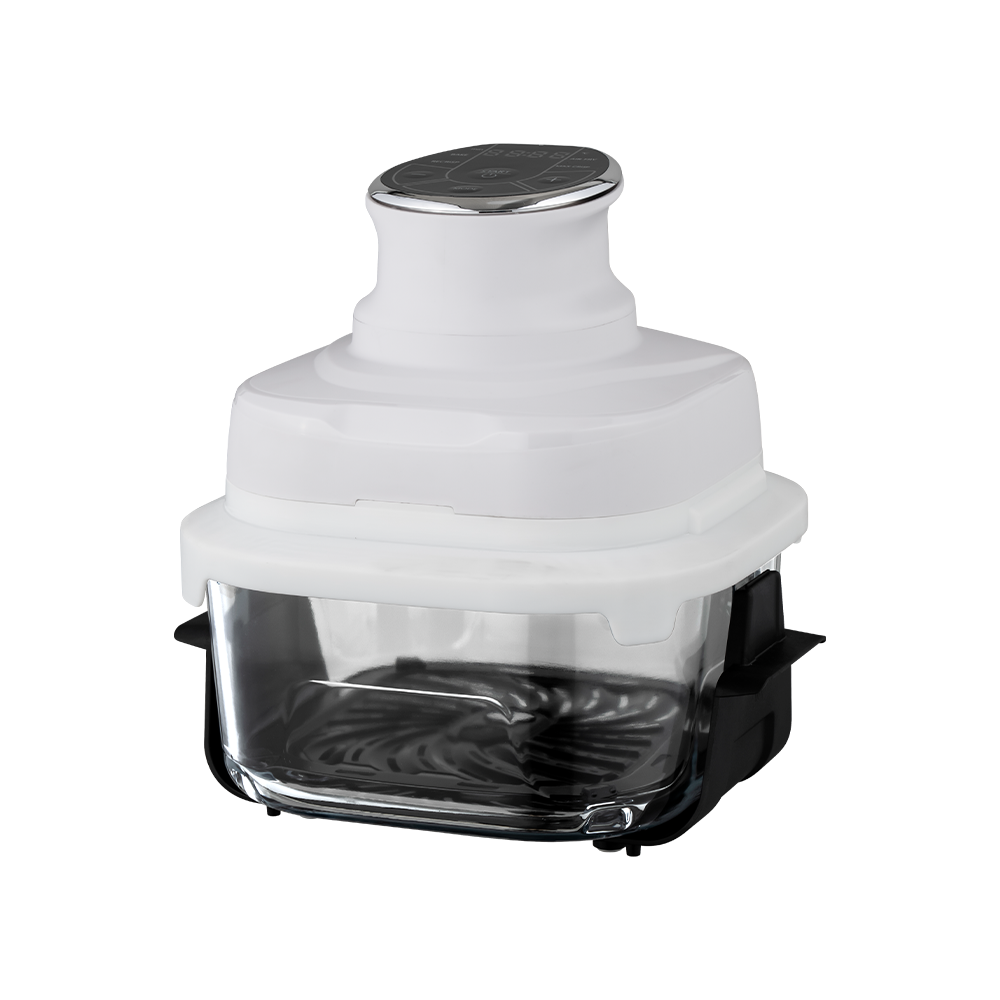 Multifunctional Push-Button Air Fryer with Glass Viewing WindowThis glass-bowl air fryer combines mechanical push-button operation with a transparent container, letting cooks check food without opening it. It suits households wanting visibility and simple controls while weighing glass models' weight and handling.View Product →
Dual Baskets Solve a Timing Problem, at the Cost of Counter Space
The honest case for a dual air fryer is synchronization: salmon at 180°C on one side, fries at 200°C on the other, both finishing at the same minute. That solves the exact problem that pushes larger families back to the oven on busy evenings. The costs are a wider footprint, a higher price, and two baskets to wash. Side-by-side models need the most counter width, while stacked designs trade height for a slimmer profile and suit crowded counters.
Stacked units that run on DC motors hold a further advantage: compared with traditional AC motors, direct-current designs are typically quieter, more energy-efficient, and steadier at low fan speeds, which matters in open-plan kitchens. If dinner regularly means two dishes for four or more people, the layout pays for itself quickly; for one or two cooks, a single medium basket remains the calmer choice.
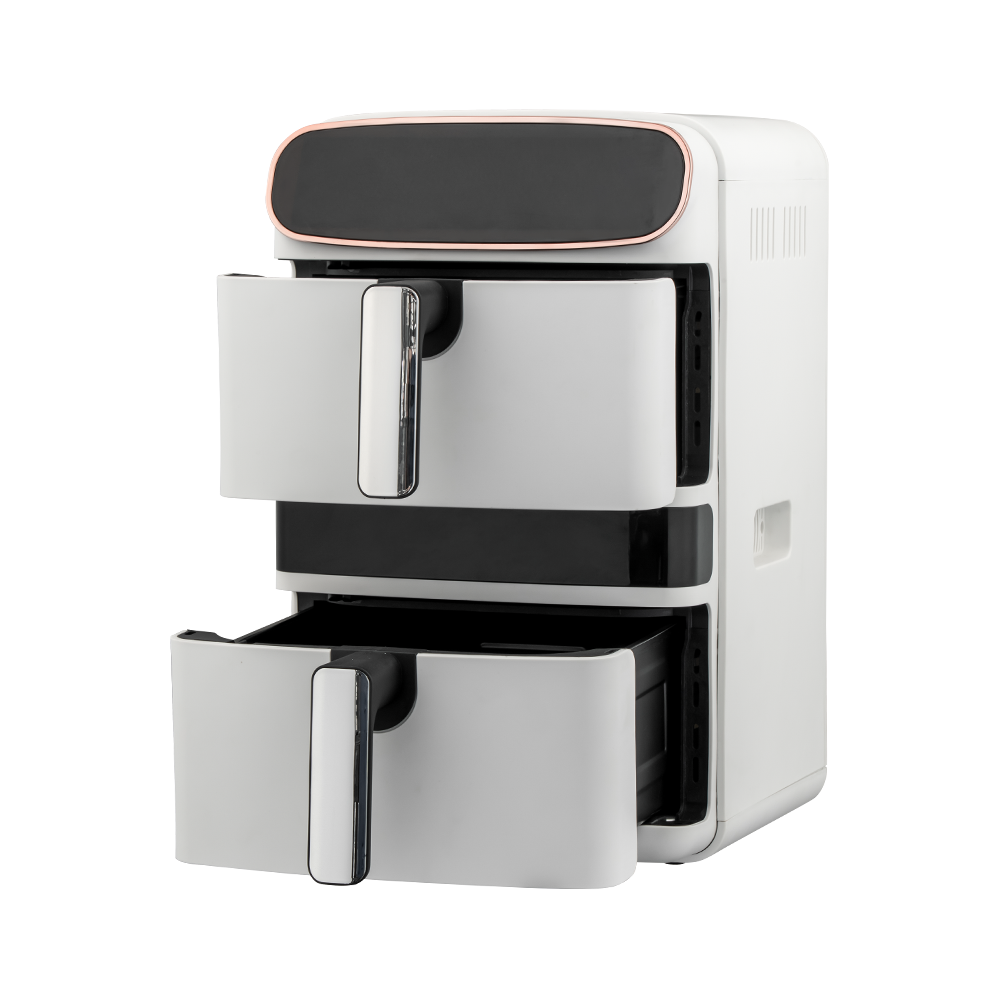 12L Double-Stack Air Fryer with BLDC MotorA stacked dual-compartment air fryer running on a quieter, more efficient DC motor, with 80-200°C control and preset menus. Ideal for cooking two dishes simultaneously for larger families in open-plan kitchens.View Product →
Materials and Paperwork Worth Checking Beyond the Coating
Nonstick interiors remain standard, but buyers increasingly ask what the coating contains, and PFAS-free options keep spreading across the market. Stainless or glass cavities remove the coating question entirely. No common interior choice makes food unsafe by itself; the practical issues are scratch resistance, what happens when a coating eventually wears, and how easily baked-on grease rinses away after a week of nightly use.
Whatever the interior, verify the documents rather than the marketing language: a food-contact material declaration for the basket, thermal-resistance data for any glass parts, and full-appliance certificates for the destination market. Households rarely see this paperwork, but importers and retailers can and should request it before any order is placed.
If You Are Sourcing Household Air Fryers, Audit the Factory Behind the Spec Sheet
For importers and brand owners, a household air fryer program succeeds or fails at the manufacturing stage. A capable partner should cover the full capacity ladder in volume, from mini and small units through medium 55, 65, and 70 series up to large 85 and 120 series, and should treat control layouts, visible-window designs, glass bowls, and dual-basket formats as configurable options rather than fixed catalog items.
Quality systems deserve as much scrutiny as specifications. Ningbo Mochu Electric, the manufacturer behind this site, has announced ISO 9001 certification and describes whole-process quality control from components to finished units, supported by standardized production workshops and in-house testing equipment. A location in Ningbo adds a practical benefit: one of the densest home-appliance supply chains in the world, which shortens component sourcing and simplifies material replacement when a project needs to move fast.
- Confirm which capacity series the factory builds at volume and which can be customized for your market.
- Request food-contact declarations, glass thermal-shock reports, and destination-market certificates in writing.
- Ask how coating adhesion and the lifespan of knobs, buttons, and motors are tested on the production line.
- Review packaging engineering in detail, especially drop protection for glass-bowl models shipping long distances.
- Walk the production line in person or request a video audit to see component-level quality control in practice.
For quotations, OEM and ODM requirements, or samples across any of these categories, you can reach the team directly through the contact page to start the conversation with your capacity range and target market in hand.
Buy for the busiest cooking day of the week, not the average one, and most household air fryer decisions settle themselves: a 5-7 liter basket covers most families of three or four, knobs or touch should follow the habits of the people who will actually press them, a viewing window quietly improves everyday results, and a dual basket earns its space only when two dishes meet the table every night. Check the materials behind the coating, and if you are buying at scale, check the factory even harder than the product.