

 English
 русский
Content
- 1 Why Digital Control Changes Results, Not Just the Interface
- 2 Capacity: Litres Are a Starting Point, Not an Answer
- 3 Wattage, Voltage and the Numbers Buyers Skip
- 4 Touch Panels, Knobs and the Parts That Fail First
- 5 Visible Baskets and Glass Chambers: Useful, With Caveats
- 6 How the Category Fits Together
- 7 What to Verify Before You Buy or Place a Bulk Order
A shopper loads frozen fries into a digital air fryer, sets 200 °C for 18 minutes, and pulls out pale sticks at the edges of the basket and scorched ones at the back. The screen did exactly what it was told. The appliance did not. That gap between what a display promises and what a heating element delivers is the whole story of digital air fryers, and it is why a specification sheet matters more than a button layout.
The short version first: digital control earns its premium when it sits on top of a real temperature sensor, enough wattage for the basket volume, and airflow that reaches every part of the cooking surface. It is close to worthless when it is only a touch panel bolted onto a mechanical heater body.
Why Digital Control Changes Results, Not Just the Interface
Mechanical air fryers run on a bimetallic thermostat. The element switches on, overshoots the set point, switches off, and the chamber drifts inside a band that can be 15 to 25 °C wide. A digital model reads chamber temperature with an NTC thermistor, often several times per second, and cycles the element to hold a band closer to 3 to 8 °C on a well-tuned board.
That difference is invisible on a chicken wing and obvious on anything with a narrow tolerance window:
- Reheating at 150 °C: a 20 °C overshoot dries the outside before the middle is warm.
- Baking small cakes or custards in ramekins: a wide swing collapses structure and browns unevenly.
- Dehydrating fruit at 60 °C: a mechanical heater may never hold that low a setting at all.
- Repeatability: the same recipe should come out the same way on Tuesday as it did on Sunday.
What digital control does not fix is airflow. A 1,500 W unit with a weak fan and a shallow basket will still cook unevenly, no matter how precise the thermostat is.
Most models on the market fall into one of four control patterns, and each one fails in a predictable way.
| Control type | Temperature behaviour | Best fit | Most common failure |
|---|---|---|---|
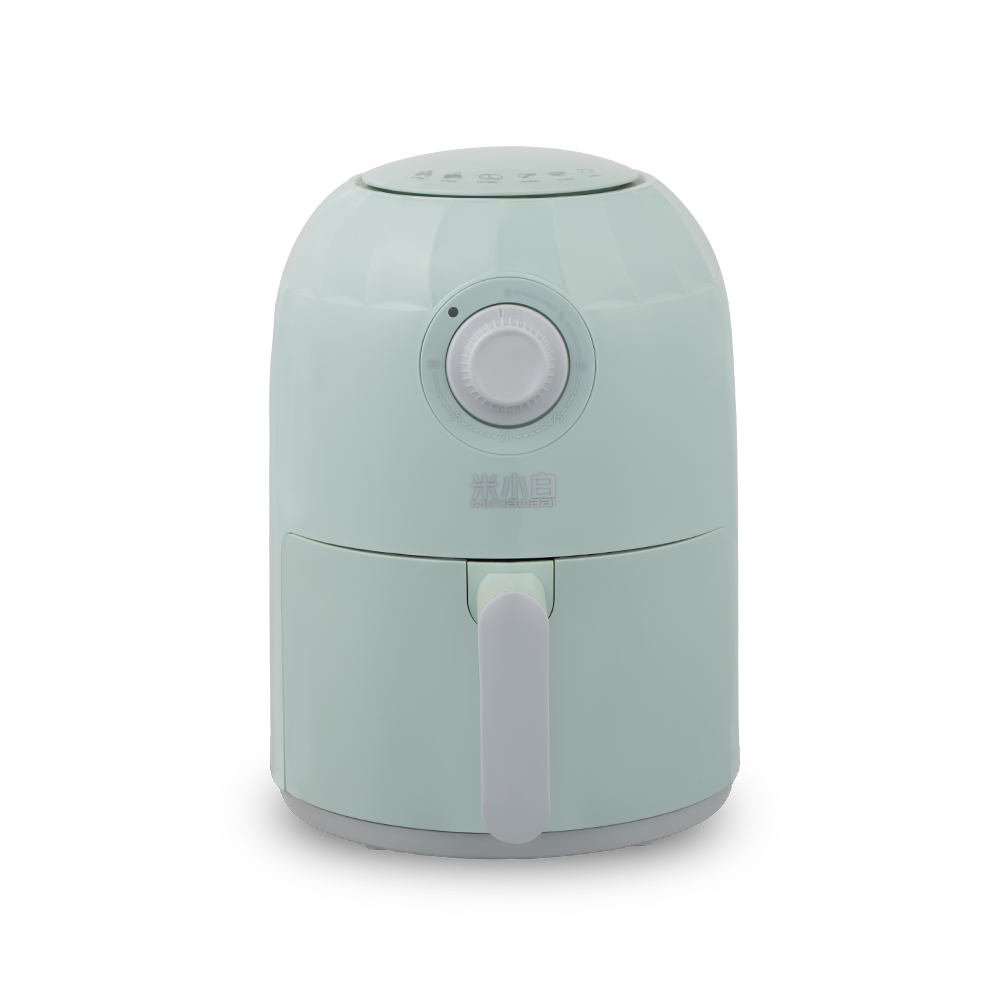
| Mechanical knob | Wide band, 15-25 °C swing | Simple reheating, tight budget | Thermostat drift after long use |
| Digital touch with LED display | 3-8 °C band with NTC sensing | Everyday family cooking | Panel membrane wear, moisture ingress |
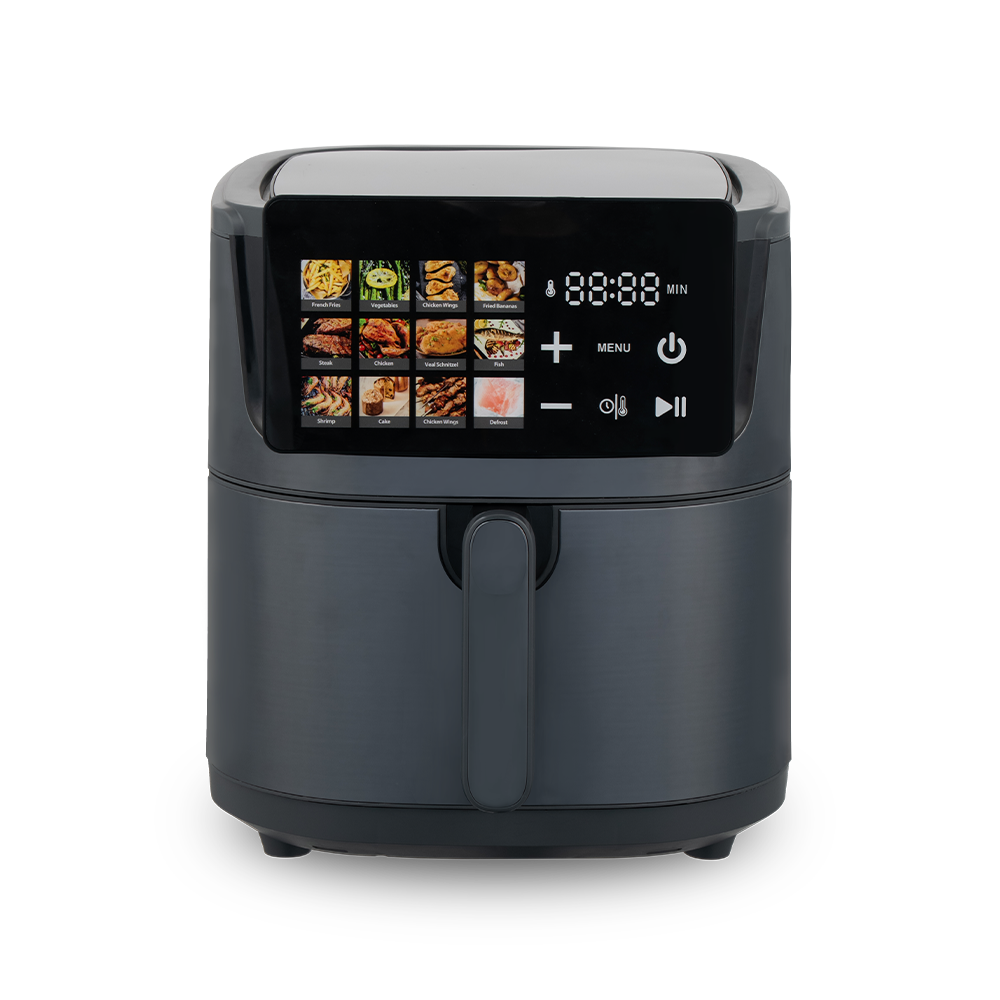
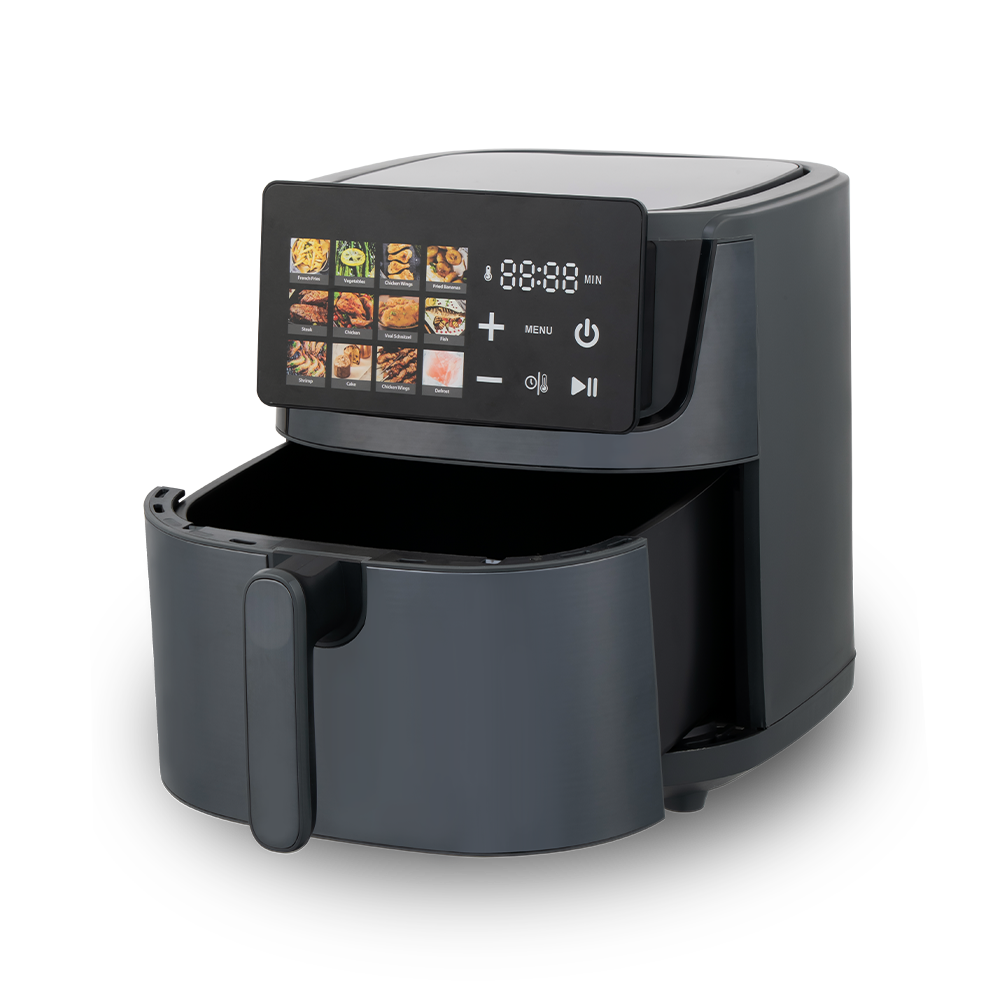
| Color touchscreen with presets | Same sensing, more programme logic | Users who want one-tap recipes | Firmware faults, board replacement cost |
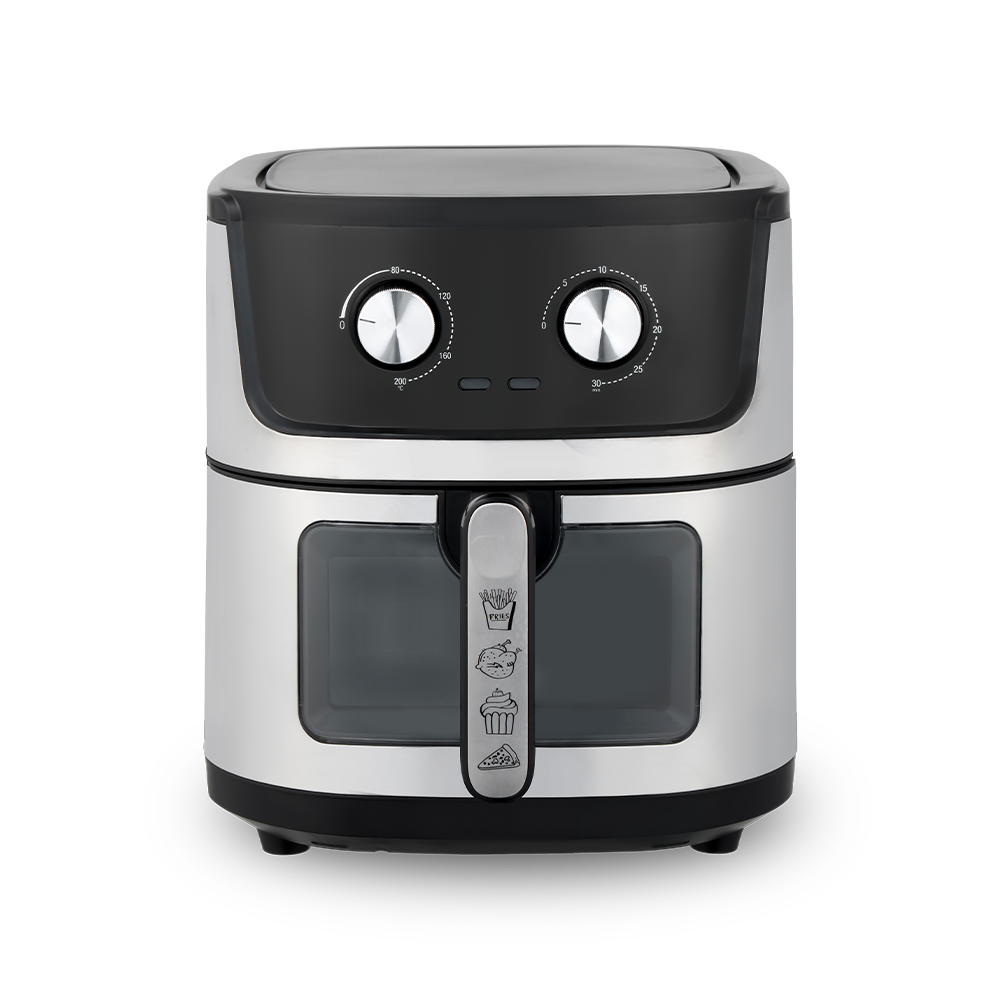
| Hybrid knob plus digital display | Digital timing, mechanical-style heat control | Users who dislike touch panels | Encoder wear |
Capacity: Litres Are a Starting Point, Not an Answer
Capacity is the number shoppers compare first and the one that misleads most often. Nominal litres measure the whole chamber, including headspace that hot air must move through. What actually cooks dinner is the usable basket area at the maximum fill line: a deep, narrow 5.5 L basket can hold less in a single layer than a wide, shallow 4.5 L one.
The working rule is a single layer with a small gap between pieces. Pile food two layers deep and the bottom layer steams instead of crisping, which is exactly the complaint that generates most returns.
| Capacity class | Usable single-layer load | Typical wattage | Household fit |
|---|---|---|---|
| Mini, under 3 L | 200-350 g | 900-1,200 W | One person, snacks, small kitchens |
| Small, 3-4 L | 350-550 g | 1,200-1,400 W | Couples, side dishes |
| Medium, 4.5-6 L | 600-900 g | 1,400-1,700 W | Families of three to four |
| Large, 6.5-8 L | 900-1,300 g | 1,700-2,000 W | Families of five, batch cooking |
| Extra large, above 8 L | 1,300 g and up | 2,000-2,400 W | Meal prep, dual-basket setups |
If you want the geometry explained in more detail, our engineers compared how basket shape changes real portions in a side-by-side capacity comparison.
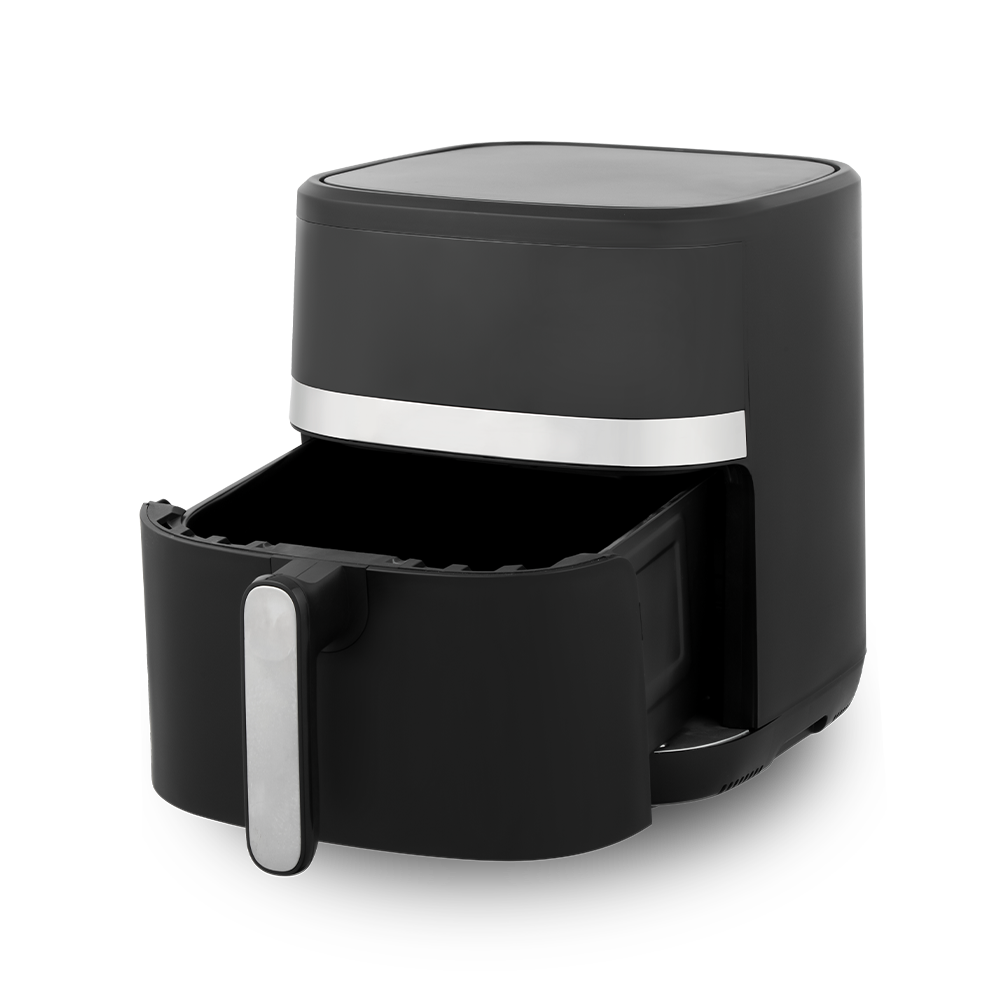
 16-Color Display Enclosed Air Fryer, 85 Series 9 LA 9 L enclosed air fryer with 16-color display and 1500 W 220–240 V design, useful for large-capacity and voltage-specific comparisons.View Product →
Wattage, Voltage and the Numbers Buyers Skip
Two air fryers with identical baskets can behave like different machines because of the power supply. A 1,700 W design at 220-240 V draws roughly 7.5 A; the same cooking chamber built for 120 V/60 Hz needs about 14 A to hit the same wattage, which pushes it into a different circuit category and often into a different cord and plug standard. Exporting one housing with two electrical platforms is common, but the two versions do not heat at the same speed.
Preheat behaviour is the second skipped number. Most basket air fryers need three to six minutes to reach a stable chamber temperature. A digital model that counts the preheat for you removes guesswork; a mechanical one simply starts cooking from cold, which is why conversions from oven recipes so often disappoint.
How to check accuracy without a lab
Place a probe thermometer at the centre and another near the basket wall, set 160 °C, 180 °C and 200 °C, and let each setting stabilise for ten minutes. A spread of more than 10 °C between centre and corner is an airflow problem, not a sensor problem. Also ask one blunt question of any supplier: does the display show the set point or the measured chamber temperature? Many budget boards show the set point, which means the number on the screen tells you nothing about what the food is experiencing.
Touch Panels, Knobs and the Parts That Fail First
On a digital air fryer, the electronic control is the component most likely to end the product's life before the heater does. Capacitive touch panels handle grease and wiping better than recessed membrane buttons, where liquid can creep under the edge of the overlay. Rated press counts vary widely, from roughly 10,000 cycles on inexpensive tactile switches to 50,000 or more on better components, and knob encoders sit somewhere in between.
For a single household, that matters little. For a buyer placing a container order, the serviceable questions are more practical: is the panel a replaceable module, is the PCB conformally coated against humidity, and can presets be locked or edited? A preset that cannot be changed is a support ticket waiting to happen in markets where users cook different foods than the original design assumed.
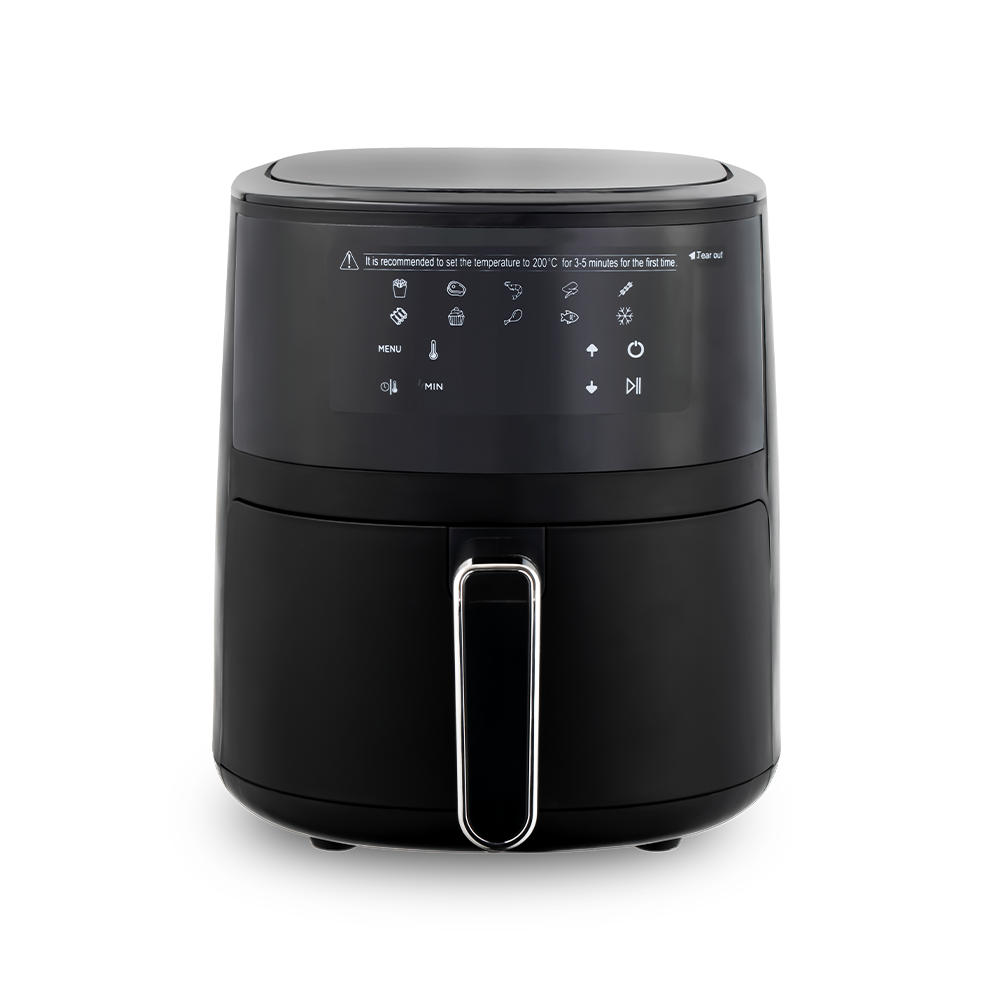
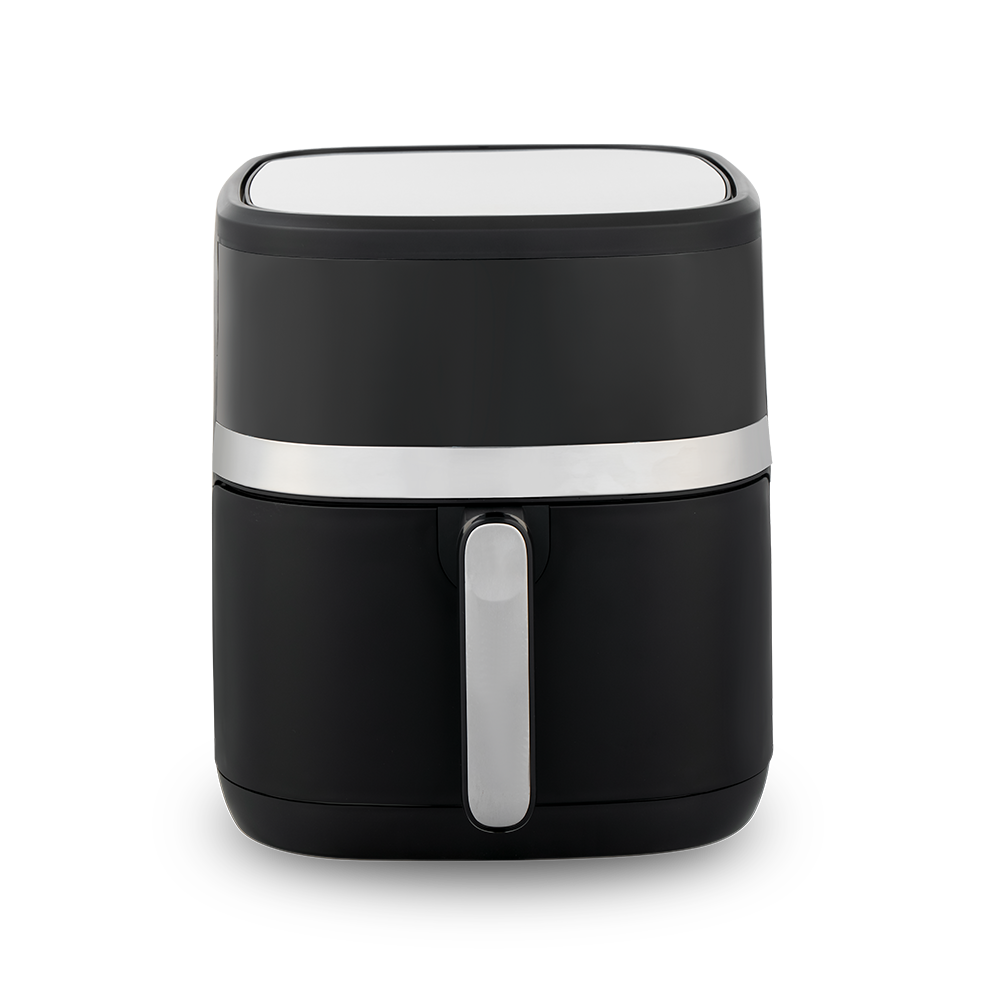
 All-Black Digital Touch Air Fryer MC-AF6507 6.5 LA 6.5 L, 1800 W black touchscreen air fryer for 3–5 person homes, with presets and removable-basket power-off safety.View Product →
Visible Baskets and Glass Chambers: Useful, With Caveats
A window or a glass chamber answers the single most common question in air frying: is it done yet? The trade-offs are physical. Single-pane windows fog and stain; double-glazed windows cost more and add weight to the drawer. Glass bowls, usually borosilicate, tolerate the heat but are heavier to lift and less forgiving of a sudden cold rinse while hot.
Coatings deserve the same scrutiny as electronics. Non-stick layers on the basket and the crisping plate should survive dishwasher cycles and resist metal utensils, and buyers in some markets now ask about PFAS status before anything else. Ceramic and stainless steel surfaces trade release performance for durability, and that exchange should be a conscious decision rather than a surprise after three months of use.
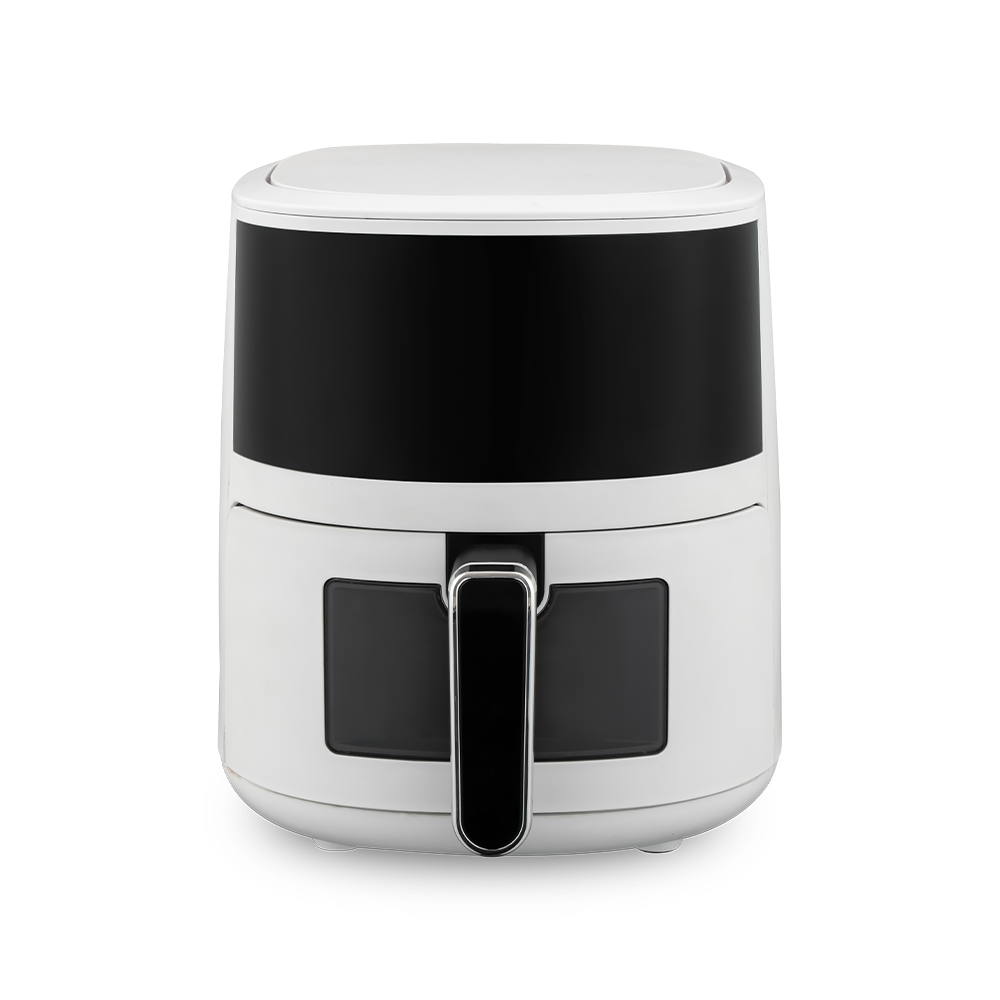
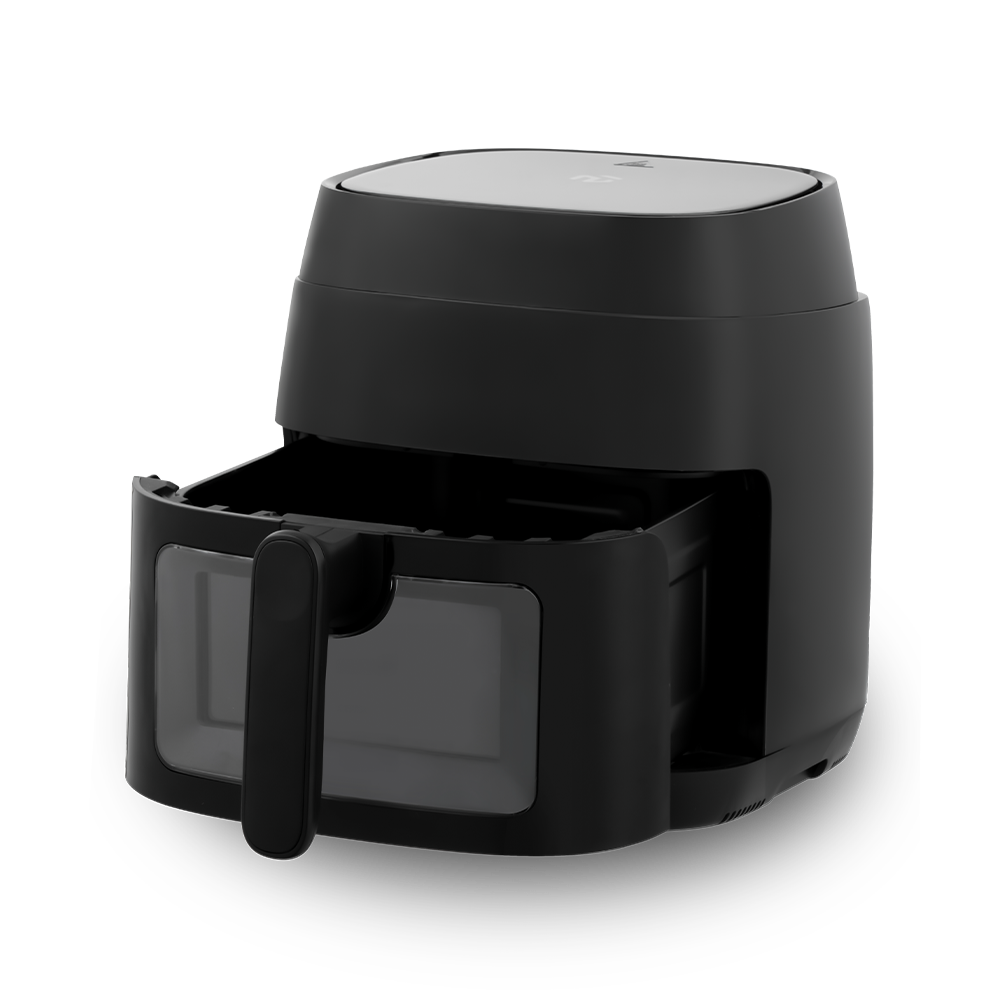 Visible Intelligent Touch Control Air Fryer, 70 Series 7 LA 7 L, 1800 W digital air fryer with transparent viewing window and customizable touch presets, suited for urban families monitoring cooking progress.View Product →
How the Category Fits Together
Once you look past brand names, digital air fryers are organised along three axes, and almost every listing is a combination of one point on each.
- Digital air fryer
- Heating chamber
- Pod or basket style
- Dual basket, stacked or side by side
- Glass chamber
- Oven style with racks and trays
- Capacity class
- Mini, under 3 L
- Small, 3-4 L
- Medium, 4.5-6 L
- Large, 6.5-8 L
- Extra large, above 8 L
- Control and interface
- Mechanical knob with analog dial
- Digital touch with LED readout
- Color touchscreen with recipe presets
- Heating chamber
What to Verify Before You Buy or Place a Bulk Order
- Confirm voltage, frequency and plug type, then confirm the wattage that goes with them.
- Ask for a temperature accuracy report covering at least three set points.
- Measure usable basket area at the fill line, not the chamber volume on the box.
- Check coating composition, dishwasher tolerance and PFAS status in writing.
- Request the rated life of switches and encoders, plus spare part availability.
- List the certifications required in your market, such as CE, GS, ETL, LFGB or FDA food-contact compliance.
- Run one sample unit through 50 to 100 cooking cycles before approving tooling.
- Drop-test the retail packaging, since basket air fryers fail at the handle and the drawer front.
We build digital air fryers under the Magichef name at Ningbo Mochu Electric Appliance, from compact 65-series models to large 85-series units, and most projects start with a specification sheet rather than a catalogue. If you have a target capacity, control type and market in mind, send the details to our team and we will tell you what is realistic.
A digital air fryer is not better because it has a screen. It is better because the screen is connected to a sensor that is actually measuring the chamber, a heater that matches the basket volume, and a fan that moves hot air across the whole cooking surface. Judge those three things, check the panel and the coating as serviceable parts, and the number on the display will finally mean something.