

 English
 русский
Content
- 1 Built for Buyers Who Order at Volume, Not Just Buyers Who Order Once
- 1.1 Inside a Stainless Steel Air Fryer Factory: How a Production Batch Actually Moves
- 1.2 Are Stainless Steel Air Fryers Safe: Laboratory Verification Behind the Answer
- 1.3 What Makes a Stainless Steel Air Fryer Different at the Material Level
- 1.4 Is Stainless Steel Safe in an Air Fryer? A Direct Technical Answer
- 1.5 What Material to Avoid in an Air Fryer
- 1.6 Is There a Fully Stainless Steel Air Fryer? Comparing Component Builds
- 1.7 Are Stainless Steel Air Fryers Better? Measured Side-by-Side
- 1.8 Air Fryer with Stainless Steel Basket: Engineering the Airflow Path
- 1.9 Stainless Steel Air Fryer Basket Manufacturing: From Sheet to Finished Part
- 1.10 Steam Air Fryer Manufacturer: Combining Moisture Control with Stainless Construction
- 1.11 Exterior Housing Design: Keeping a Stainless Steel Shell Safe to Touch
- 1.12 Comparing Basket Shapes: Square Drawer vs Round Rotating Design
- 1.13 Where Stainless Steel Air Fryers Are Used
- 1.14 Customization Options Available Across a Production Run
- 1.15 Maintenance Guidance for Long-Term Stainless Steel Performance
- 1.16 Protecting a Stainless Steel Finish During Transit
- 1.17 Additional Questions on Stainless Steel Air Fryer Construction
- 1.18 Specification Sheets and Sample Evaluation
Built for Buyers Who Order at Volume, Not Just Buyers Who Order Once
A stainless steel air fryer is judged differently once an order moves from a single unit to a full container. Questions such as is stainless steel safe in air fryer cooking, are stainless steel air fryers safe across a full production run, and are stainless steel air fryers better than aluminum or coated alternatives matter more, not less, at scale, because a material weakness that shows up in unit five thousand is far costlier than one that shows up in unit one.
This section sets out the material grades, certification checkpoints, and production controls behind an air fryer stainless steel build, along with the customization range and export packaging standards used when a stainless steel air fryer factory ships a full production batch rather than a single sample.
Inside a Stainless Steel Air Fryer Factory: How a Production Batch Actually Moves
A capable stainless steel air fryer factory runs every batch through the same four checkpoints in a fixed order. This sequence matters to a buyer evaluating consistency across a large order, since it is what keeps unit five thousand as close as possible to unit one.
Raw Material Control
Incoming steel coils and sheets are matched against material certificates before release to the production floor.
Precision Stamping
Automated presses shape baskets, housings, and internal shrouds to tight dimensional tolerances for consistent assembly fit across the full run.
Welding and Assembly
Laser and spot welding join seams with minimal visible marking, reducing crevices where residue could otherwise collect.
Final Function Testing
Every unit is powered on and run through heating cycles to confirm airflow, temperature accuracy, and control response before packing.
Are Stainless Steel Air Fryers Safe: Laboratory Verification Behind the Answer
Answering are stainless steel air fryers safe at a production scale requires more than a visual inspection of one sample. Verified batches go through the checks below before a certificate of conformity is issued for the order.
What Makes a Stainless Steel Air Fryer Different at the Material Level
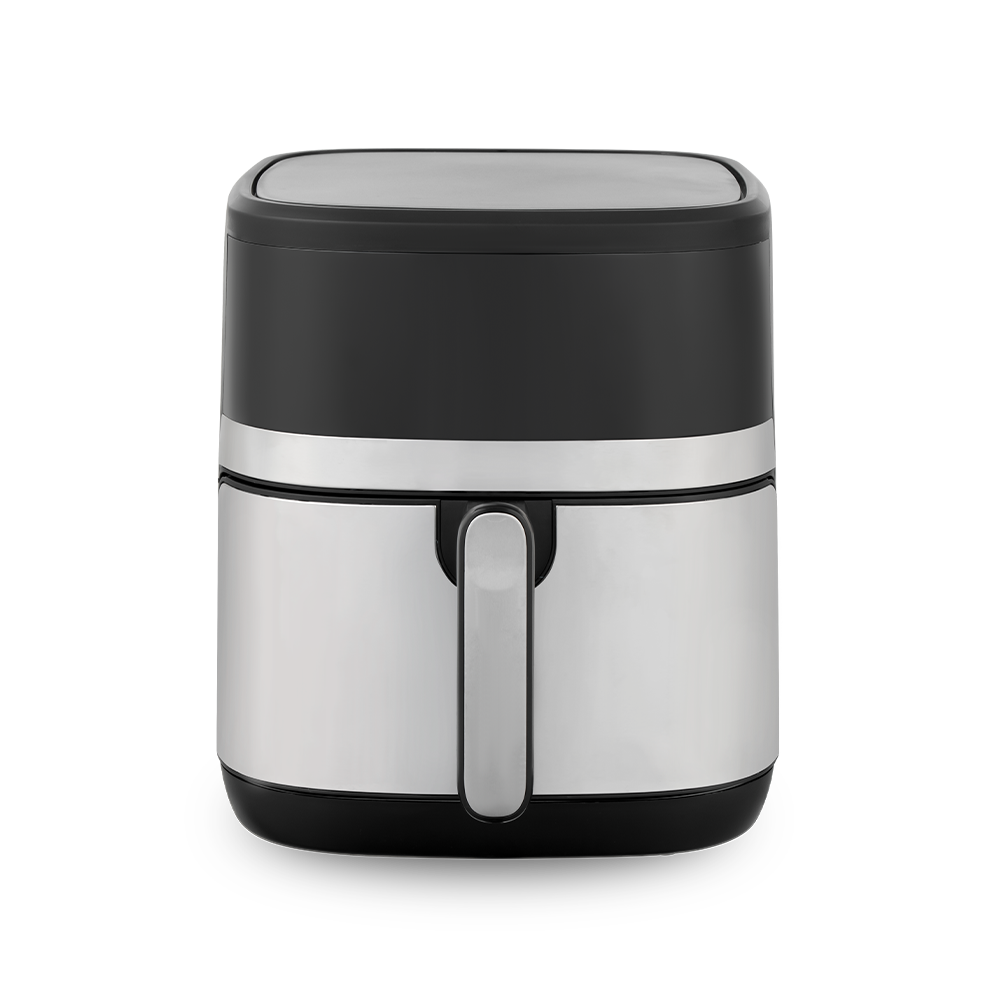
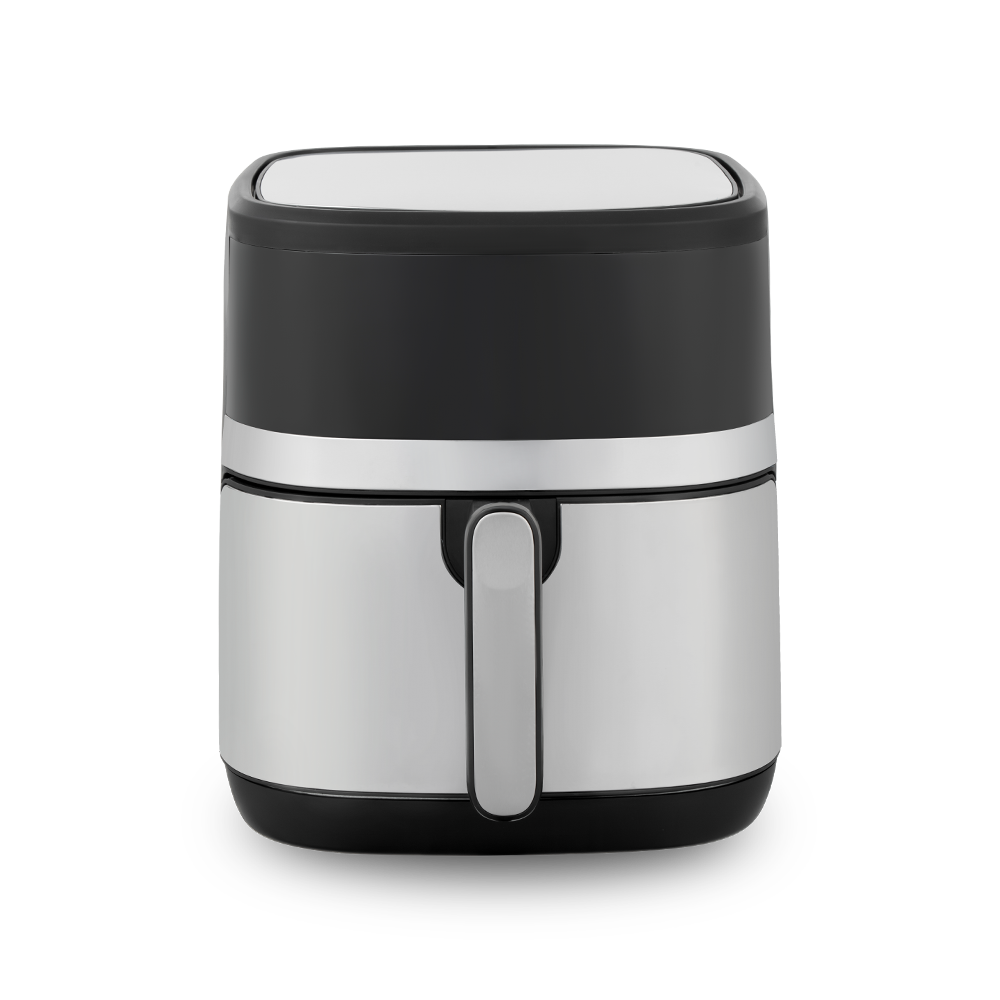
The term air fryer stainless steel covers a wide range of build quality. Some units only use a thin steel outer shell while the food-contact basket remains coated aluminum. A genuine stainless steel air fryer basket uses food-grade steel across every surface that touches food, steam, or hot oil vapor, and the grade selected has a direct effect on corrosion resistance, heat tolerance, and long-term hygiene across a full production run.
304 Food-Grade Steel
The most common grade used for interior baskets and heating chambers. Chromium and nickel content resists pitting from oils, salt, and acidic marinades while withstanding sustained cooking temperatures.
316L Marine-Grade Steel
Used in steam-integrated units where humidity exposure is higher. Added molybdenum improves resistance to chloride corrosion, which matters when a steam air fryer manufacturer combines moisture and high heat cycles.
Brushed vs Mirror Finish
Brushed finishing reduces visible fingerprints and micro-scratch marks during daily handling, while mirror polishing is typically reserved for external panels for a premium visual result.
Is Stainless Steel Safe in an Air Fryer? A Direct Technical Answer
Is stainless steel safe in air fryer environments where temperatures repeatedly exceed 200°C?
Yes, when the grade is food-contact certified. Unlike coated surfaces, stainless steel does not rely on a surface layer that can chip, flake, or degrade under thermal cycling. The metal itself is the food-contact surface, so there is no separate coating that can wear away after repeated washing, scraping, or high-heat exposure across the product's service life.
Repeated thermal cycling is one of the harshest tests a basket material can face. During internal testing, a stainless steel air fryer basket is cycled through heating and cooling hundreds of times to confirm that the metal does not develop stress fractures at weld points or along folded edges, a test coated materials rarely pass to the same cycle count.
What Material to Avoid in an Air Fryer
Understanding what material to avoid in an air fryer is just as important as understanding which materials perform well, particularly when a single material weakness would need to be corrected across an entire production batch rather than one unit.
Aged PTFE Coating
Repeated high-heat cycles cause micro-cracking in the coating surface over time, which can allow small coating fragments to mix into food.
Untreated Aluminum
Without anodized treatment, aluminum reacts with acidic ingredients such as tomato-based or citrus marinades.
Standard Plastic Handles
General-purpose plastic near a heating chamber can soften, discolor, or emit odor over extended use.
Painted Metal Surfaces
Decorative paint layers on food-contact areas are not designed for direct food exposure and wear unevenly once scratched.
Is There a Fully Stainless Steel Air Fryer? Comparing Component Builds
The question is there a fully stainless steel air fryer comes up frequently because most units on the market only use steel in select areas. A fully built line extends the material through the basket, the internal heating shroud, the airflow duct, and the external housing panels.
| Component | Partial Stainless Build | Fully Stainless Steel Build |
| Food basket | Stainless steel | Stainless steel |
| Heating chamber shroud | Painted mild steel | Stainless steel |
| Airflow duct / fan housing | Coated aluminum | Stainless steel |
| External side panels | Painted steel or plastic | Brushed stainless steel |
| Control panel bezel | Plastic | Stainless steel with sealed control membrane |
Extending stainless steel construction beyond the basket increases production cost, since steel forming and welding require more labor time than molded plastic or painted panels, which is why fully stainless builds are typically positioned toward buyers prioritizing long service life over the lowest unit price.
Are Stainless Steel Air Fryers Better? Measured Side-by-Side
To answer are stainless steel air fryers better in practical terms, it helps to compare measurable performance categories across coated aluminum, standard steel, and food-grade stainless steel construction.
| Performance Category | Coated Aluminum Basket | Standard Steel Basket | Stainless Steel Basket |
| Maximum sustained temperature | Approx. 230°C | Approx. 250°C | 300°C and above |
| Corrosion resistance | Moderate | Low without coating | High |
| Estimated service life | 1–2 years | 2–3 years | 5+ years |
| Deep cleaning tolerance | Requires gentle handling | Moderate | Dishwasher-safe, scrubbing-tolerant |
| Risk of surface degradation over time | Present | Present without protective layer | Minimal |
Air Fryer with Stainless Steel Basket: Engineering the Airflow Path
Designing an air fryer with stainless steel basket construction is an airflow engineering task as much as a materials decision. Perforation pattern, hole diameter, and basket depth all affect how evenly hot air circulates around food. Too few perforations create uneven browning, while excessive perforation weakens the structural rigidity of the basket wall.
Production teams test multiple perforation densities using thermal imaging to map airflow distribution across the basket surface before finalizing a stamping die, ensuring the finished basket delivers even heat exposure rather than hot spots near the center or edges.
Basket wall thickness is typically balanced between 0.6mm and 1.0mm, thin enough to promote fast heat transfer, thick enough to prevent warping under repeated thermal cycling.
Stainless Steel Air Fryer Basket Manufacturing: From Sheet to Finished Part
The path from raw sheet metal to a finished stainless steel air fryer basket runs through several distinct production stages, each affecting the final safety and durability profile of the part.
Sheet Selection and Inspection
Incoming coil stock is checked against chemical composition certificates before approval for food-contact part production.
Stamping and Perforation
Precision dies punch the ventilation pattern into the sheet while maintaining consistent hole spacing across the entire basket surface.
Edge Rolling and Deburring
Cut edges are rolled and deburred to remove sharp points that could pose a handling risk during cleaning or food loading.
Surface Finishing
Baskets pass through brushing or polishing stations depending on the finish specification requested for the order.
Steam Air Fryer Manufacturer: Combining Moisture Control with Stainless Construction
A steam air fryer manufacturer faces a different engineering challenge than a standard dry-heat line. Introducing steam into the cooking chamber exposes internal components to sustained humidity in addition to high heat, which raises the corrosion demands placed on every metal surface inside the unit.
This is one of the reasons 316L steel is frequently selected over standard 304 grade for steam-integrated internal components, since the added molybdenum content resists chloride-driven corrosion once water vapor condenses repeatedly on internal surfaces during normal operation.
Steam generation components also require careful sealing design. Water reservoirs, steam injection nozzles, and condensation drainage channels must all use corrosion-resistant fittings, since even small leaks around a steam pathway can accelerate rust formation on any non-stainless component nearby.
Exterior Housing Design: Keeping a Stainless Steel Shell Safe to Touch
A full stainless steel build has to solve a problem that coated plastic housings rarely face: metal conducts heat far more efficiently than molded plastic, so the exterior panel needs deliberate insulation engineering to stay safe to handle during and after cooking.
Air Gap Insulation
A ventilated cavity between the inner heating chamber and outer stainless panel slows heat transfer to the exterior surface during operation.
Reflective Inner Lining
A polished inner surface reflects radiant heat back toward the cooking chamber rather than letting it pass through to the outer shell.
Heat-Resistant Base Feet
Non-slip feet rated for sustained heat exposure keep the unit stable while isolating the housing base from the surface below.
Comparing Basket Shapes: Square Drawer vs Round Rotating Design
A stainless steel air fryer basket is not built to a single universal shape. Two structural formats dominate production lines, and each brings a different balance of capacity, airflow pattern, and cleaning convenience.
| Design Factor | Square Drawer Basket | Round Rotating Basket |
| Interior capacity efficiency | Higher, corners hold usable space | Lower, rounded walls reduce usable corners |
| Airflow uniformity | Even with correctly spaced perforation | Very even due to constant rotation |
| Best suited food type | Layered or stacked pieces such as vegetables and fries | Rounded items such as whole potatoes or drumsticks |
| Cleaning access | Straightforward due to flat wall surfaces | Requires removal of rotation axle before deep cleaning |
Where Stainless Steel Air Fryers Are Used
Household Kitchens
Daily cooking cycles benefit from a basket that tolerates frequent scrubbing without surface wear, particularly for oily or sauce-heavy dishes.
Catering and Food Service Kitchens
Higher usage frequency demands a basket and chamber that withstand extended daily operating hours without accelerated degradation.
Hospitality and Guest Kitchens
Visible stainless steel finishing supports a cleaner presentation in shared kitchen spaces while remaining easy to sanitize between uses.
Staff and Canteen Facilities
Continuous multi-shift use makes long-term corrosion resistance and structural durability a higher priority than initial unit cost alone.
Customization Options Available Across a Production Run
Beyond material grade, a stainless steel air fryer factory typically offers configuration options that can be fixed across an entire order rather than adjusted unit by unit.
| Configuration Option | Available Variations |
| Basket capacity | Compact, mid-size, and extended-capacity chambers |
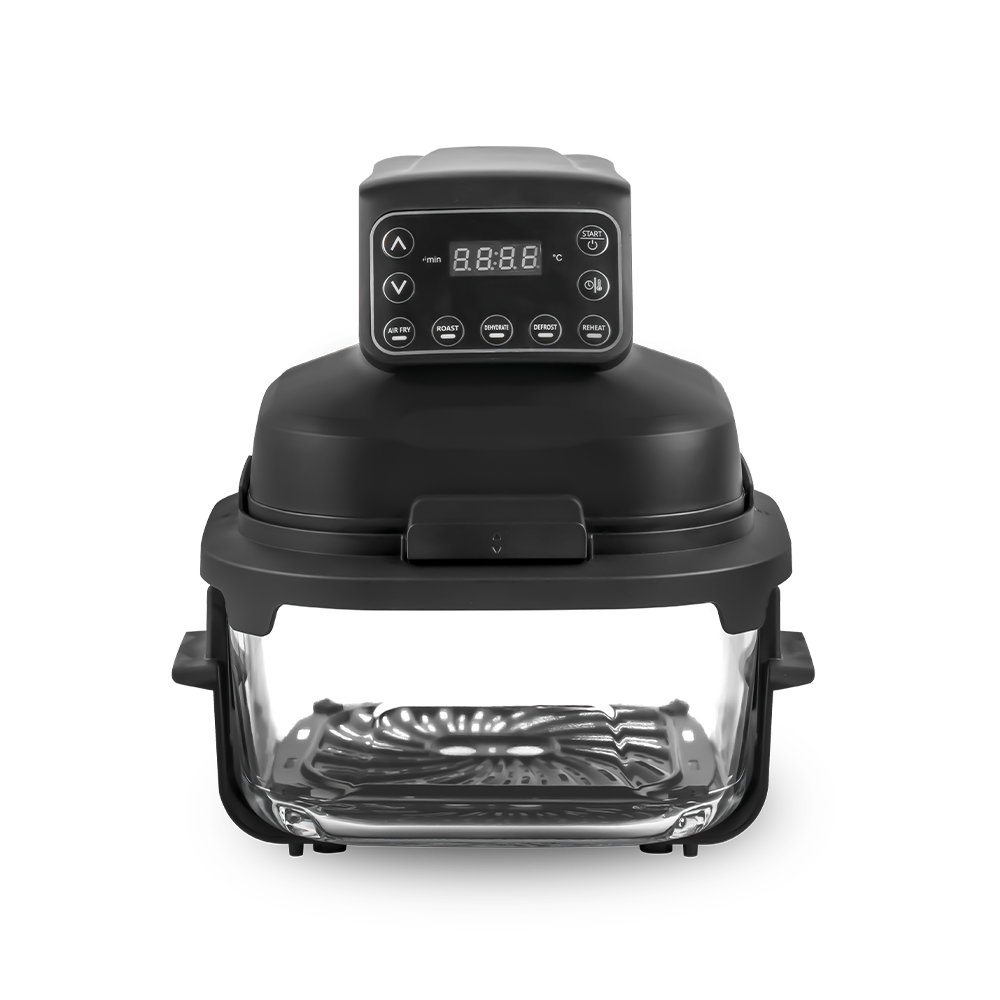
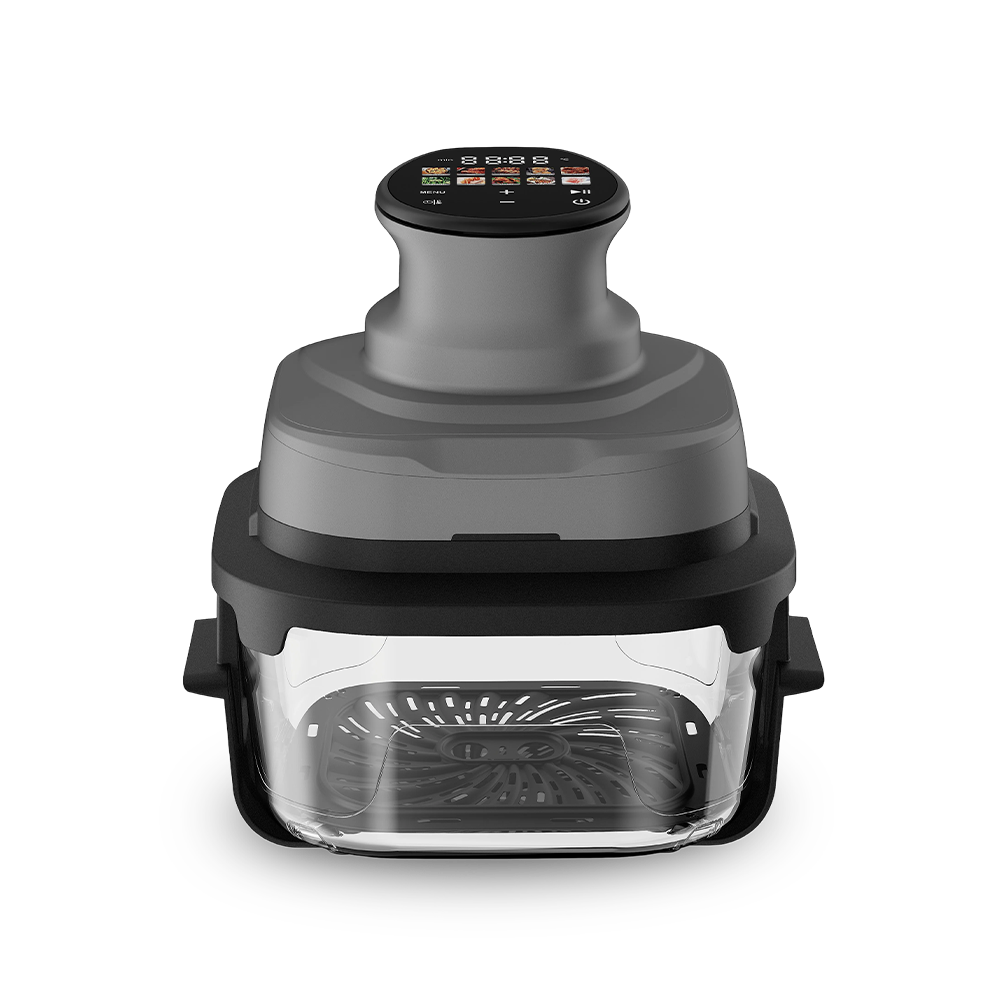
| Control interface | Mechanical dial, digital touch panel, or app-linked control module |
| Steel finish | Brushed matte or mirror-polished exterior panels |
| Basket shape | Square drawer style or round rotating basket style |
| Power configuration | Multiple voltage and plug configurations for different regional standards |
Maintenance Guidance for Long-Term Stainless Steel Performance
One advantage frequently cited when comparing are stainless steel air fryers better against coated alternatives is how simple ongoing maintenance becomes across a large fleet of units, since the food-contact surface is the base metal itself rather than an applied layer.
Routine Surface Cleaning
Warm water with mild detergent removes most residue, and stainless steel tolerates a soft brush for baked-on food without surface damage.
Removing Discoloration
Light heat-tint discoloration is cosmetic and can be reduced with a stainless-safe cleaning solution rather than aggressive abrasives.
Preventing Water Spotting
Drying the basket promptly after washing avoids mineral deposits from hard water forming on the surface over time.
Long-Term Storage
Storing the basket fully dry prevents moisture from sitting against gasket or seal components between uses.
Protecting a Stainless Steel Finish During Transit
A polished or brushed stainless steel housing can pick up scuff marks if packaging is not designed around the finish, and the risk compounds across a full container load rather than a single parcel. Production teams apply a peelable protective film directly onto exterior panels before the unit reaches the packing line, so the visible surface stays protected until the film is removed at first setup.
Peelable Surface Film
A thin adhesive film shields brushed or polished panels from contact scratches during handling, stacking, and transit.
Corner and Edge Padding
Molded foam inserts hold the unit away from carton edges, preventing impact dents on exposed stainless steel corners.
Moisture Barrier Wrapping
A sealed inner wrap limits humidity exposure during transit, which matters most for orders shipped through varying climate conditions.
Additional Questions on Stainless Steel Air Fryer Construction
Does a stainless steel air fryer take longer to heat up than a coated aluminum model?
Heating speed depends more on wall thickness and heating element wattage than on the metal type itself. Well-engineered stainless steel baskets are built thin enough at the food-contact wall to heat within a comparable timeframe to aluminum baskets while maintaining structural strength.
Can a stainless steel air fryer basket go in a dishwasher?
Most food-grade stainless steel baskets tolerate dishwasher cleaning without surface degradation, a notable difference compared with coated baskets that often require hand washing to protect the coating layer.
Why do some stainless steel air fryers cost more than coated alternatives?
Steel forming, welding, and polishing require more labor and equipment time than injection-molded plastic components or coated aluminum stamping, which is reflected in the additional production cost of a fully stainless build.
Is there a difference between food-grade stainless steel and decorative stainless steel used in appliances?
Yes. Decorative stainless steel used on external panels is not always certified for direct food contact, while food-grade steel used inside the basket and heating chamber must pass migration testing specific to cooking applications.
Specification Sheets and Sample Evaluation
Material certificates, test reports, and sample units can be arranged for buyers evaluating a stainless steel air fryer production run ahead of a full order commitment.