

 English
 русский
Content
- 1 Why the Control Type Matters More Than You Think
- 2 What Is a Mechanical Air Fryer?
- 3 What Is an LED Display Air Fryer?
- 4 Mechanical vs. LED Display: 6 Key Differences Compared
- 5 Who Should Choose Which? A Decision Guide
- 6 Beyond the Controls: 3 More Features to Consider
- 7 Conclusion: Make the Choice That Fits Your Kitchen
Why the Control Type Matters More Than You Think
You are standing in the aisle, or scrolling through product pages, and two air fryers catch your eye. One has two sturdy knobs and nothing else. The other has a sleek panel with a glowing display. Both claim to make crispy fries with little to no oil, so the choice seems to come down to looks. In practice, the control type determines how accurately you cook, how easy the machine is to use, how much cleaning it needs, and how long it will serve you without problems.
The air fryer market is split into two control philosophies. Mechanical models rely on physical rotary knobs that set temperature and time through simple switches. LED display models replace those knobs with a microprocessor, a digital temperature sensor, and a touch panel that shows your settings on screen. The cooking mechanism is the same — rapid hot air circulating around food — but the interaction is completely different. Understanding that difference is the key to choosing an air fryer you will actually enjoy using.
What Is a Mechanical Air Fryer?
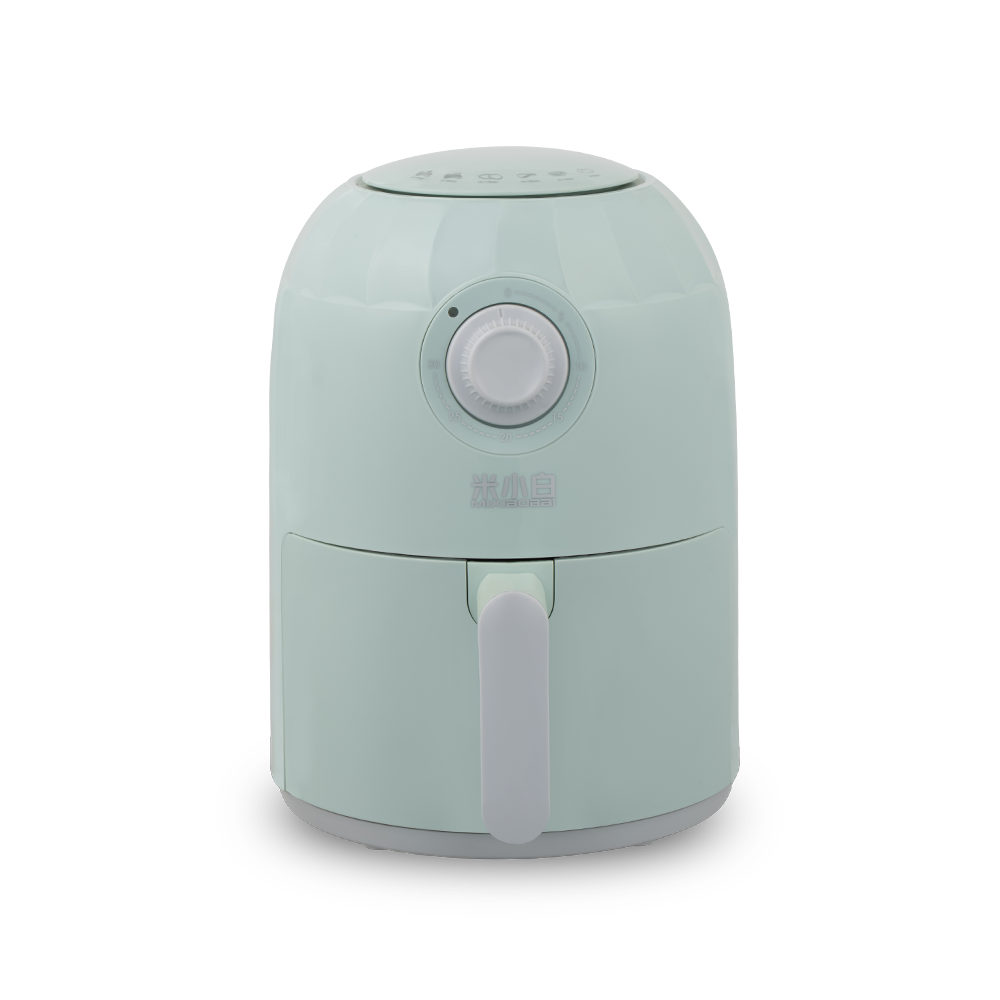
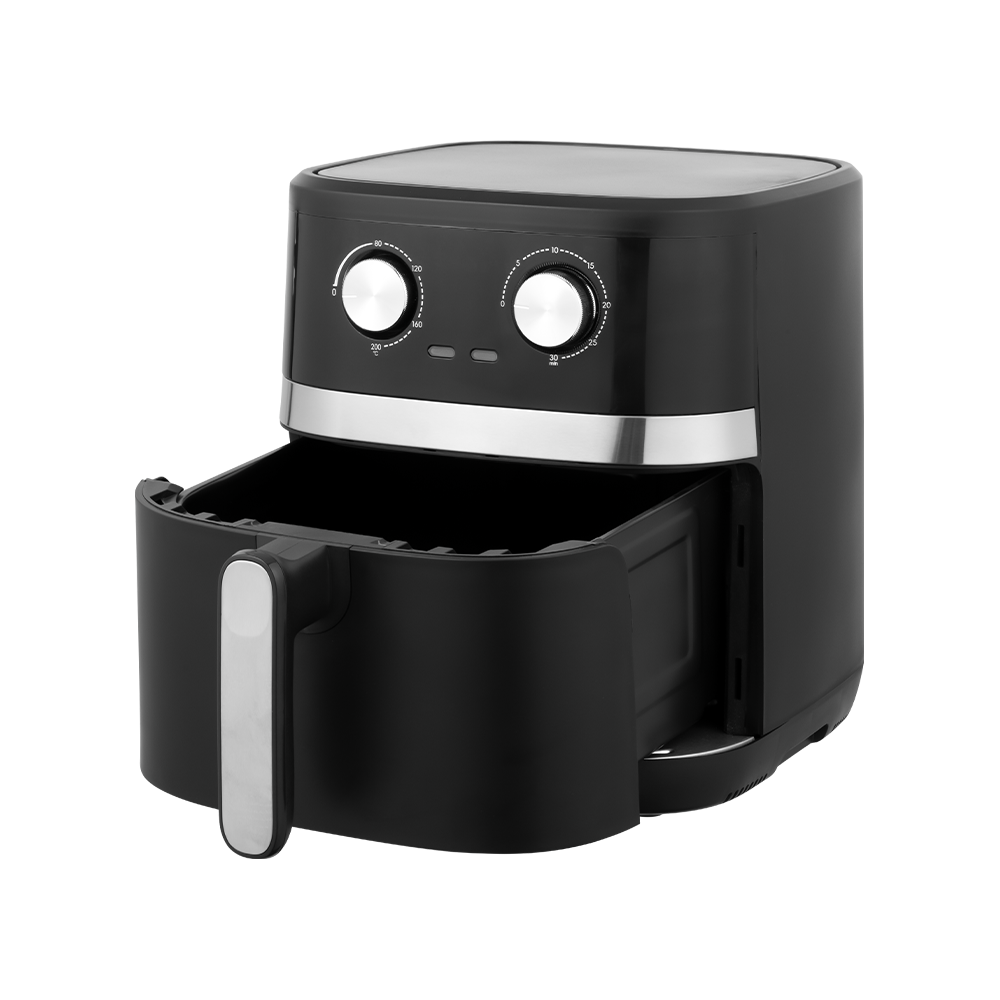
A mechanical air fryer works without any digital brain. You turn a knob to choose the temperature and another to set the cooking time. Inside the appliance, a mechanical timer and a bi-metallic thermostat switch do the rest. When the timer winds down, it clicks off, and the heating element stops. No circuit board, no sensor, no display lag — just a straightforward electrical circuit that either works or does not.
That simplicity translates into real benefits. The learning curve is essentially zero: anyone who has used a microwave dial or a stovetop knob knows how to operate a mechanical air fryer within seconds. The knobs can be turned by feel, without reading anything, which matters when your hands are covered in seasoning and you are juggling multiple dishes. Because there are few electronic parts, the failure rate is low, and when something does go wrong, the repair is usually cheap and quick.
The compromise appears in accuracy and feedback. A mechanical timer typically marks time in coarse intervals, and the bi-metallic thermostat reacts slowly, so the temperature inside the cooking chamber can drift while the food cooks. There is no live temperature readout, no countdown display, and no beep to prompt you to shake the basket. The exact tolerance varies by brand and model, but mechanical units generally hold a less consistent heat than digital units.
For many households, that trade-off is acceptable. Simplicity, durability, and a lower price are powerful arguments. A well-laid-out dual-knob design, like this dual-knob mechanical air fryer, shows how clean and functional knob control can be.
 Wholesale Dual Knob Mechanical Air Fryer Factory, Manufacturers - Ningbo MagicheNingbo Magichef Electric Appliance Co.,Ltd. is China wholesale Dual Knob Mechanical Air Fryer factory and manufacturers, details:The MC-A...View Product →
What Is an LED Display Air Fryer?
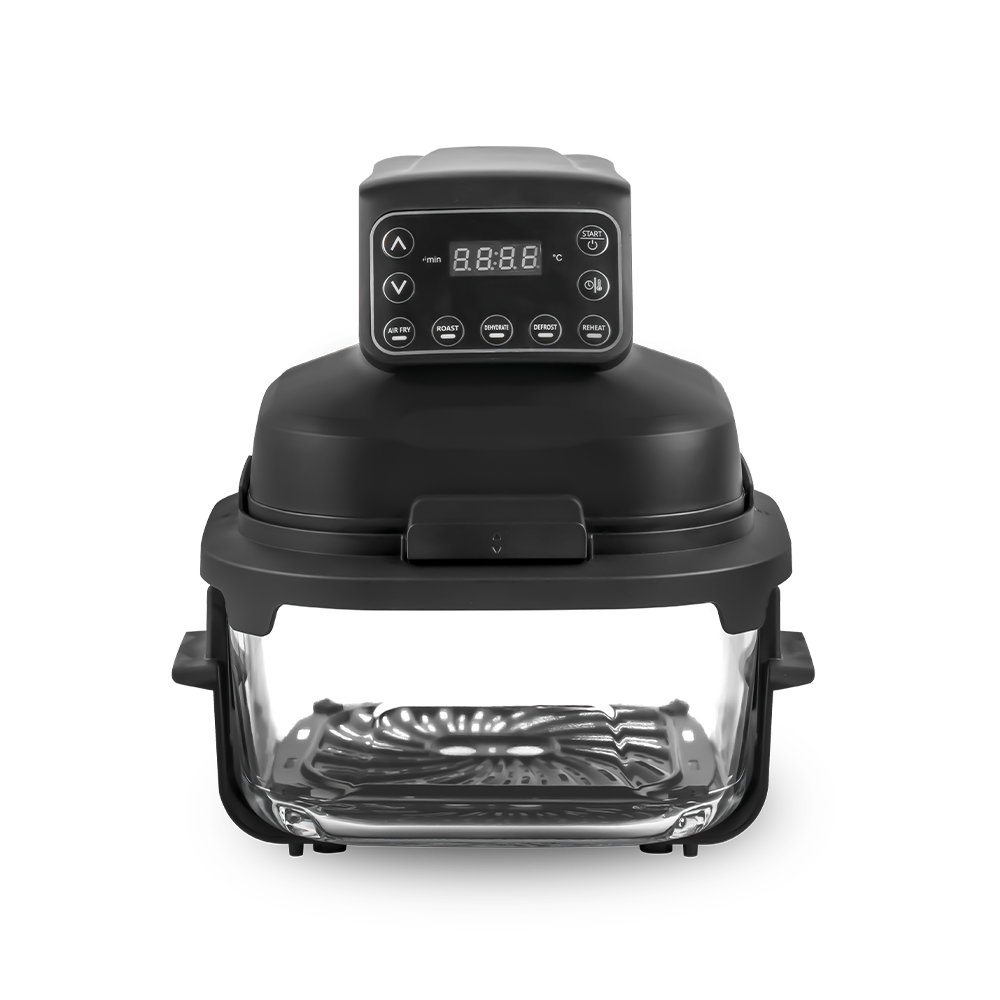
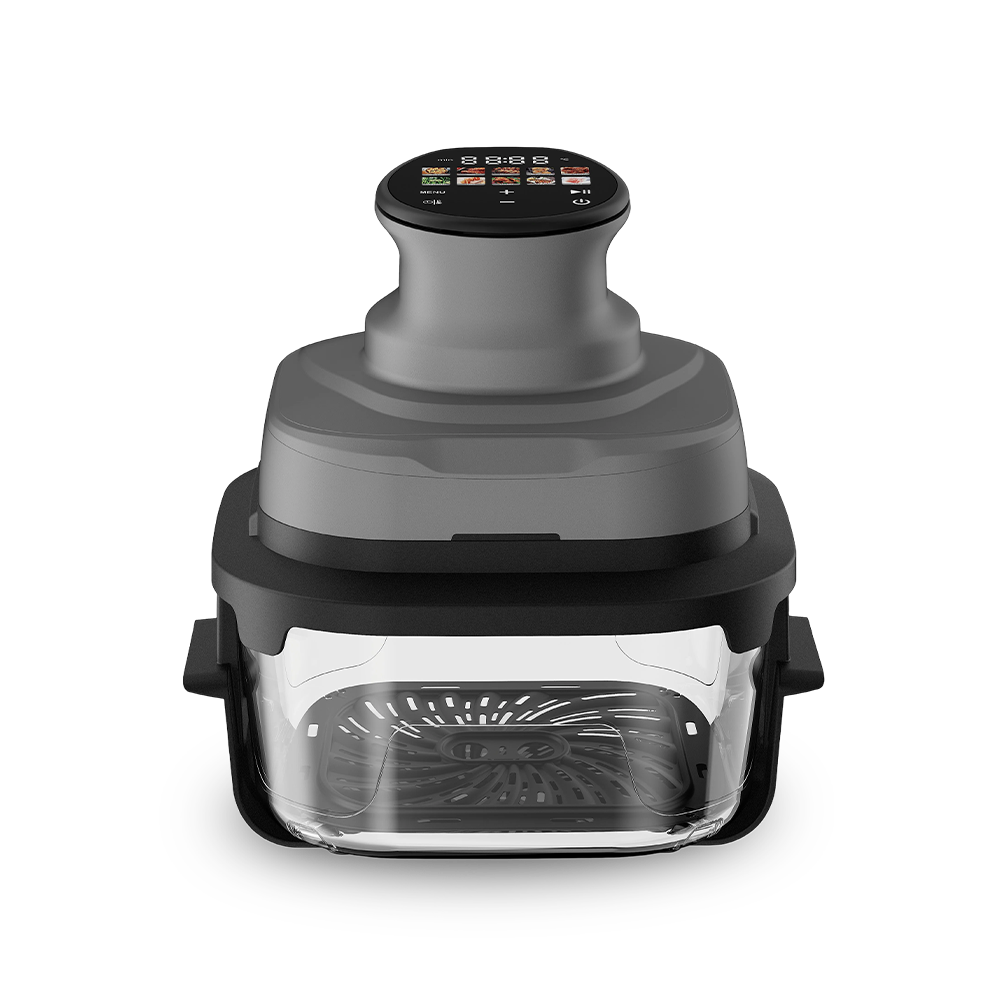
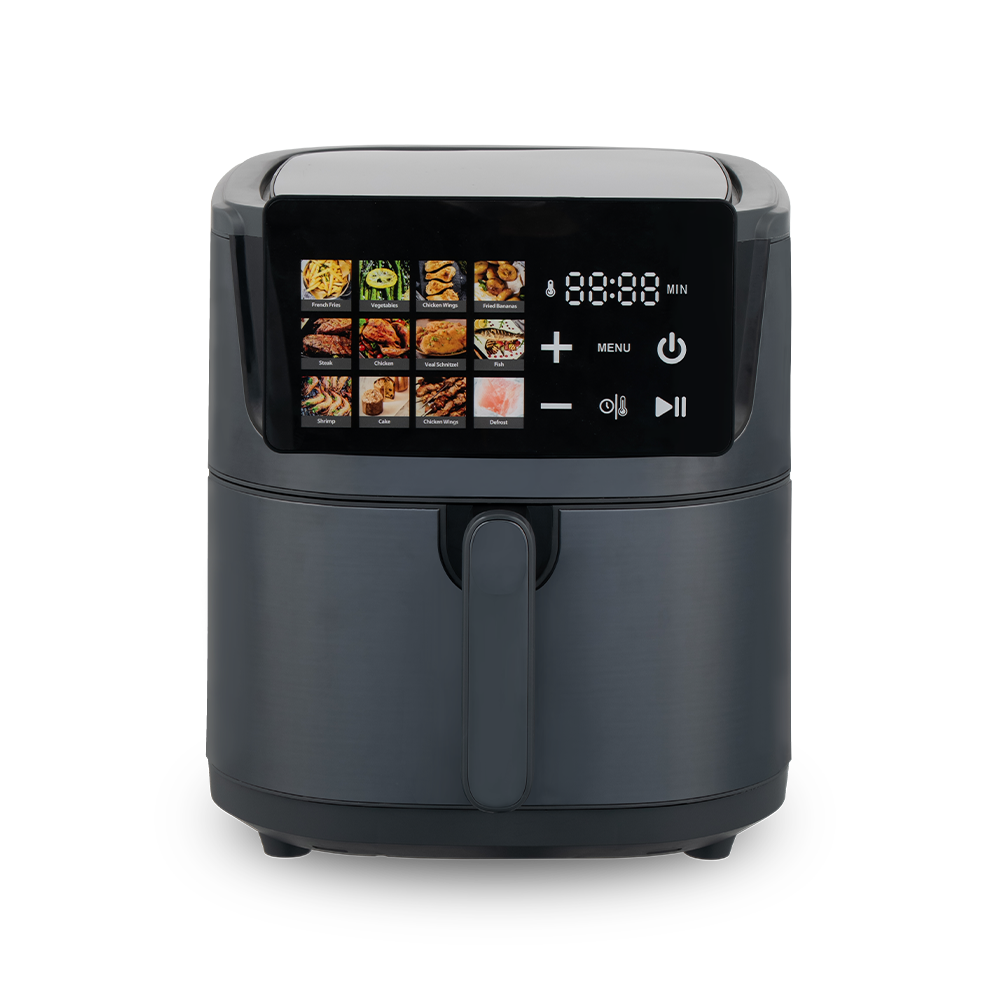
An LED display air fryer brings a control board, a digital temperature sensor, and a touch interface into the mix. You set the temperature and time on the panel, and the microprocessor adjusts the heating element constantly to match your settings. The display shows the selected temperature, the remaining minutes, and on many models the cooking progress, so you always know what is happening inside.
Precision is the headline advantage. Digital sensors measure the air temperature continuously, and the processor responds in real time, holding the interior much closer to the target temperature than a mechanical thermostat can. Time is set to the exact minute, and preset programs let you tap one button for fries, chicken wings, or other common dishes instead of translating a recipe into knob positions. If you cook from written recipes, the ability to dial in an exact temperature is genuinely useful.
The cost appears in several places. LED models are more expensive to manufacture, and that price difference reaches the shelf. Touch panels need a lighter touch than a knob, which takes a little adjustment. And if the control board or sensor fails, the repair bill is higher than a simple knob replacement and usually requires a service technician. Some users also find menu-driven controls less immediate than a single physical knob.
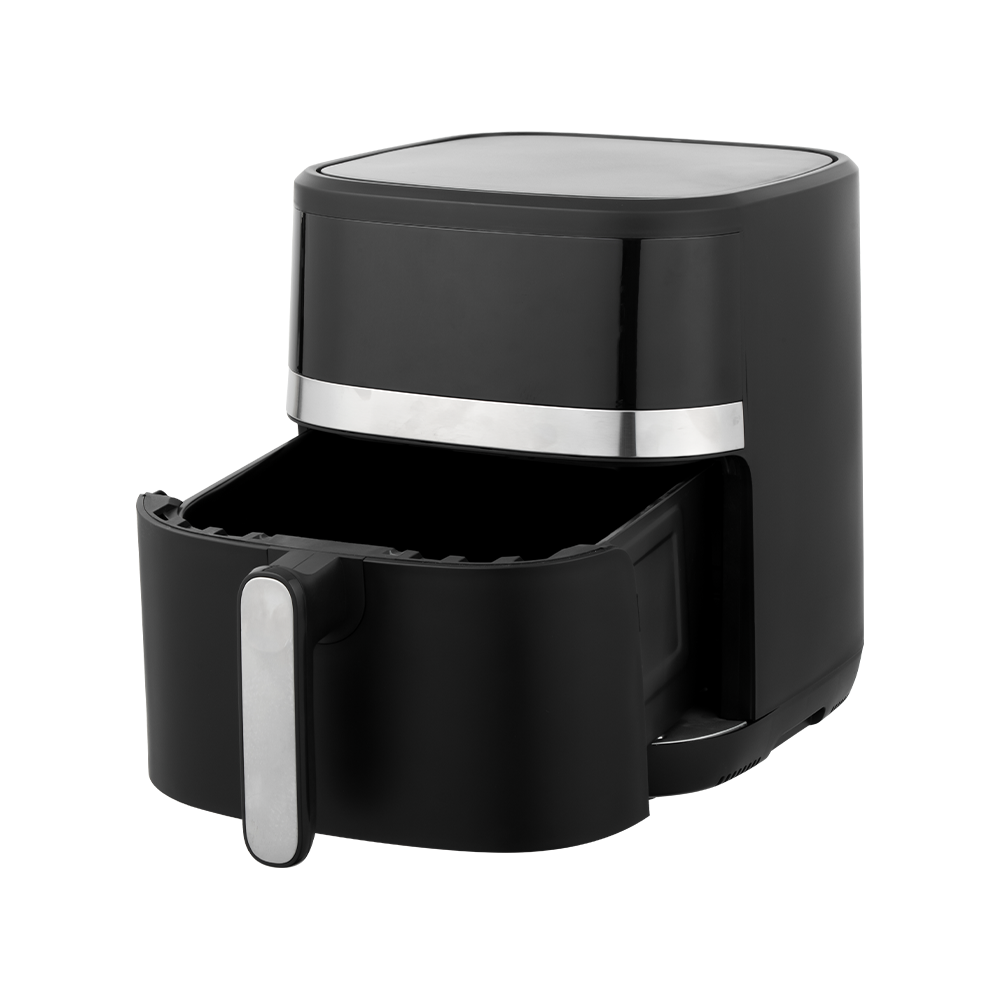
None of these drawbacks outweigh the benefits for cooks who value consistency. For a closer look at what digital control offers, the digital touch air fryer models in the Magichef lineup demonstrate the point clearly: a responsive panel, precise settings, and a clean modern look that fits a contemporary kitchen.
 Wholesale All-Black Digital Touch Air Fryer Factory, Manufacturers - Ningbo MagiNingbo Magichef Electric Appliance Co.,Ltd. is China wholesale All-Black Digital Touch Air Fryer factory and manufacturers, details:The M...View Product →
Mechanical vs. LED Display: 6 Key Differences Compared
With both control types defined, let's put them side by side. The table below summarizes the six differences that matter most in everyday use.
| Factor | Mechanical Knob | LED Display |
|---|---|---|
| Temperature accuracy | Reacts to heat changes with a delay; the temperature can swing above and below the set point during the cycle. Exact tolerance varies by model. | Samples temperature continuously and adjusts the heating element in real time, holding a steadier internal temperature. |
| Time setting | Set in coarse intervals; no visible countdown during cooking. | Set to the exact minute; countdown displayed on screen. |
| Ease of use | Immediate touch-based operation; comfortable for all ages. | Slight learning curve; preset programs speed up daily cooking. |
| Durability & repair | Few electronic parts; simple, low-cost repairs. | Complex control board and sensor; higher service cost if failure occurs. |
| Cleaning | Knobs on the side; minimal crevices on the top panel. | Flat panel wipes easily; keep moisture away from screen seams. |
| Price | Lower sticker price due to fewer components. | Mid to premium range depending on display and features. |
Temperature accuracy. A mechanical thermostat reacts to heat loss with a delay, so the temperature inside the chamber oscillates around the set point during the cycle. A digital sensor catches those fluctuations quickly and cycles the heating element to compensate. The result is more consistent browning and cooking, particularly for long roasts and baked items.
Operation convenience. Knobs give instant physical feedback and work by touch alone, even in a dim kitchen. Touch panels need your eyes for a moment, but after a few uses they become just as fast, and the visible countdown removes guesswork. For people who cook on autopilot, knobs win; for people who cook from recipes, the display wins.
Durability and repair. The mechanical internals — a timer motor, a switch, and two control shafts — have decades of proven service life behind them. Digital controls add a board and a sensor, which are far more reliable than early consumer electronics but still more complex and expensive to service if they fail.
Cleaning. Mechanical knobs sit on the side of most models, away from splashes, and the top surface stays smooth. A digital panel is also easy to wipe, but you need to avoid pushing moisture into the seams around the screen. Neither is difficult; they just demand slightly different habits.
Functionality. This is the widest gap. Mechanical models do exactly two things: heat and time. Digital models may include preset programs, finer temperature steps, and other convenience options that vary by model. If your menu rotates through a few familiar recipes, the gap does not matter. If you like exploring new dishes, it does.
Price. Fewer components give mechanical air fryers a clear price advantage. LED models span a wider range, with the premium tied to processor capability, display quality, and extra features. You pay for precision and convenience, not for the screen itself.
Neither technology is superior in absolute terms. The right answer depends on your cooking patterns, your household, and how much you value visible feedback during cooking.
Who Should Choose Which? A Decision Guide
Choose a mechanical model if:
- You are buying your first air fryer and want a tool that needs no learning curve.
- Your cooking centers on frozen fries, chicken wings, and simple reheating.
- An older adult, a child, or a guest will be a regular user.
- You want the lowest purchase price and the cheapest possible maintenance.
- You plan to keep the appliance for many years and want a predictable, easy service life.
Choose an LED display model if:
- You cook a wide range of foods and want the same result every time.
- You like using preset programs to simplify everyday meals.
- Your recipes specify exact temperatures and cooking times.
- You enjoy a modern interface and appreciate seeing cooking data on the panel.
- Your household cooks for four or more people, where steady heat matters most.
Special scenarios to weigh:
- Multi-generational household: mechanical models are the easiest for older members to accept, while digital models tend to appeal to younger cooks. If everyone will use the machine, mechanical avoids friction.
- Buying as a gift: an LED display model feels more contemporary for a young professional; a mechanical knob model is the safer bet for an older relative who values familiarity.
- Large-batch cooking: if you regularly cook more than four servings, the stable temperature of a digital model helps the entire batch cook evenly, which is harder to achieve with a mechanical thermostat.
Beyond the Controls: 3 More Features to Consider
Control type is the first decision, but not the only one. Three more factors should shape your choice.
1. Visibility: viewing window or glass body
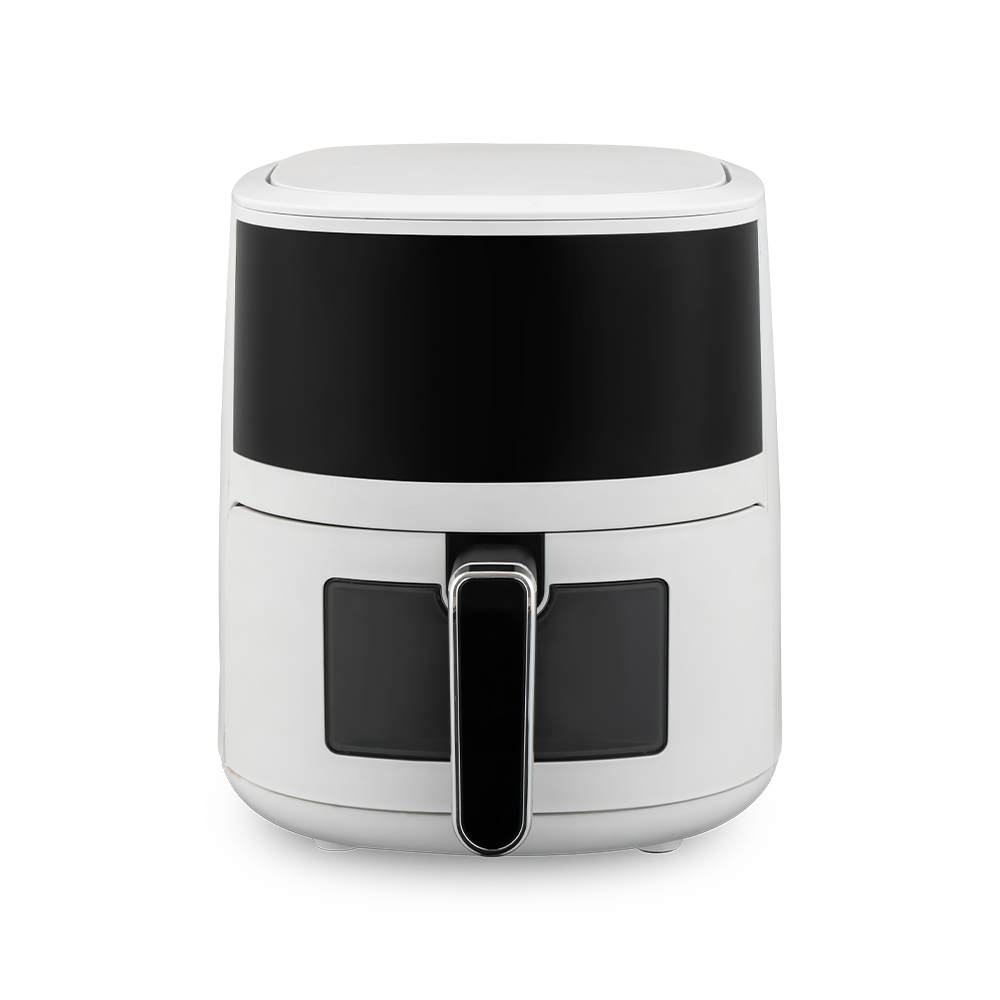
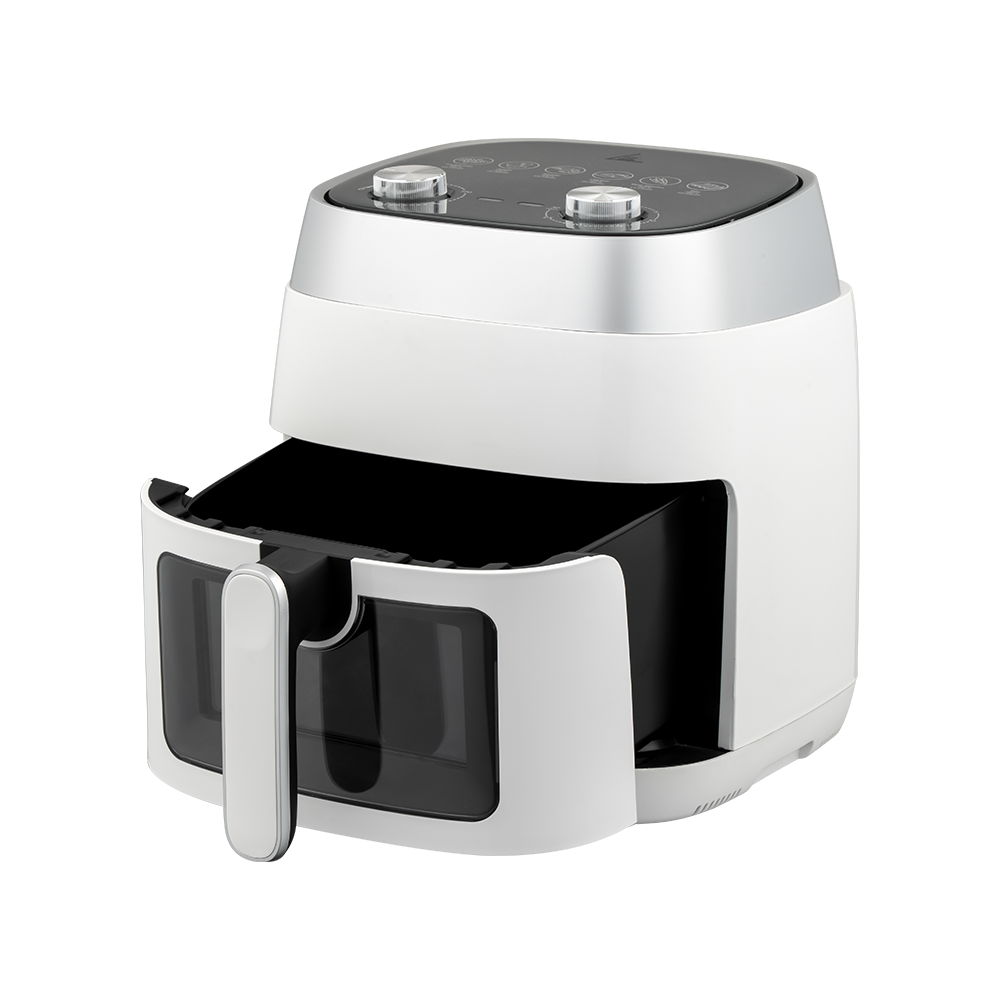
A viewing window or a glass cooking chamber lets you check browning without opening the basket and losing heat. This pairs wonderfully with mechanical control, because the knob keeps operation simple while the window removes the "blind cooking" weakness of a sealed basket. The dual-knob visible air fryer is a practical example of that exact combination. Digital models with a windowed or glass design offer the same visual reassurance on top of their precise controls.
 Wholesale Classic Dual-Knob Medium-Sized Visible Air Fryer Factory, ManufacturerNingbo Magichef Electric Appliance Co.,Ltd. is China wholesale Classic Dual-Knob Medium-Sized Visible Air Fryer factory and manufacturers...View Product →
2. Capacity and household size
Match the basket size to the number of people you feed. A 2.5 to 3.5 liter unit suits one or two people; 4 to 5 liters covers three or four; 5.5 liters and above handles larger households. Larger loads depend more on stable heat, so the precise temperature control of a digital model becomes more valuable as the basket grows.
3. Cleaning and safety
Check whether the basket has a non-stick coating, whether it is dishwasher-safe, and whether the pan separates fully from the base for washing. Mechanical units have fewer electronic seams to protect, which some people find reassuring during cleanup. On any model, leave space around the air vents, place it on a heat-resistant surface, and confirm that the unit carries the safety certifications required in your market.
Before you check out, run through a quick five-point checklist:
- Do I prefer a physical knob or a touch screen?
- Do I want a viewing window or a glass body?
- What capacity does my household genuinely need?
- Who will use this appliance most, and are they comfortable with that control type?
- What is my realistic budget, including the cost of a replacement a few years from now?
Answering these five questions in order will narrow your options faster than any review list.
Conclusion: Make the Choice That Fits Your Kitchen
A mechanical air fryer is the reliable old friend: simple, durable, and gentle on your budget. An LED display air fryer is the clever kitchen assistant: precise, informative, and full of helpful features. Neither is the universal winner, because the best choice depends on who cooks in your home, how often, and what kind of feedback makes you confident in the kitchen.
Start with your household structure and cooking habits, then decide on the control type. If your budget allows, choose a model with a viewing window or glass body so you can watch your food turn golden without interrupting the cooking cycle. Pick a sturdy unit with easily cleanable parts and proper safety certification, and your air fryer will earn its place on the counter quickly. Business buyers evaluating a private-label program will find both control systems available across sizes and designs.
If you want to see how both control philosophies come to life in real products, explore the full air fryer collection and compare mechanical, digital, and visible-glass models side by side.